Posted in Uncategorized

How to use QR codes in research and teaching

See on Scoop.itM-learning, E-Learning, and Technical Communications

You have seen QR codes in ads, but do they make sense for academics? This post discusses why, when and how you can use QR codes in research and teaching.

Danielle M. Villegas‘s insight:

I have a cousin in the UK who has a Master’s in Educational Technology, and I remember us having a conversation several weeks ago about the use of QR codes. She said they were everywhere in Europe and very heavily used not only for advertisements, but also being highly touted in ed tech circles over there. I told her that I hadn’t seen it as much here, but I didn’t doubt that it could work. 


Then, just yesterday during my first day of work at the new job, my new manager took me to the company’s "Innovation Center", which is like a small visitor’s center, to show some of the latest innovations of the company. And sure enough, since the entire Innovation Center is meant to be a highly interactive learning tool in a confined space, I saw the use of the QR codes there. Of course, the global headquarters of the company is based in Germany, so in that respect, I wasn’t surprised that the QR codes were being used based on what my cousin had told me. But I was pleased to see how they were effective in providing additional information. At certain stations in the room, there would be a tablet with a a built-in camera in front of a small stand up display of a photo with a QR code. To learn more about the particular product or process, the visitor would just take a photo of the QR code, and voila! Video and other interactive content would display on the tablet. It was actually very cool. 


This article is really good because it’s a great primer for how to use QR codes effectively. This is a must read! 
–techcommgeekmom 

See on www.joachim-scholz.com

Posted in Uncategorized

Gagné’s Nine Events of Instruction applied to Game Based Learning

See on Scoop.itM-learning, E-Learning, and Technical Communications

Following on from a recent post The Pedagogies in Game Based Learning, this article will look at how Gagné’s Nine Events of Instruction can be applied to game based learning.

Danielle M. Villegas‘s insight:

Ah, good ol’ Gagné! His Nine Events of Instruction are one of the gold standards of instructional design, and for good reason. They make sense. This is a great article that shows how well-written gamification used for learning follows Gagné’s rules very well. It sure explains why my video-game addicted son learns so much as he plays! Excellent article. 
–techcommgeekmom 

See on www.avatargeneration.com

Posted in Uncategorized

The Technology of Massive Open Online Courses

See on Scoop.itM-learning, E-Learning, and Technical Communications

Online learning used to be synonymous with shady diploma mills that offered a questionable product. Now it suggests something much better and more technologically sophisticated.

Danielle M. Villegas‘s insight:

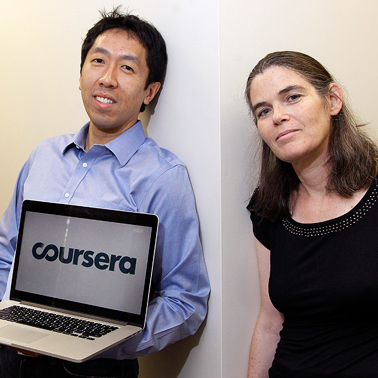
Another excellent article about the future of MOOCs. It’s definitely a growing business, whether it’s internally in higher ed or going corporate. This article also stresses the challenges in providing the same quality content as the classroom experience. Definitely a must-read. 

–techcommgeekmom

See on www.technologyreview.com

Posted in Uncategorized

MOOCS, Online Learning, and the Wrong Conversation

See on Scoop.itM-learning, E-Learning, and Technical Communications

“The fact that MOOCS and online courses have sparked new conversations on your campus about teaching and learning is a terrific development. We should be grateful whenever attention is paid to teaching. The problem is that neither MOOCS or online courses are, in themselves, a strategy to meet the challenges we all face in higher ed. MOOCS and online courses are a means, not an end, and should be understood as such. The real conversation that you should be having on campus is about your institutions’ goals around teaching and learning.”

Danielle M. Villegas‘s insight:

This is definitely an important conversation to have in the correct way. I’ve been the recipient of an online education through a MOOC used effectively. Just like any course going from classroom to online, or for that matter going from e-learning to m-learning, careful thought has to be done to ensure that content is not lost, and that an essential part of learning–interaction–is included. It’s a different dynamic than in a classroom, thus how a MOOC is used should be planned out accordingly.

–techcommgeekmom

See on www.insidehighered.com

Posted in Uncategorized

New Learning Opportunities Create Self-directed Learners

See on Scoop.itM-learning, E-Learning, and Technical Communications

What if learning took care of itself in your organization? What if your staff knew what they needed to know, or learn, to do their job successfully? Would you say, great! Go for it. Or would you say, wait a minute not so fast.

Danielle M. Villegas‘s insight:

I think this is a very common problem in many organizations. I’ve even been in the situation where the response would be, "Great! I’m glad you found something that could help you, but we can’t afford to send you to _____."  This means that individuals end up learning things on their own anyway. But if more resources–especially good ones online–become more available, this will allow not only better training and learning opportunities for self-directed learners, but it will also allow for better cost savings long term. 

–techcommgeekmom

See on networkedblogs.com