
Posted in Uncategorized

Contracting Adventures Lay Ahead…

Indiana Jones
Taking on new contracting positions is always an adventure. Indiana Jones knows all about that!

It’s been a quiet start to 2016 for me, even though there have been some things going on for me “behind the curtain”. I wasn’t ready to share just yet, but I think I am now, since things have settled down for the moment.

My contract as a knowledge management specialist ended early. The projects that they kept saying to me, “They are coming…we’re waiting for approval…” fell through. Two of them. They also didn’t have any other work for me to do, so understandably, they cut the contract short. Unlike some other jobs, I was greatly relieved to be released. I did not feel that this particular position and company was a great fit. Even though I truly tried to give it a chance, I remember not having good feeling about the place from my first day of work there, and my gut instincts were right. It wasn’t a good match in the end, and the fact that they didn’t plan well for my presence there proved that.

In the meantime, I had two events that changed the picture rather quickly.

TechCommGeekMom speaking at the PANMA/STC-PMC February 2016 meeting (photo courtesy of Timothy Esposito for STC-PMC)
TechCommGeekMom speaking at the PANMA/STC-PMC February 2016 meeting (Photo courtesy of Timothy Esposito for STC-PMC)

First, I was invited to be a panelist/presenter for a meeting that combined the Philadelphia Area New Media Association (PANMA) and the STC-Philadelphia Metro Chapter memberships. The meeting was about freelancing and contracting. Each group contributed two speakers, and I was one of the two representing the STC (the other was my friend, David Calloway). I was the last one to present or speak, and to be honest, I came completely unprepared. I thought it’d be a quick introduction thing, and then moderators would ask questions based on our experiences and background. (I guess I’ve been watching too many American political debates lately.) I was glad that I went last of the four presenters. Although the other three presenters covered much of what I would’ve said, I still had a few things to contribute. David and I took the stance of being contractors rather than freelancers. And as you might remember, several months ago I started my own freelancing company, but it hasn’t quite taken off yet.

But I will admit, listening to the others, I had a big realization of my own that night. I’ve been a contractor for several years, but not of my own choosing. I’ve tried finding full-time employee jobs, and it hasn’t happened in years. I think the last time I was not a part-time person or a non-contract person, it was still the 20th century! Yet perhaps, without my knowledge, I’ve already been a freelancer by default of being a long-term contractor.

That was my “A-HA!” moment, as Mitchell Levy likes to call it. I realized that yes, perhaps I have been a freelancer all along, and perhaps it really isn’t so bad to constantly be getting contract jobs. After the meeting, I told my husband about the discussion, and he pointed out that there was great opportunity in being a contractor. The biggest thing he pointed out was that each contracting job was an opportunity to learn new things. I would learn more about different industries, and often I’d learn more about new software, new procedures, and generally pick up a few new skills. I would also learn more about myself, namely what I’m good at, what I’m not as good at, and what I actually like doing.  The more I thought about it, I realized that he was right. These are all opportunities to hone different parts of myself, both in improving what I do well, learning new things, and gaining insight about what is best about my capabilities and how to use them.
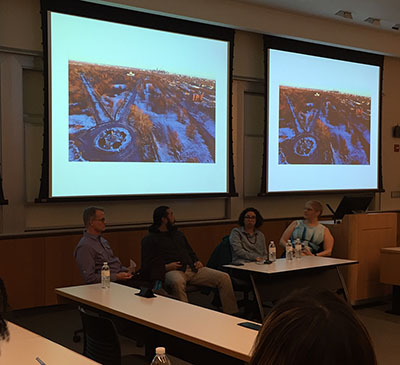
Group of PANMA and STC panelists, February 2016 (Photo courtesy of Timothy Esposito for STC-PMC).

Now, not everyone can be a contractor. It’s not easy because of complications of being a non-employee, thus you don’t get the same rights and benefits, like affordable health insurance, as a contractor. Some agencies that contract out do offer these benefits, but they are usually at a higher rate than at a large company. But, at the same time, there are certain flexibilities that a contractor has. If a contractor is careful with personal finances, he/she can take time off, or work more than one position over time. Granted, in 99.99% of cases, if you don’t work, you don’t get paid. So, for example, when I go to the STC Summit in May for about a week, I won’t be paid for “paid vacation”. In fact, a contractor doesn’t get any paid vacation. You get paid for the hours that you work. So, that can be good, and can be bad. If you are a good contractor, you communicate these occasions with your manager, and you ensure that you are caught up with your work to be able to do this, it provides a little flexibility that an employee doesn’t have.

I’ve lamented the woes of being a consultant recently, and it was especially because I was in a bad situation. It was not a good fit, and the worse parts of being a contractor were at their absolute worse. But now that I’ve been away from that, with the help of this PANMA/STC-PMC panel last week, I’m starting to change my attitude a little bit.

With that in mind, I took a new job that started this week…as a contractor. I will be working for a global insurance company as a content writer/copywriter for their global self-service websites. This is a big change for me, because while you’ve known me as a social media writer, I really haven’t done any writing for a company this way before. I originally was reluctant to take the job, as it’s a far commute than what I’m used to and I’m taking a significant pay cut to do this job. But, I saw it as an opportunity to actually put my technical writing, editing, and UI/UX experiences to work in a different way, so it’s worth a try. After all, the contract is only for six months with a possibility for extention. Unlike the last position I took in which I had a sinking feeling about it (and my instincts were right about it), I have a better feeling about this position. After completing my first day, I think it’ll be a challenge to do things from a different perspective, but I liked the group of people I’ll be working with, the environment was more inviting, and I could tell that the work we’d be doing is much more in line with my experiences.  While I’ll be learning to do copywriting the way they want, I’ll still be using skills I’ve acquired from all the conferences, webinars, grad school, and social media experiences I’ve had. In other words, I think this is a much better fit, and I think I can learn something positive from this position, which makes me feel much better about taking the position.  Everyone was speaking tech language that I understood, and I was deep in the mix with information architects and visual designers as well as spending a lot of time with the other copywriter on my first day. I think it’s going to be a good thing!

I’ve also been continuing to work on a part-time basis with my old content strategist/management job at BASF. It’s my “moonlighting” job, as I call it, but it helps keep those skills fresh at the same time while working with another company that I truly like.

See? Even the old Templar Knight agrees with this attitude change.

These next months are going to be obviously very busy, but I think they’ll provide some good insights into something new for me. I’ll be able to truly write blog posts from a technical writing and UI/UX perspective based on new experiences. Hopefully, future contracting positions will also be providing great learning experiences along the way. Perhaps embracing being a contractor means that I will be more of an adventurer than I thought.


Posted in Uncategorized

Is ageism in the workplace the last civil right to be conquered?

Paul McCartney and Mick Jagger are rock legends and working in their 70s. Why can't the rest of us do that, if we want to?
Paul McCartney and Mick Jagger are rock legends and working in their 70s. Why can’t the rest of us do that, if we want to?

Okay, I know there are far greater civil rights that need to be achieved first, like the global equality of all regardless of gender, color, race, religion, or sexual orientation. Those definitely come first. Ageism, however, is one of those things that people forget about. It’s certainly an issue, as society is constantly pushed into thinking that youth and beauty count for everything. While representing and producing more variety in age imagery in marketing and entertainment output is improving, it’s not really improving in the business world.

There was a time, many years ago, where a young graduate could find a job in a company, find a mentor–either in a manager or more experienced worker–to help guide that person’s career and help that person rise within the company. The young graduate would stay with that company for many years, perhaps even until retirement. When I entered the work field, I already knew those days were over. As a young graduate, I already knew it was a world where it was everyone for themselves, nobody was going to guide you and help lift you up. There were few to no mentors for people available. If you were to move up, it was by sheer luck, or hard work, and nothing else. Nobody was going to recognize you for a promotion unless your job was your life and you produced insane sales number or stats in your support (or there was some sort of favoritism/nepotism at play).

Now, this might sound like the usual angst of a Generation-X person like myself. And unfortunately, that has almost always been the case with just about everyone of my generation that I know.  But now we are facing a different battle altogether, and it’s not just affecting us, but those who might have gotten a little bit of an extra leg up being a few years older than us.  It seems that the millenials are taking over. Are they any smarter than those of us with a few more years’ experience? Nope. But they are cheap, and businesses–for better or worse–are gambling their businesses on the shoulders of this younger generation and leaving those of us who aren’t even close to retirement age out in the dust. I’m not saying that millenials shouldn’t have a chance to find work, but they are easily being favored due to their youth and supposed “digital literacy”.

I can think of several examples where this ageism issue has come to the forefront for me. The first one that comes to mind is a friend from graduate school. She is super smart, has a strong background in marketing and public relations, and worked for many years in both the profit and non-profit sectors. She is highly creative, incredibly well-spoken, and a consummate professional. Add to all of that, she is a delightful person to be around. This makes her a great candidate with loads of experience that would benefit any company. However, beyond sporadic consulting and contract jobs in the last few years, she has had a very difficult time finding a permanent position, as she needs the stability and the benefits package to help support her family. She even lives in the New York City market, where you would think there are a plethora of positions that would be open to her.  Heck, she’s worked on a non-profit company wage for many years, so you’d think she’d even be open to taking a lower wage with a corporate entity, and knowing her, she is. But even when she fulfills everything they ask for in a job opening, employers won’t hire her. She’s trying to figure out what’s not adding up, and ageism is the only thing she can conclude.

I also talked to another friend recently who worked for a large company. She said that there was rumor-like talk that the unofficial company policy was that when employees reached a particular age that was before retirement eligibility, they would start working on pushing those employees out, and bring in significantly younger, less experienced workers to do the same job, simply and soley to save on costs.

Seriously?

I’ve also wondered about this for myself. I’m not exactly a young woman, but in many respects, I’m still a young graduate, as I only graduated from grad school slightly less than four years ago. I’ve had some good positions, but when looking for something new, the pay rate is always just a little too low. Why? Because they are hoping for someone who has lots of experience, but is cheap. I don’t ask for less than what I’ve already made in terms of hourly rates. I’ve been told that the rate I was receiving in the past was fair for experience. I’ve even checked against the STC Salary Database for my area to be sure, and I know this to be true. And yet, recruiters call with opportunities for positions that in some cases, I’m over-qualified for yet offer the equivalent of US$12,000-$25,000 LESS per year than I’d be making at my current rate. Of course I’d like a raise, even a cost-of-living/inflation raise, but at this point, I’m just trying to make the same amount of money. Those lower pay rates would be acceptable for a single person 20 years younger than me, but not someone like me who has more experience.  From what I can tell, this is a move by companies not only to save money by getting cheaper, younger employees, but also a move to edge out older, experienced, reliable workers who are still willing to learn and adapt to new practices at work, but can’t take the pay cut.  This is why my friend and I went back to school–to keep up and learn to make ourselves more attractive prospective employees. That hasn’t exactly worked out the way we planned.

It’s a silent issue, but it’s evidently not just in my head. After doing a simple Google search on the topic, it’s a prevalent problem.  An article put out by Reuters called, “Ageism in U.S. workplace: a persistent problem unlikely to go away” was published just a few months ago, and it reinforces this issue.  To reinforce that this has been an ongoing problem, here are two articles that were published in the last two years that also reinforce this notion:

Forbes – “The Ugly Truth About Age Discrimination” by Liz Ryan, January 2014

AARP – “Forced Out, Older Workers Are Fighting Back” by Carole Fleck, May 2014

Solutions provided in these two articles are not necessarily solutions. Liz Ryan’s go-to solution is to prove to prospective employers that you can fulfill a “pain point” for them, and you are worth the money and experience for it. But how do you know what the pain points are for different companies? They aren’t always so obvious from the outside. The AARP article’s “coping skills” were going back to school, starting a new career, suing an employer, or living off 401K/retirement savings early. Those are not necessarily great solutions. Suing an employer for age discrimination would be hard to do without proof (which is difficult to provide), and going back to school requires money, too. Living off of retirement funds early isn’t a great way to go, either. In the case of my friend and I, we both went back to school and tried to revitalize our careers–or in my case, reboot my career to break into a second career. My career, in my eyes, has barely taken off. I’m still a “new” graduate in many respects. I know it was recommended that I leave the year of my undergraduate graduation off my resume to help against this ageism, but I can tell you that because of my work history, that hasn’t helped (and I already left off the first ten years or so off my resume, since they don’t apply to my current career). What the heck?

In the AARP article, there’s an infographic that says that as of 2014, 58% of American adults believe that ageism starts when employees are in their fifties. I’m starting to question if that number is getting younger, more like at the age of 45. I’m currently 47 at this writing, and I have felt the pinch already. I know people who are in their early fifties who are incredibly capable people in the tech comm world–not just the friend I mentioned here–who are feeling this pinch as well. They attend conferences and local events to stay on top of the latest and greatest information so they can not only network, but also keep their skills and knowledge fresh. Is it an effort done in vain? I’m starting to wonder…

This is a problem that’s universal, not just in technical communications, but in all fields. But I sometimes wonder if more seasoned technical writers and strategists are falling out of favor simply because it’s thought that millenials are not only more digitally savvy, but cheaper labor? Without substansive proof that this is going on, it seems to me that anyone over the age of 40 is going to be having an uphill battle fighting for relevancy in the workplace for several years to come. Anyone over the age of 40 who starts a second career has a disadvantage, as they don’t have many years of experience doing something, yet they are “too old” for the job at the same time.

Do you agree with this observation? Have you experienced age discrimination–for either being “too mature”, or even for being too young for the job? What do you think the solution is for this? What advice do you have for those who are battling this silent fight as they look for employment?  Include your comments below.

Posted in Uncategorized

Here’s 6 reasons why remote workers are valuable.

guy telecommuting
Remote work is great for remote workers because it’s always Casual Friday. 🙂

I was re-reading an article I had posted on Facebook years ago, namely “More Companies Turning To Virtual Employees” found on the Huffington Post in early 2012, and saw that technical writers were among the top positions listed to be good remote positions and positions for independent contractors. Back then, I thought, “Great! Sign me up!”

Four years later upon re-reading this article, I was thinking, “Great! Sign me up!” However, I’m wondering if things have changed since that article has posted. The reason I ask is that I’ve been looking for those remote positions, and I’ll be damned if I can find one, or find one easily.

Now, keep in mind, I’ve had the opportunity to be a remote worker, and I did it for about three years. The small consulting gig I have after hours that’s an extension of that job is still done remotely. I know what it takes to be a successful remote worker.

So why is it so difficult to find these remote positions? When Marissa Meyer of Yahoo took away telecommuting privileges in 2013 (a year after the Huffington Post article), did it scare everyone else to do the same? I protested that move then, and I protest it now.  I’ve seen many positions listed that could be done remotely, or mostly remotely (like an occasional visit to the office would be okay), but everyone insists that workers need to be in the office. I’m all for teamwork, yet I’ve been on several teams remotely without any problem.

I have a feeling that there are several misconceptions about remote working on the part of employers. Perceptions I have heard include:

  1. Workers will get more done in the office workers who work remotely goof off and regard the time as their own.
  2. Working from the office costs will be less expensive.
  3. You can keep a closer eye on workers/micromanage when they are in the office.
  4. There’s nothing like the social aspects of being in the office as part of a team.
  5. Being in the office with your fellow co-workers will instill more teamwork, and more company loyalty, and more productivity. (This was an argument of Marissa Mayer.)

Rubbish, I tell you!

I have found from my own experience, and the experiences that others have told me, all these are not true. This is not to say there isn’t some truth to some of these preconceptions, but they are based on the worst in class workers instead of the best in class.

Here are the 6 reasons why employers should consider hiring more remote workers:

  1. Remote workers actually put in more hours than office workers.
    Since we don’t have to commute to the office, we often are starting work earlier and finishing work later. Good remote workers will usually have a home office so they can be removed from household distractions, and distractions are actually fewer than in an office setting. Even if we have to step away for a doctor’s appointment, pick up the kid from the bus stop, etc. we put in more quality time in those working hours. In most cases, we keep the same business hours, but are at our desk more than someone moving around the office.
  2. Remote workers take on a good chunk of the operating costs.
    Since we work from home most often, we pay for the space, electricity, heating/AC, and the internet connectivity. All the other potential costs, like a VOIP phone, network box or VPN, and a company computer would be the same as if you were at the office. In some cases, the remote worker uses a VPN connection, and it’s the cost of using their own computer or equipment being used. The employer doesn’t have to pay for the occupation of space at the office.
  3. Good remote workers don’t need to be micromanaged.
    Remote workers can keep themselves busy, and are more productive if they don’t have someone constantly looking over their shoulder. If details are important to an employer, remote workers have to deal with details to ensure that communications about projects are understood well as a result of being remote. They ask clarifying questions as needed. Just relax!
  4. Social time isn’t going to get the work done.
    Being a remote worker can be lonely sometimes, and some of the social aspects of working in an office can be missed. But thanks to social media tools, web conferencing, and good old email, being remote isn’t anti-social. Work, after all, isn’t about hanging out with your friends. Work is about getting a job done, and if you become friendly with your teammates, that’s great. I’ve seen plenty of situations where workers at the office socialize more than they actually work. You don’t have that problem with a remote worker.
  5. Remote workers work harder to be a valuable member of the team than those in the office.
    While there is some validity that face to face events help to foster teamwork, it’s not a must-have. Remote workers can feel out of the loop a little bit when there are small chats across cubicles that are missed out, but when phone meetings or web conferences are going on, remote workers will go out of their way to integrate and ensure that their contribution is at least on par with the office teammates and that the other teammates know that you are pulling your weight–sometimes more. This is especially true of global or cross-country teams that all meet remotely whether they are at the office or not. By being allowed to work independently as a remote worker, and by being allowed to work in a way that best suits that worker, this situation allows for more worker satisfaction, which can lead to more loyalty to the company, and further productivity.
  6. Here’s a bonus for prospective employers–you don’t have to limit your search to a local commuting radius or pay for any relocation for the right remote worker.
    The best person for the job might be 100, 1000, or more miles away, ready to adapt to time differences if needed, and ready to work!

Not everyone is cut out to do remote work. And yes, some jobs do require that you need to be in the office, or at least every now and then.  But in this digital age when we can connect in so many ways, I don’t understand how this hasn’t taken off more. I have Skype, WebEx, AdobeConnect, and other web conferencing tools at my fingertips. I also have email, social media, and internet access. I have most of the standard tools such as Microsoft Office and Adobe Creative Cloud on my laptop. What’s stopping me from getting another remote position?  Oh yeah…it’s that I can’t find where they are, and they aren’t many of them out there.

What do you think? Should remote working or telecommuting be happening more? It was predicted that more people would be telecommuting by now, but I haven’t seen it happen yet. What are your experiences? Include your comments below.

Posted in Uncategorized

What will 2016 offer? Good question. I don’t know–yet.

Rey and BB-8 are trying to find their way, too, in 2016.

While I’ve reviewed what’s happened in 2015 in my recent posts, it’s time for me to look ahead, and see what I need to plan for this year.

I admit that last year, I had big plans. I knew that I wanted to sample some new conferences so that I could have some new experiences and meet new people. I also knew that I wanted to try to launch my own consulting company. Additionally, I knew I needed to learn something new to enhance my skills. I achieved all these goals on some level, so that’s good.  However, it’s more difficult this year.  If last year was a transitional year, this seems to be more of a transitional year than before. Last year, I had some direction on what I wanted–and needed–to do. This year, I really don’t know where to go, and that’s problematic.

While I earned a mini-MBA in digital marketing last year, I don’t feel strong enough to take on a content marketing job. I could certainly try, but most of the job listings need someone with a stronger marketing background than a digital background. While I understand marketing concepts, my experience fails me on that front.  I’m open to taking more coursework in something to enhance my job seeking opportunities, but…in what? Two avenues that I’ve considered is learning more about Agile/Scrum, and the other is looking at getting a certificate in localization practices. I think both would be beneficial, and are things that I’m interested in, but I don’t know how much they would actually help me in the job market where I’m at. I’ve thought about getting some coursework in project management–which is what originally brought me into the IT world almost 20 years ago. Project Management has morphed quite a bit since that time. I’ve also thought about learning more about either WordPress or AEM development, which I think would be good, but I’m not sure where to find the right education for that, or know if I’m up to it, since I’m not really a developer. I’m not sure if any of these are the right direction, either.

I launched my company, but I’ve hardly gotten it off the ground. Part of the problem is that I know I need to focus on what I’m best at, and figure out what I can offer that other consultants can’t. I’m not sure what that is quite yet. I think I have a lot to offer, but honing into what makes me special, unique, and valuable to a client is much harder to define, especially when you are trying to figure it out about yourself. I also need to figure out how to find clients–that’s important, too!  If I can get that off the ground more, I’d love that. I’m open to any part-time or full-time projects–even being the sub-contractor for someone else. I’m very open to remote possibilities. I don’t know where the opportunities lie. I know they are out there, but I don’t know how to tap into it.

I’d like to continue trying out new conferences, and perhaps go back to some that I’ve already attended in the past. I’m already set to attend the STC Summit this year, as I’ll be a workshop speaker. I’ll also be attending the STC-PMC Conduit conference–for the first time strictly as an attendee, and not a speaker! But other conferences? A lot of it has to do with time and money. Money is something I don’t have a lot of, and time–well, I don’t know what my time is going to look like a few months from now, let alone later this year. Perhaps I’ll go to the IEEE ProComm which will be in Austin, Texas in the Fall. I’m not sure yet. I thought about going to the Big Design conference in Quito, Ecuador (I heard it’s going to be great, and an opportunity for me to visit cousins-in-law at the same time), but it’s very close to the STC Summit, so I don’t know if I can swing two conferences so close to each other time-wise or financially.

I think the biggest issue, as you can sense here, is that I feel direction-less. It’s almost a dilemma between having too many choices and not enough choices. It’s one of those times that I wish I was a kid again, and someone could see through the clouds better than I could, and help point me in the right direction. But alas, I don’t have such a luxury. I have to figure this out for myself.

You can see that I have ideas, and I’m open to suggestions, but there are too many unknown factors this year that prevent me from committing to anything right now. I don’t know what direction my career is going in right now. Last year was the year that I thought I would turn things around and start in a new direction, and it would be a clear path.  I think I had some good ideas last year–and they were, and I could try to continue with them, but I’m not sure how to do that.

So where do I go from this point? As I said, I’m certainly open to suggestions or leads. I have a concept in my head of where I want to go, what I want to do, but I don’t know how to get there. There are no Google Maps to take me there.  If you have felt like you didn’t have any direction in your career before proceeding towards next steps, what did you to break out of that rut?

Include your comments below, as I’d really like to hear about some ideas that might benefit me, but could also help others who are facing the same dilemma as I am.

Don't worry, kid. You'll figure it out. The Force is strong with you, Padawan.
General Leia says, “Don’t worry, kid. You’ll figure it out. The Force is strong with you, Padawan.”

This is not to say I’m not optimistic about this year. I will say that over the past several years, I’m glad that I’ve built a great support network professionally around me who can certainly lift me when I’m down, and I’m grateful for that. Also, who’s to say that I have to set out any goals right now? When I decided to lose weight and get healthy, I didn’t make the plan in January, but rather in May or June of that year. Who’s to say that I won’t have this figured out a little better in a few months? Time will tell, but for now, I’m hoping the Force will provide me with some direction….

Posted in Uncategorized

David Bowie–Content Strategist? (Yes!)

davidbowieonComputer_omnifeedcom

“The actual context and the state of content is going to be so different to anything we can envisage at the moment–where the interplay between user and the provider will be so in simpatico…it’s going to crash our ideas of what mediums are all about.”
–David Bowie, 2000

The world is mourning the loss of an incredible musician and artist who made a huge impact on the world. David Bowie was always thinking outside the box, always changing and adapting his style and music, but was always true to himself–and admired for his boldness in doing so.

One of the things that I always thought was very cool about David Bowie beyond the music, fashion, and Ziggy Stardust makeup was that he was an Internet pioneer. No, really, he was! I remember many years ago reading about how much he was playing and investing in websites and creating content for websites.  Some of the websites and content stuck, and some of it didn’t, but Bowie wasn’t afraid to give things a try.  The best example I can think of off the top of my head was a children’s music site.  Bowie’s daughter is about a year older than my own son, so I thought it was pretty cool that he was curating musical content that was age appropriate for our children, but not so dorky/corny stuff that parents wouldn’t want to listen to it as well. It was an amazing site that closed down later, but it was a significant step towards digital music content as we know it now. He may have done some other experimental sites with music, but I was only tuned into the children’s music at the time.

If you do a search on “David Bowie Internet Pioneer”, you’ll see many articles out there right now telling you more details about his heavy involvement. He knew that the internet was all about CONTENT, and he tried to be one of the earliest content providers.

One of the things that popped up in the many memorials to him was this interview about the role of the Internet and content and the wide possibilities.  The interview below was done in the year 2000, just as internet access was starting to become more mainstream (AOL was the big provider at the time, to give you some perspective), and he was SO ahead of his time.

Hopefully, as technical communicators, we can not only learn how to be creative individuals like Bowie was with his music, art, and fashion, but also think beyond our current scope of thinking to what content–not just the arts that he represented, but much more and beyond–can truly be, and have a better understanding of what our relationship to content should be.

Listen and learn. RIP, David Bowie.