Posted in Uncategorized

2012 Top Ten Highlights on TechCommGeekMom

Woman on Computer2012 has been the inaugural year of TechCommGeekMom.com. What started initially as both a class project as well as a personal project with no expectations other than to get a good grade and have a form of expression has blossomed into something else. Who would have guessed? I’ve been blessed that I’ve gained a lot of support over the past nine months that I’ve been writing TechCommGeekMom. Evidently, the combination of both my original posts as well as my curated posts are seen as worthwhile reading! I truly appreciate the support.

Since this is the time of year when everyone does year-end reviews, I thought I’d list the top blog posts of 2012 here (at least at this writing) from TechCommGeekMom. Just to clarify the selection process, these were based on the posts that I wrote myself, not on any curated content (some of that got high marks as well). It also does not include my home page.

So, here are the top ten posts of 2012:

1) Upgrade Time! PREVIEW of the NEW Adobe Technical Communications Suite 4!
I have to thank Adobe for the “Adobe bump” on this article. This preview of the Adobe Technical Communications Suite 4 package was made possible by Adobe, as they allowed me to sit in on the preview presentations of the product, and subsequently promoted this article not only on the web, but also for some of their print marketing materials later. Thank you, Adobe!

2) Project Tin Can: Good Communication or just a Tin Can Alley?
Project Tin Can was a hot topic in m-learning this year, and I had the chance to listen in on several conversations and learn about Tin Can highlights myself, and was glad to pass this information along.

3) Whitepaper: The Future of Mobile Learning: Empowering Human Memory and Literacy
I’m especially proud that this particular article was among the top posts this year and that it was so well received. It was originally a paper that I wrote for one of my grad school classes, and I was encouraged by Mayra Aixa Villar (who was my editor for the paper as well as one of my references) to either present at a conference or publish as a Whitepaper. I chose the latter for the sake of ease and time, and really happy that this was so well received.

4) What Hurricane Sandy Taught Me About Mobile Technology and Social Media
Mobile technology is what got me through the hurricane, and got a lot of other people through the hurricane. This kind of technology wasn’t available when Hurricane Katrina hit greater New Orleans area, but it made a world of difference when Hurricane Sandy hit and its aftermath. If anything, hopefully both weather events have taught us how we need to upgrade what we have for continued better communications so that we can minimize all damages.

5) The Meaning of Graduating with a Masters in Technical Communication
This was a big year for me in technical communications, especially because I finished earning my credentials. It took two and a half years of hard work in between both full- and part-time work, running a Cub Scout den, and being a mother to child with Asperger’s, but I did it. Graduation day was a big event in my life. I still miss going to school, and it seems surreal that I’m not still studying, but it was all worth it.

6) Being a specialist or a generalist? Which is better for a technical communicator?
As is often the case, this blog has often been a place where I would explore some of my own concerns about my career as a technical communicator, and I was glad to see that the conundrum I had in this article was relatively universal in the field. I also appreciate TechWhirl promoting this article, because I think it’s something that should be addressed as technical communications continue to change.

7) What did you do to get that Tech Comm job?
This recent posting was the result of everything that’s been done thusfar on this blog and more. I did my best to outline the pointers that I felt would help others, and in the process helped me obtain the new job that I’ll be starting in a week. It was also featured in TechWhirl.

8) Be a warrior with Technical Communications Suite 4!
This was a post that promoted the new Adobe TCS 4 package and subsequent webinar done by my friend, Ankur Jain. I guess a lot of people were excited about the new software to have clicked on it so much!

9) Digital Tablets for Kids–Child’s Play, or should we take it seriously?
My perspective of digital tablets for children and review of some of the latest tablets made especially for kids made this post a popular one. This was an occasion to flex my GeekMom muscles more than my TechComm muscles.

10) My response to RJ Jacquez’s question: Will Tablets replace PCs?
RJ Jacquez, tech comm blogger extraordinaire and m-learning revolutionary, is one of my earliest followers as well as someone who I consider one of my mentors. The sign of a good teacher is having one of your “students” challenge or discuss ideas that have been put forth by the teacher, and that is what this post reflects.

Honorable Mentions:

There are so many more posts that also got some great traffic, but these were all the top ones for this year. I appreciate that so many of you have come to visit this site or follow this site regularly. Please enjoy reading–or re-reading–these posts, and feel free to peruse through the rest of the archives. There are almost 240 posts on this website at this writing, so there is plenty of content to read and enjoy–or hopefully learn and share!

As I’ve mentioned before, with my new job starting in about a week, I’m hoping to be able to keep up with posts when I can, and hopefully the new job will incite ideas for new posts in the next year to come! This blog has literally taken me places I’ve never expected to be, and I hope you continue to enjoy the trip as much as I have. More on my reflections about the year soon.

Posted in Uncategorized

Being a specialist or a generalist? Which is better for a technical communicator?

I feel like I’ve stepped into quite the conundrum by entering the technical communications field. As I continue to search for full-time work, a problem that I seem to find almost everywhere I go is that technical writing jobs in my area seem to require that one be a specialist in their field, or do very, VERY specific types of work. Both before and after my technical communications studies, I had always been taught that with few career exceptions, being a generalist was more often a desired skill set, simply because I couldn’t get stuck in one specific direction and find little to no work. Having a broad range of skills and abilities made one more marketable, flexible, and thus desirable as an employee. I know the last place that I consulted for full-time appreciated that generalist ability of mine, because I ended up being the go-to person for web editing, web design, and general graphics design. There were those who had the title of “web publisher” but didn’t even know basic HTML, and I actually did.

However, I’m finding that as much as I did my best in both my career and my graduate studies to study a broad range of subjects, including social media, e-learning design, content management strategy, UI strategy, and technical writing and editing, to name a few, I end up as a Jack of all trades, but master of none. However, it seems that because I don’t have specifically five years of medical or proposal writing background in XYZ software, I’m useless. I was recently criticized for having an “unfocused” resume because it was so broad. When asked what specialization I wanted to follow, I listed all the subjects I mentioned above and then some others. I feel I have the skills to start out in any of those fields if someone gave me a break to go in any of those specific directions.

One of the things that stuck out in my mind from Adobe Day at Lavacon last month was commentary by the panel at the end of the morning, in which the group said that one of the issues right now in tech comm is that there are too many tech comm specialists instead of tech comm generalists. When I heard that, it was music to my ears, and I felt vindicated for taking the approach I had with my career! I’ve already taken steps–specifically getting a Master’s degree in Professional and Technical Communication–to provide myself with an education on understanding all the available possibilities in the technical communications field, and be able to adapt to it. However, one of the other challenges listed in the panel talk was the general resistance to progressive change. I fear that the resistance to change is far more widespread than anticipated, based on my own experiences. Every job listing and every recruiter I talk to seems to want to pigeonhole me into one specialty, and I don’t want to do that. The reason I went to graduate school was to allow me to gain opportunities beyond my knowledge of content management alone, and allow me to flex my editing, writing, design and e-learning muscles some more.

Perhaps because I’m a “newbie,” I don’t understand this strict adherence to being a specialist in only one kind of tech comm. Becoming a specialist is a double-edged sword. On one side, being able to work in a niche field makes your skills more desirable for that niche. However, on the other side, it limits the kind of work one can do if there are layoffs or one finds him/herself out of work.

Since I’ve been looking for full-time work for almost a year now, I talked to my husband recently about this idea, and questioned whether I should commit more to one particular area of technical communication than another. While I’ve done a lot of content management work, I find it constraining when I want to be able to edit what I see as just plain BAD writing, and I feel limited to not flex my brain muscles on all the things I’ve learned in grad school in the last two years. I’ve tried to immerse myself in the tech comm world and the e-learning world to varying degrees, but again, I find myself as a generalist since I don’t have any job to help me hone my professional focus as of yet. Even so, I wondered if I should just resign myself, and just try to figure out what specialty I should focus on, perhaps in the hopes of increasing my job prospects. After voicing this concern, my husband vehemently disagreed, feeling that it was better just to continue to be able to look at a little bit of everything and do a little bit of everything, as it broadened prospects by giving me multiple directions to follow.

It makes me wonder how other graduates–whether they are from undergraduate or graduate school–find a job at all. How is someone supposed to be able to do a technical communications job with little to no experience? How the heck can they become specialists without first being generalists given a direction from their first jobs? I know I have the flexibility and know-how to go into many jobs, but it’s autobots that read my resume instead of people more often than not, and autobots don’t understand the value of what I can do and my ability to learn on the spot. I’m sure I’m not the only one in this rut, and yet there doesn’t seem to be any flexibility on the part of employers. There are plenty of us who are more than willing to be dedicated employees with a strong skill set foundation, and we aren’t given a chance.

So, what is better? Being a specialist or a generalist? Write your opinion in the comments below.

For me, I’m still torn, and my problem is that if I do need to be a specialist, I don’t know what direction to follow, because I like so many aspects of tech comm. Should I find work as a full-time blogger, pursue my desire to be an instructional designer, go back to content publishing and management, become a technical evangelist, become a teacher or trainer…or what?

(If you know of any telecommuting/remote jobs or jobs in the Central NJ area along these lines, let me know!)

Posted in Uncategorized

Hard Work and Persistence (Who Says OCD Is a Bad Thing?) Pays Off! : How I won an iPad

As someone who participated in Adobe’s TechComm Conundrum contest on Facebook, I can confidently say that it was not for the faint of heart! It combined one of my favorite topics—technical communications—with the thrill a researcher gets when hunting for clues. Many of my favorite television shows and movies often combine finding historical facts and clues to find a treasure of some sort at the end, whether it be an “ah-hah!” piece of important information, or some physical prize at the end.  As it turns out for me, it was a matter of having both at the end of my journey!

The TechComm Conundrum, for those who did not participate, was a series of questions and clues to learn more about technical communication history, as well as Adobe’s role in technical communications, on the way to find Adobe’s missing employee, Tina.  Being that I was trained to do research while I was a graduate student at NJIT’s MSPTC program, I knew that sometimes answers would be very obvious, and sometimes I would have to read between the lines.

Like many who did participate, I hit some brick walls along the way.  Many of the answers were right in the Adobe Technical Communications Suite 4 videos, blog, and product page. Other answers required deeper searching, and using extensive Google searches, I found the information I needed. Some responses were more obvious than others, and I admit I learned a few new things about the technical communications field and its fantastic history. It made me proud to call myself a technical communicator, and reinforced the idea that I was glad to be a part of this field. It was fun.

For those who got that far but got stuck, like I did initially, the last question was the trickiest of all. Finding a connection between a photo of actors Annette Bening, Julianne Moore and Mark Ruffalo, the logo of FrameMaker, and a photo of produce at a market was daunting.  I found a connection between the actors, as they were all in the film titled, “The Kids Are Alright.”  But beyond that, I couldn’t figure out what that had to do with a photo of vegetables or FrameMaker.  I tried so many combinations of ideas to figure out the answer, and wasn’t getting very far. I wrote down all the answers on a sticky note by my computer, and for at least a good week, I would enter all the answers for the questions and get stumped at the last one.

Finally, I decided to look more carefully at FrameMaker’s history to see if that would yield any clues.  It was Wikipedia that finally yielded the clue I was seeking. In Wikipedia’s first line of the history of FrameMaker, it explains that FrameMaker’s original author, Charles “Nick” Corfield, designed FrameMaker to be a WYSIWYG document editor. Wait…WYSIWYG…that acronym stands for “What You See Is What You Get.” My mind started racing, as that’s an acronym I like to often use myself. Was it really that simple in the end? I was told later (after the contest) that Mark Ruffalo’s character in the movie owned a restaurant called “WYSIWYG”, although I didn’t know that since I hadn’t seen the movie. Nonetheless, I tried the acronym as my response, and gingerly hit the “Enter” button on my laptop to submit it.

EUREKA! That was it! The explorer finally had her “ah-hah” moment! There was true joy in deciphering something that was still stumping everyone else still playing. So, yesterday, when I found out that I had actually won one of the “grand prizes”—a new iPad—I was actually thrilled. I was informed that only two people—I was one of them—figured it out. The hard work to crack the code paid off!

Hopefully, Adobe will bring this contest back as a fun game, as I think the quiz is great for new technical communicators to learn about the rich history of the technical communications.  Talk about your active learning exercises through e-learning! (And I’ll bet it was created on Captivate, which is a featured product within Technical Communications Suite 4, too.)

Thanks, Adobe for such a fun ride—and the iPad!

Posted in Uncategorized

Video Killed the Radio Star – @TechCommGeekMom Style

I’m really excited about this! I’ve been waiting to tell y’all about this, and now I can!

A few months ago, the director of NJIT‘S Master’s of Science in Professional and Technical Communication
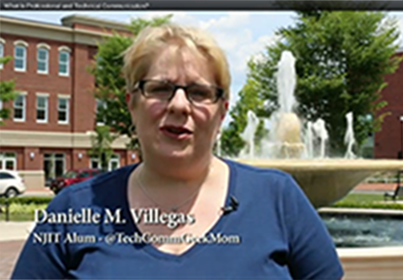
(MSPTC) program asked me if I would be willing to do a video about my experiences as an MSPTC student and graduate, and some of the opportunities the program has afforded me. Of course, I was honored that she asked me, and I said yes! So on several particularly hot days in late June and early July, a fellow graduate from the program who works for NJIT’s communications department came down to my hometown and filmed this video.

Yes, that’s really me in the flesh. Yes, those are my own words. I was just asked to talk about certain topics, and nothing is scripted at all (well, it’s scripted from my head, but nothing was memorized). I thought I was stiff during the filming, but my–I admit I’m rather animated! Just imagine what it’s like when I’m up doing a regular presentation! LOL

You can click on the image in this post (a still from the video) or you can click on this link: http://youtu.be/NN_nHOANR7k.

Or, if you’d like me to speak in person–contact me! (See the “About TechCommGeekMom” tab above.) Hey, if I can get some more speaking gigs, that would be good, wouldn’t it?

Let me know how I did in the video! 🙂

Posted in Uncategorized

Why Mobile, Gamification and Special Needs Are Made for Each Other

As the school year has started for some and will start during the following few weeks ahead, my thoughts start thinking about conventional learning and how educational technology has changed so rapidly, especially in the last few years.

Now, before I continue, I just want to preface this by saying that much of what I will be writing below isn’t based on any scientific study, but rather it’s based on my own experiences and knowledge.

I recently saw this article, and even retweeted it:

Autistic Student Feels Reinspired by Online Learning

I was so glad to see an article like this. We are constantly shown articles or videos about students who are much lower functioning than this kid, who are breaking through the communication wall through various apps on iPad. But I find that higher functioning autistic kids have a much harder time as the gap is much narrower, so it’s hard to define where the fine line between effective communication and ineffective communication is.  As a result, these kids fall through the cracks of the system. Seeing that the young man in this article found a solution through online studies is fantastic, and I can relate to it a lot.

I am sure that I’ve mentioned many times before that my son is autistic, but much like the young man in this article, he is very high functioning autistic. My son is so high functioning that the actual autism diagnosis eluded us until he was 9 years old, and that was after already going through several other diagnoses and still feeling that something wasn’t quite fitting right.  Through my son, while I have not gotten an official diagnosis, I’m pretty convinced that I am an Asperger’s Syndrome person myself; I have displayed so many of the same symptoms as my son, but I did not have the speech problems he had when he was younger (he’s fully language fluent now, due to early intervention and persistence). Even as a mother, I marvel at the various apps that are out there that could have helped my son when he was small, and I wish that we had access to it back when he was small.

My son is a smart boy. However, if something doesn’t interest him or doesn’t serve any meaningful purpose to him, then he’s unwilling to do the necessary schoolwork. As he’s gotten older, this has been problematic. He’s also a kid, and when it comes to mathematics, he doesn’t get the rote information down right away (like understanding his multiplication tables). But, show him how to do a mathematical function, and he can pick it up fairly quickly. He’s not always interested in reading, but he was reading when he was about 3, and when he reads something that interests him, he practically has the resource information memorized. He takes in videos like nobody’s business. Ask him anything about Super Sentai (the original Japanese Power Rangers), Kamen Rider, Power Rangers, Beyblades, Bakugan or Pokemon, and he can tell you everything about them.  He also has a fascination with the sciences, especially physics, so when the Higgs Boson was recently proven, I asked him if he had heard about it, and he said, “Yeah, what about it?” and he explained what it was, and didn’t know that it had actually be proven.  Keep in mind, the kid is only 11.

Yet, he struggles with school. It’s hard for him to focus, and sometimes he’s still processing things in his head when he’s paying attention in class. He can’t take notes to save his life, but he can learn from them.  School is a difficult chore for him, and it takes some creativity to engage him to learn. He’s definitely capable of learning, but he can’t always learn by conventional means. He has a very difficult time with writing skills as well, which has been a struggle since he was small.

I can relate to my son on so many levels academically. I think this is why I end up being the one to do homework with him most of the time–I know how to “translate” things in a way that he can understand. I also had that same combination of hyper-focus on some topics, and total distraction on other topics, and had a hard time with school as well, even though I did well for the most part. If I had half the tools and support he has now when I was a kid, I would’ve been valedictorian of my class, I bet, but instead, I had to fight my way through much of school to get decent grades.

So, when I read the article above, I could relate to it so much because of my son, but also because of my own online experiences getting my Master’s degree from NJIT. My degree was 100% online, and despite what anyone would think, it was a very social event, yet I could pace myself the way I wanted (well, within reason–I still had deadlines for assignments and such).  I want to say that the success in earning my degree and getting a straight “A” average was due to hard work and the quality of the program–which it was, but it was more. It was the delivery system. I’m very convinced that if I had done this coursework solely in a classroom environment, while I might have done well, I don’t think I would have done THIS well.  Being able to set up my own schoolwork routine, read at my own pace, respond to forum threads and work on assignments at my own pace were a huge part of it. I’ve found for years that social media and just being connected to the Internet is not only addictive for me, but essential for me. It’s how I’m able to socialize more effectively and learn more effectively as well.  For all those naysayers that say there’s no such thing as “learning styles,” I say, “Poppycock!” I am a living example of someone who needs to be taught more on a visual level than an audiological level; I have sensory issues but am simultaneously a sensory learner.  My son is the same way.

So what does this have to do with mobile learning and gamification? EVERYTHING! There seem to be more and more studies that “typical” learners learn as much or more with mobile options and gamification methods. Imagine what it can do for special needs learning! My son is a big of a gamer, and I know at his age I love the earliest electronic and digital games myself.  Even now, I’d much rather play an online game to learn than read my dry textbook. The trick for high-functioning special needs people like my son and I is that we–as I mentioned before–fall between the cracks; we don’t need things dumbed down for us, but we do need a different method to get the same information into our skulls, and everything is either over simplified and babyish (like some of the math games that he can play to get those multiplication facts into his head), or there isn’t something that is sophisticated enough that can achieve the same thing.

I envy my son, because e-learning is SO much more than it was when I was growing up. Heck, just having Internet access and email and social media is much more than what I had  when I went to school. Getting my Master’s degree was the first time I could use such resources, and given the right tools as these digital ones, I could fly (metaphorically speaking). I want to see my son fly as well, as I know he’s capable of it. I try to find lots of physics game apps for him on my iPad, which he zooms through with ease. I need to find some age appropriate math apps, writing apps, and other apps that can help him learn without him realizing he’s learning, or at least make it more enjoyable. I want him to feel successful in whatever he ends up doing, and I want him to feel that learning is a lifelong endeavor, and that he is capable of finding the resources he needs to accomplish what he wants. We are still figuring this out, but like I said, the world is his oyster, and he needs to learn how to access it all, and I think he’s already on his way since he found the Super Sentai on his own (and yes, he watches these Japanese Power Rangers episodes on YouTube, in Japanese, sometimes subtitled, sometimes not, but he doesn’t care–he picks up what all of it’s about anyway).

Being that my son is a big gamer, he enjoys and adapts to games well.  He was fortunate, this summer, that his summer school math teacher picked up on the idea of gamification, as every day my son and the other kids in his class would play a card/board game that would teach math skills. He enjoyed it very much, and there was a social skills aspect to it as well, which helped. Granted, it was not a video game or digital online game, but the principle is still the same–it was a game, and he was learning the skills he needed to learn.  So many online games can teach without one realizing it, and making learning so much more accessible.  Even the popular Angry Birds game–one of my son’s favorites–is actually a fantastic game that teaches physics and problem solving skills. I don’t say no to him playing Angry Birds on my iPad or iPhone.  He’s learning, at least, and developing skills that may help in the future as some sort of engineer.  Even as an adult, I can say that I would enjoy something more interactive online than something static or something that’s essentially a page-turner.

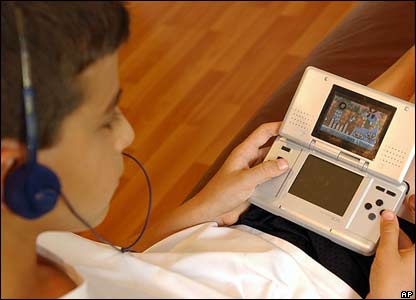
This is where mobile comes in. We all know the benefits of m-learning functionality, such as providing just essential information, having web capabilities to interact not only with others, but use tools like social media and researching on the web, and sharing resources is a big deal. Even the nature of m-learning is beneficial, because good m-learning design breaks things up in to small pieces than if it was done as a regular desktop course or classroom lesson. With m-learning, a child can record the class while attempting to take notes, and listen to it later while doing homework, rewinding parts of the lecture while rewriting or filling in missing information in notes.

I know for me, it was a big deal to be able to manipulate my studies to make them mobile. I would use the Microsoft OneNote app on my iPad to do initial drafts of homework assignments during my lunch hour, and then sync up my notes so that I could pull them onto my laptop later to clean them up more on my laptop at home. I could watch video or listen to a podcast on my iPad or iPhone, stop it and restart a section if I didn’t quite catch it–or even just stop so I could catch up writing notes first, then continue. You can’t do that so easily in a classroom. I could pace myself much better, and as a result, my retention was better because I could review details as needed.

This is really important for Aspies as they want to take in everything, and very often it hard to keep up because we are still deciphering and translating information given in our heads while the information keeps feeding. Sometimes our brains can’t process quite as quickly, so by the time we have a piece of information processed and we are ready for the next bit, instead of one new piece of information, then next five have happened. Keeping up and forcing oneself to keep up with the pace can be mentally grueling and exhausting. It’s not that we don’t have the mental capacity to understand the information, but rather that our internal processors are different. It’s like having last year’s processing chip in your computer instead of the latest and greatest. It’s not that the chip can’t handle it at all, but rather at a different pace. If you can gamify the information, then the information is learned on a subconscious level, and just like any video game, new skills are attained little by little as you proceed higher and higher in a game. It’s really THAT simple.

So, for you instructional designers, educational technologists and technical communicators that don’t think that gamification or m-learning makes that much of a difference–IT DOES. Believe me! Keep m-learning and gamification in mind. It not only lends itself well to typical learners, but can go miles farther for those with special needs.