Posted in Uncategorized

So, where do we go from here?

In the aftermath of STC closing, there’s just a lot going on. As the Board VP who is still involved in closing activities, I’ve seen a range of emotions from those who’ve claimed a connection with STC. Most are sad but understand that we had to do what we had to do, and showed appreciation for the organization over the years. Other have expressed things…differently. I have words for those people since they were not involved with the decision making, so I will save those for another day.

Instead, one of the biggest messages from this has been, “Without STC, where can I go for my professional development, networking, and community?” Well, if you do enough research, there are lots of different avenues you can take. Some focus broadly on tech comm topics, and others are more specialized. Either way, there’s something for everyone. Even in these early post-closing days, I’ve seen former members rally to form smaller groups (not affiliated with STC, mind you) to help a grassroots movement to fill in this gap.

Sara Feldman started a post on LinkedIn asking others about these alternatives, and with her permission, the list below is based on all the suggestions that she and others who contributed to her online conversation as potential alternatives to explore.

Please note that these are is listed in alphabetical order so as not to show any preferences or personal endorsements from me for any of these institutions. This is not all institutions, but rather many that either Sara’s LinkedIn post provided or some that I researched. Most descriptions are parsed or paraphrased from their websites. This is simply a partial list that you can use to start your exploration of tech comm professional options:

(Last updated: 5 May 2025)
Organization/ResourceTell me about this
ACES: The Society for EditingACES elevates editorial excellence and empower editors across industries through training, networking, and career opportunities. As an international alliance, they advocate for professionals in journalism, media, publishing, corporate communications, academia, and government.
American Institute of Graphic Arts/ AIGA, The Professional Association for DesignAs the profession’s oldest and largest professional membership organization for design—with more than 70 chapters and more than 15,000 members—we advance design as a professional craft, strategic advantage, and vital cultural force.
American Translators Association (ATA)ATA supports the issues affecting translators and interpreters and actively promotes the value of their services.
American Medical Writers Association (AMWA)AMWA’s mission is to promote excellence in medical communication and to provide educational resources in support of that goal.
Association for Business Communication (ABC)The Association for Business Communication (ABC) is an international, interdisciplinary organization committed to advancing business communication research, education, and practice.
Association of Independent Information Professionals (AIIP)AIIP is a global network of independent business owners running information-centric businesses.
Members offer expertise across a wide variety of industries, services and geographies.
Association of Proposal Management Professionals (APMP)The Association of Proposal Management Professionals’ mission is to be the trusted leader that serves a global community of bid and proposal development life cycle professionals.
Association for Talent Development (ATD)The Association for Talent Development (ATD) is a professional membership organization supporting those who develop the knowledge and skills of employees in organizations worldwide.
Association of Teachers of Technical Writing (ATTW)Members of ATTW work in graduate and undergraduate programs in technical communication, media, engineering, rhetoric, writing studies, and English, among other complementary research programs.
Australian Society for Technical Communication (ASTC)The Australian Society for Technical Communication (ASTC) promotes and supports people who design, write and edit technical and business information.
Button Conference Presented by Kristina Halverson of Brain Traffic, Button content design events and community resources help independent contributors and leads grow in their careers.
Canadian Association of Instructional DesignersThis organization supports professional Instructional Designers in Canada and abroad.
Center for Information-Development Management (CIDM)CIDM is a member organization that facilitates the sharing of information about current trends, best practices, and development within the industry, providing networking opportunities, host conferences, lead roundtable discussions, and publish newsletters.  Hosts of the ConVex conference.
Consortium for Service InnovationThe Consortium is a nonprofit think tank focused on customer engagement. Consortium Members created and continue to develop the widely-adopted Knowledge-Centered Support (KCS) and Intelligent Swarming methodologies.
Content Strategy AllianceOrganization for content strategists, UX writers, content designers and other content professionals. 
The Content Wrangler (TCW)TCW offers over 100 live free one-hour webinars for tech writers each year and maintains an archive of almost 800 recorded shows.
Council for Programs in Technical and Scientific Communication (CPTSC) CPTSC brings together administrators, faculty, researchers, and students to advance the study and teaching of technical, professional, and scientific communication.
Editorial Freelancers AssociationThe Editorial Freelancers Association is the largest and oldest U.S.-based professional association of editorial freelancers. Their members include editors, book coaches, writers, indexers, proofreaders, researchers, fact-checkers, marketing experts, graphic designers, translators, and more.
FireheadEurope’s market leader in finding, placing and training technical communicators. Strong US/ Canada ex-pat community.
Globalization and Localization Association (GALA)GALA serves and supports the global language services and technologies industry which comprises translation, interpreting, localization, and the technologies that support such activities.
IEEE Professional Communications Society (IEEE ProComm)IEEE ProComm supports professional, scientific, engineering, and technical communication, content development, information design, and usability, as well as their potential social impacts.
The Indexing Society of CanadaThis is a global community of like-minded people who enjoy the challenge of providing clear, concise, time-saving guides for readers and researchers.
Information Architect Institute ConferenceThe IA conference exists to promote discourse and learning about the intentional design of information environments. It is a gathering of practitioners from around the globe, who practice and teach Information Architecture and other design-related disciplines.
Institute for Performance and Learning (I4PL)Training, networking, and certification.
Institute of Scientific & Technical Communication (ISTC)The Institute of Scientific and Technical Communicators (ISTC) is the largest UK body representing information development professionals. 
International Association of Business Communicators (IABC)The International Association of Business Communicators (IABC) enables a global network of communicators working in diverse industries and disciplines to identify, share, and apply the world’s best communication practices.
The International Design Association (IDA)IDA is a professional organization dedicated to the design field. 
International Society for Design and Development in Education (ISDDE)The goals of the ISDDE are to improve the design and development process, build a design community, and increase their impact on educational practice.
Knowledge Management Global NetworkKnowledge Management Global Network (KMGN) is a not-for profit network of international KM communities and associations that endeavours to connect KM professionals and facilitate co-creation and sharing of KM assets and resources.
The Kinetic CouncilThe Kinetic Council’s mission is to unite and empower content, data, and semantics professionals through an industry-wide authoritative association. Within this new association, members will create meaningful connections, advance careers through world-class education and certification, and shape the future of these fields together.
Knowledge Management Institute (KMI)KMI provides knowledge management certification and training.
The LavaCon Content Strategy ConferenceVery popular conference where content professionals share best practices and lessons learned, network with peers, and build professional relationships.
The Learning and Development Community (TLDC)Networking and training member website.
 Learning GuildFocuses on elearning, but also instructional design, virtual training, emerging technology, and more.
National Communication Association (NCA)NCA is committed to transforming lives through communication.
Plain Language Association International (PLAIN)PLAIN is the international association for plain language professionals that promotes clear communication in any language.
Rhetoric Society of America (RSA)The Rhetoric Society of America is committed to public facing research, teaching, programming, commentary, training, and engagement in rhetorical studies to confront urgent concerns.
Sunshine State Scriveners Discord ServerFlorida-based tech comm group; made of of former STC members. (Not affiliated with STC.)
Support DrivenThe community dedicated to Customer Support as a career.
Tech Comm ConnectionsTech Comm community sessions on Feb 6 & 11 hosted by Comgenesis.
Tech Comm Group (Slack)Slack Community started by former STC members for networking.
Technical English Association of JapanTEAJ is a Japan-based organization dedicated to promoting clear and concise technical communication. We offer seminars and work opportunities for translators and technical writers who assist Japanese companies in creating effective technical documents in English. Contact us at y_nakayama@teaj.or.jp  .
Tekom Europetekom Europe is the largest professional association for technical communication in Europe whose interest is to promote the professional and business interests of all persons involved in technical communication.
User Experience Professionals Association (UXPA)User Experience Professionals Association (UXPA) International supports people who research, design, and evaluate the user experience (UX) of products and services.
Write the DocsWrite the Docs is a global community of people who care about documentation. We have a Slack community, conferences on 3 continents, and local meetups.
World Information Architecture AssociationWorld Information Architecture Association is dedicated to growing awareness of the discipline of information architecture while promoting social responsibility among practitioners.

While I think it might be a little while before I jump into a new “home” (I’m still dealing with closing up the old one), there are a lot of good suggestions here, and plenty more out there. Here’s wishing you good luck at wherever you land, and hopefully I will meet up with you through one or more of these in the future.


Posted in Uncategorized

What is UX Writing? | UX Booth

There’s a new job in town. Google’s looking. Amazon’s looking. Dropbox, Paypal…many of the big players in tech are now looking for User Experience Writers. This week, Kristina Bjoran explains how writing-focused user experience designers will be a critical part of the way we design for experiences from here on out.

Source: What is UX Writing? | UX Booth

I can’t remember where I found this or who originally posted this, but I thought this was an excellent article about UX writing. I’m starting to find that UX writing and UX content is starting to emerge as something that is greatly sought. I’m fortunate that I’ve had experience with doing this over the past few years. I agree with the author that often employers trying to find a UX writer by looking towards copywriters first, and then sometimes they look for technical writers. I think UX writers fall somewhere in between those two disciplines. They are still technical communicators, but it’s a slight niche of knowing how UX and content should work, and how user interface (UI) should work. Copywriters might understand how to use the punchy marketing language needed to incur action, but technical writers understand how to use plain language and the technicality of directing people on how to navigate digitally to allow the user to get to where they want to go.  So, really, in many respects, a UX writer is both a copywriter and a technical writer, with a little something extra built in.

What do you think? Is UX writing becoming its own discipline? What’s your experience with UX writing? Share your comments below.

–TechCommGeekMom

Posted in Uncategorized

Technical and social challenges of conversational design — uxdesign.cc – User Experience Design

I made my website conversational. Here is what I learned.

Source: Technical and social challenges of conversational design — uxdesign.cc – User Experience Design

Thanks to Madonnalisa Gonzales Chan for posting this on the Content Strategists’ group on Facebook.  This is an excellent article that starts to delve into the idea of how one would create UX content to interact with people.  As I’ve been working in UX creating some of this style of text (but definitely not anywhere close to this deep), I found this fascinating, and the journey that the author took in exploring this brought up points that I hadn’t thought of, as well as points I could relate to.

What do you think? Where do you see conversational design going as we start to write more content for help, IoT, and other content outputs? Put your comments below.

–TechCommGeekMom

Posted in Uncategorized

Where’s TechCommGeekMom? Good question…

wheres-waldo
You’d think that “Where’s TechCommGeekMom?” would be a variation of “Where’s Waldo?”. You might not be too far off…

Yikes. It’s been quite a while since I last wrote any entries. I apologize for that. I am keeping up with Facebook, Twitter, and LinkedIn (not Google+ so much), so people do know that I’m alive and well.

The last few months or so have been incredibly busy. Much of my summer has been making the long commute to the office and back almost every day. I’ve gotten a bit of a reprieve for August when I’ll be working from home most of the week, due to an arrangement I made with my director so that I can stay home part of the time while my son is home for the last part of summer break. I’m grateful that.

Despite commuting issues, working on the UX team I belong to can be stressful. I finally settled into the position, and only now I’m feeling okay about speaking up and asserting myself. Yes, I’m a closet introvert, despite my seemingly outgoing personality. We’ve had a lot of very tight deadlines lately, and have not been given ample time to create UX artifacts that completely do justice to a given project, but that’s the way it goes, unfortunately. I’m fortunate that the team I’m on is full of good people who are both total professionals and who support each other’s efforts.

For my part, as I’ve continued to adapt, there have been intense frustrations and tears shed, and a few tiny victories in between. Writing copy for UX design has been a challenge, but I have to say that I think I have a good knack for it. Sometimes my copy gets overruled, but sometimes I know I come up with something good. It’s not like it’s something like marketing or customer service-related content, or even help content, but debating the semantics of “edit” versus “modify” versus “update” when writing customer-facing instructional content is the kind of stuff that gets my brain to work at its best. The other day, I needed to change the text on a button, and the text had to be instructional and have a marketing slant at the same time. I asked the UX graphic designer the limit of how many characters I could use in that space. She said it had to be less than 31 characters–including spaces. The fewer characters there, the better. I got it down to 21 characters including spaces. Those are the kinds of challenges I like! So, work has been truly occupying a lot of my time and energy for the most part.

Even though I have been told that I’m doing a good job and I provide a fresh perspective on the content being created, I decided that this was not the job for me. I asked my manager not to renew my contract at the end of the month because it’s really not the kind of work I want to be doing. I gave it a try, but this kind of writing–not to sound conceited–was not what I went to grad school to do. I know I can contribute much more than what’s expected at this job. I think my abilities are more than labelling buttons and headers or writing two instructional lines at a time. My manager was understanding, fortunately, which I was glad about.  This means that I need to figure what my next move is.

I have also been continuing my part-time gig doing content management for my old job. While it doesn’t provide me with many hours, it does help me keep my foot in the door of the content strategy and management world. I also enjoy that job, so even if it’s just a few hours a week, it’s a good thing.

I’ve also taken on a volunteer position. I was elected to be the vice-president of the STC-Philadelphia Metro Chapter (STC-PMC). Of course, I don’t know what I was thinking. I wanted to help, and I was encouraged. Now, I’m trying to hustle and learn what the position is about while trying to get the job done! The VP of the STC-PMC, in addition to supporting the chapter president, also acts as the program manager for the chapter. So, I’m trying to figure out how to coordinate several meetings for the upcoming program year. While my chapter president is very supportive, and we work well together, it’s a little overwhelming. What was I thinking? I’m trying to get as much done now during the summer so it won’t be as high pressure in the fall, provided everything is in place at that point. I’m also co-chair of the CONDUIT conference, so I’m trying to get some things started with that as well. I want to do well as VP at this point, because it’s really my first crack at any kind of leadership position I’ve had in almost two decades, and I need to feel good about something related in my career.

I’m in a weird position in my career right now.  I’m not so young anymore, and I have experience. I know that I do good work, I can make intelligent decisions, and that when given the change, people value what I have to contribute.

BUT…when looking for appropriate work, I’m either inexperienced (not enough years doing something), not enough background (content marketers=a marketer who understands content, not a content strategist who has some understanding of marketing, for example), or I don’t know the right software. I’ve often seen rare positions come up that were totally appropriate, and then find that they were an hour and half (or more) commute away one-way, or they didn’t pay enough, or both. I’m starting to lose confidence in my abilities because I’m losing chances to gain experiences. Or, the only way to gain experiences is to take steps backwards. I’ve already stepped backwards several times in the past year, and I’m fearful of falling off the cliff’s edge now.  At the same time, I’m trying to figure out what direction I should try next. Or better yet, I’m trying to figure out what direction I should go in that aligns better with my interests, not what the “market” says I should do.

The irony is when I attended TC Camp this past weekend, I felt validated in my abilities. I could learn from others who were more experienced than I am, yet I found that I could speak competently about the subjects discussed at hand. I didn’t sound like an idiot, and people found what I said helpful. One friend/attendee even asked me if she could pick my brain about how to approach a project she had. I never had that happen before, but I was happy to offer the approach I had used and suggested some tools she might want to try. For a day, I felt like a real technical communicator again!

I know my weaknesses. I’m not MBA material, I don’t know medical, pharma, or financial terminology, and I’m not a person with web development in my background beyond HTML and being able to manipulate Javascript, PHP or other coding languages a bit. Yet, somehow, where I live, to get a job as a tech writer, you must have a strong background in one or more of these things. They want SMEs who can write, not writers who can learn to be SMEs. Nobody wants to train. You are either an entry-level, right out of college kid who has some of this know-how and is willing to be paid peanuts, or you’re a person who’s been doing more complicated jobs for about a decade or so.  There doesn’t seem to be much for something in-between, or opportunities for people who have raw skills and the foundational experience that would lend well to different positions. Nobody–or at least very few–want to train a potential employee anymore. And thus lies the rub of my frustrations these days.

I’m trying to figure out whether I need to get more training on my own. Even if I did pursue that, I really don’t know what direction to go in anymore. I was told to learn DITA, but guess what? There are no DITA jobs near me, so that would be a little pointless. UX jobs? Well, I don’t have enough design background to apply for something. I have several interests within the tech comm world, but none of it seems to align with positions available in my area. It seems like instead of “one step forward, two steps back”, I keep falling farther and farther behind, and my prospects get weaker and weaker as I get older and all the skills I gained in grad school and other former positions become a faint memory.

Where in the World is Carmen Sandiego
Hopefully the rest of my life this year will not be something similar to “Where in the World in Carmen Sandiego?” Hopefully, you’ll find me here!

The STC-PMC VP role alleviates some of that frustration, even though it has its own issues. At least within the STC-PMC, I have a great amount of support, and enough space to learn, fail, and pick myself up again without dire consequences.  I feel more confident in that role. I can’t say the same for the rest of my career at the moment. While I don’t have a direction, I knew that staying longer where I have been lately was not good move for me. I want and need to be able to do more, and I am in a spot where financially I can take the break, and I have the support of my family and my tech comm community behind me while I figure out my next steps forward.

So, that’s where I’m at. TechCommGeekMom might still be looking for her place in the tech comm world, but I’m hoping that with a little luck, maybe what I’m looking for will be found. I’m hoping that in coming months, I’ll be able to bolster this blog again, and you’ll see some more content coming through.

But I’m still here!

Posted in Uncategorized

Being paid to write–for the first time!

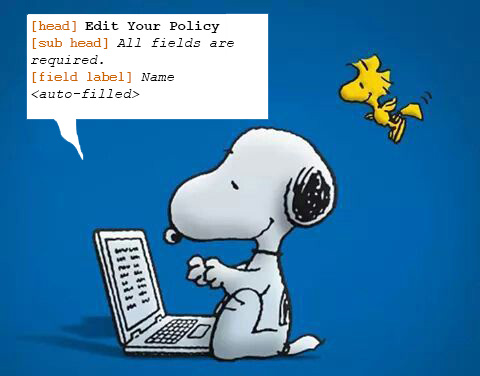
Snoopy and Woodstock are writing the copy deck. It's a lot of work, but they are learning a lot!
Snoopy and Woodstock are writing the copy deck. It’s a lot of work, but they are learning a lot!

While I’ve spent years blogging and talking about being a technical writer, I haven’t actually been a technical writer except for doing projects in grad school–until now.

In the last two months, I’ve started a position as a content/technical writer for the UX/UI Design team of a large company, working on their global self-service portal. The position was available shortly after my last contract gig ended prematurely. While I’m not enjoying the extra long commute, and I took a pay cut to remain employed, I have to say that I am learning a lot while applying a lot of the “theory” that I know.

Up until now, I’ve been more caught up in content strategy, creating the UX of websites, and making suggestions about how to utilize content rather than actually writing it. This new position has taken me in a completely new direction that I’m sure most of my readers are already familiar with, but it’s new territory for me–at least in applying what I know about it. There’s an outside vendor who creates the business requirements, who passes those along to the UX and graphic designers to create wireframes and the UI designs, and then another writer and I create the copy decks based on those.  The project we’re all working on is the Company’s global self-service product (the image above is a hint of where I’m working), so there are a lot of details to consider.

My time as a knowledge management specialist in my last position was not as pleasant as I would have liked simply because I wasn’t doing that much actually related to knowledge management at all.  I was brought in to do one thing, and ended up doing something completely different and something that didn’t play up to my strengths.

This is the complete opposite of that.  While I will contend that I’m still very much in the learning curve of understanding my responsibilities and their expectations, the environment is much more in line with what I need to be around. Our manager has been talking about the idea of creating consistency throughout the product’s content. I’ve suggested looking into single-sourcing tools that might help us with that, but they don’t know how to wrap their heads around that idea yet. Even so, the other writer of the team and I have had some lively discussions about it.  I appreciate having a voice when asking questions of why a UX designer went in a certain direction, and I get a vote when the team discusses how customers think and how they should direct the customers on the site.  While I’m still learning by doing when creating new copy and editing old copy, I feel like I’ve been well-trained for this at grad school as well as from various presentations I’ve attended over the years at conferences.  I’ve even had the chance to share my localization/globalization insights to the company in the hopes that we can be sensitive to better copy when the product is ready for translation.

So, this is certainly a new adventure. It’s not the direction that I thought I’d be going into, but I’ve definitely been learning a lot over the last couple of weeks, and things are just getting started.  We’ll see how this progresses in the coming weeks. I finished my first copy deck last week, and I was told that I did a pretty good job for a first-timer. However the second, much bigger and more complicated deck I just completed with little guidance was ripped to shreds after spending a month writing it, with only a day and a half to fix everything. Needless to say, I was unhappy about that (spent the afternoon in tears), and it made me put all my education and self-confidence as a technical writer into question. As I said above, I know they need better processes that probably involve a way to write single-sourcing information, but the problem is that it’s not the kind of information that would eventually be published as a website, ePub or other documentation. It’s complicated to explain, but it’s a bad process. All the copy is done in Word. Need I say more?

My husband has said that there’s one thing that’s been for sure during this last year or so–I can’t say that as a contractor that I haven’t had an opportunity to learn new things, and to have very different experiences in the process. He’s certainly right about that! This latest position is one that I think will provide me with better insights into writing and developing content, and how it integrates best for a good user experience for the customer. I’m used to receiving content written by others, so it’s a great chance for me to be on the “other side” of the equation. It’ll also provide me with insight as to whether this is the kind of job for me. (I’m thinking right now that I like content strategy and management better.)

Where will this take me next? Good question–I don’t know.  But there’s still a lot to learn, and it definitely contributes to my skills as a technical communicator.

What was your first writing gig like? Share your experience in the comments below!