
Posted in Uncategorized

Uhura and Translation Software–Still not there yet

star-trek-uhura NNMy husband’s first language is Spanish. As a result, naturally, most of his relatives speak Spanish exclusively. I, however, do not speak Spanish.  I took two beginner courses, but I know little Spanish in comparison.  I have had more French in my background, and with the similarities between French and Spanish, I can sometimes understand enough written Spanish to get by.

Recently, my husband’s aunt was celebrating her birthday, and I wanted to send her a brief line or two on Facebook to acknowledge the day. She only speaks Spanish–or at least her English is very outdated, so I knew it’d be better to write in Spanish. I used the Bing Translator to help me write a note to our “Tia”, and I had enough of a Spanish background to know it was correct. I think.

I started thinking about how translation is advancing with technological changes, and how writing for translation in tech comm is becoming increasingly important. It occurred to me that we are certainly not at the stage that we can each have a Lieutenant Uhura, the communications officer from Star Trek, at our disposal.  Even in the 23rd century, she still had to learn several languages and would depend on her software–and even the occasional book–to help her get through a difficult translation. This scene from the film, Star Trek VI, came to mind when I thought about it:

So, things aren’t perfect even when we do have universal translators.

Back in the present,  two people who have spoken about translation in tech comm came to mind. The first person I thought of was one of my favorite content management speakers, Val Swisher. Val and her company, Content Rules, specialize in translation and how it fits into using content management wisely. I always love hearing her presentations about the importance of translation editing, and writing content for reuse that can easily be used for translation.  One of the examples that Val uses often is a scenario involving a pet care website. In curating content, one author may use the word, “pooch,” another might use, “puppy,” and yet another might use the term, “canine.” All are different terms to describe a dog, but that doesn’t mean that translation software–or even a human translator–necessarily understands the differences. The same occurs with expressions. There are several expressions or slang that can be used in English that don’t have an equivalent translation in another language, and vice versa. Heck, sometimes slang used between different dialects of English alone need translation!  Since translation is often lacking for many parts of the world for things as simple as instructions on how to use everyday, life-saving products, I know Val is very involved with a volunteer group called, Translators Without Borders, for this very reason–to help smooth out that process of getting technical communication out to ALL parts of the world, especially in areas that actually might need it more than one would think.

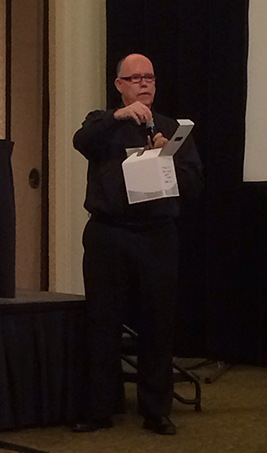
The other person that came to mind was Ray Gallon. On a panel at the Adobe Day during the 2013 STC Summit, Ray stated very clearly that as technical communicators, we should all know at least two languages other than our own, as it lends to our global credibility.  Tying it into what Val has talked about, his statement made sense.  Over the years, I have studied five languages other than English, although I’ve mastered none of them. I got up to an intermediate to advanced level in one language (French), but I don’t remember as much as I should. And as mentioned, my Spanish hasn’t been that good despite two separate years of classroom Spanish and 17 years of hearing it from my husband and his family. Nonetheless, learning another language–or several other languages, for that matter–can help an English-speaking writer understand how other languages are structured. During my freshman year of undergraduate school, my roommate and I were taking 300-level classes in foreign languages; she was taking Spanish while I was taking French. When each of us had essay assignments, we’d consult each other, and we actually would have some fun figuring out how to change our wording in English to fit the language architecture of the respective languages we were studying.  Even now, while some of my in-laws do speak English, it’s not strong, so I find I have to restructure my sentences in such a way that they can translate or understand the English better.  It truly helps to put translation into perspective. 

Uhura can't translate as well as C3-PO and doesn't have the gift of the TARDIS to help her, but she's definitely the epitome of translation and localization to us in the present.
Uhura can’t translate as well as C3-PO and doesn’t have the gift of the TARDIS to help her, but she’s definitely the epitome of translation and localization to us in the present.

So, imagine poor Uhura. She’s no C3-PO who can translate a million languages or so. Nor does she have the gift of the TARDIS to do her translating for her. Uhura probably had to learn not only how to use universal translation hardware and software for all the human languages, but alien languages as well. So, in that respect, I’m sure that Uhura took Ray Gallon’s advice to make her life easier and allow her to stand out.

I recommend that you also read the following post that I discovered while doing a little research myself, as it covers almost the same topic here from another perspective. It’s very good.

Star Trek VI: will computers ever emulate the charm of human language learners?

Having an understanding about localization and globalization in language will help all of us be better technical communicators.  Translation software is getting better, but it’s not flawless. I know enough of the languages I have learned to know when a translation is wrong, which can often be the case as well. We live in a time that we may see something close to a true universal translator available, but in the meantime, we need to be more aware of how we write for a global audience.

How do you approach your audience? Do you write for a single language or for a global audience–or for that matter, a universal audience? I know I’m not perfect when it comes to writing this blog for a global audience, but I do try when I think about it.

(Val and Ray, please feel free to chime in or correct anything here in the comments!)

Feel free to add any insights to the comments below. I’m definitely curious about how technical communicators approach this subject in their work on a daily or frequent basis.

Posted in Uncategorized

You’ve got what it takes in Tech Comm? Here’s your chance to PROVE IT!

doctormadeofawesomeCome on, admit it–you know you are good.  You know that deep down, you are one of the best in the tech comm business doing what you do.  Perhaps your co-workers and your manager know it, or your clients know it, but does anyone else?

Here’s an opportunity to show the rest of the world–especially your peers in the field–that you have what it takes to be one of the best technical communicators out there.

The STC New York Metro, Philadelphia (my chapter!) and Houston chapters –three outstanding award-winning chapters–have combined forces to bring you one of the best Regional TechComm Competitions available–and you don’t have to be a member of any of these chapters to submit an entry!

RegionalComp_horz_small_506x170
Click on this logo for more information!

You have to hurry, though, as all entries should arrive by 3:00 PM ET on October 17, 2013!

Now, you may be asking the following questions…

Why should I enter?

  • Winners receive awards and tangible recognition of achievement from the STC , which celebrated its 60th anniversary this year
  • Receive detailed evaluations from judges in the technical communications field; this objective peer evaluation supports continuous improvement
  • Validate your methods and earn visibility

Who can enter and what can be entered?

Anyone (student or professional) who produces technical communication, training material, or content for the web and other devices can enter. Membership in the STC is not a requirement. You may submit an entry as a team, an individual or on behalf of a colleague.

Enter your best work in the following categories:

  • Instructional Materials
  • Informational Materials
  • Promotional Materials
  • User Support Materials

Entries are subject to the rules that are defined in the STC General Information and Competition Rules.

The STC offers two levels of competition:

  • Local and regional
  • International

Regional competition entries that earn Excellence or Distinguished Technical Communication awards qualify for the STC International Summit Awards competition.

Sounds good! How to I submit my work?
The STC strongly encourages all entrants to submit the online version of their content or send URLs because:

  • Uploading online entries is faster and cheaper for entrants
  • There is less risk of damage to entries if sent online
  • Distribution of entries to Judges can be done quicker and at lower costs

Whenever possible, send the URL or the online version of your content. Instructions will be given on sending entries via GoogleDrive or FTP.

Okay, I want to do this! I’ve got what it takes! I’m ready to submit, and just need more details on the rules, entry fees, and all that’s involved with this competition, because I want to get feedback from top technical communicators from around the country!

Find all the details you need at the STC-NYC Metro Chapter’s Competition website, found at:
https://sites.google.com/site/stcnychapter/home/competitions/competition-entries

This is a great opportunity, so don’t miss it!

GOOD LUCK!

Posted in Uncategorized

Everything’s Coming Up Roses! : Why I’ll be going to Adobe Day at Lavacon 2013

Ethel Merman can't wait to go to Adobe Day at Lavacon 2013--and she's been gone almost 30 years!
Ethel Merman can’t wait to go to Adobe Day at Lavacon 2013–and she’s been gone almost 30 years!

A little more than a month from this writing, Adobe will be hosting an Adobe Day event at the 2013 LavaCon Conference on Social Media and Content Strategies. It will feel a little sentimental for me, because I felt like I had come into my own when attending the same event last year. I remember my excitement at hearing all the speakers and learning so much information from them as a newly-minted technical communicator. All the information that I soaked in during last year’s Lavacon Adobe Day was put to good use, as I was able to use the information when speaking at interviews when I was job searching. I’m confident that the information I learned at the event helped me get the job I have right now.

Now, I’m excited that Adobe is bringing the event back to Lavacon this year.  I think I’m just as excited as last year, to be honest! Having now attended two Adobe Day events (the other being the one at the 2013 STC Summit), I know I’m in for a great time.

AdobeDayLavacon2013AdAdobe has adopted a theme around the location of the Lavacon Adobe Day, namely around Portland, Oregon’s nickname of “The City of Roses.”  I got to thinking about this, and it seems totally appropriate.  If you think about it, technical communicators are the gardeners and landscapers of content and technical communication. We need to sow and care for our documentation as if they are our gardens and plants.  I know that I grow with each event with my own knowledge, and that’s why I like attending them.

And how is it that we describe growing roses? I believe the expression is that roses are “cultivated”, which implies to me that they aren’t just grown, but they are carefully tended to, bad stuff weeded out, and they are pruned until they are just right, much like technical communication should be.  If these steps are done correctly, diligently, and thoughtfully, rose plants should bloom in full.  The same applies to our documentation–our gardens! The speakers at Adobe Day will be helping us learn the tools and methods we need to make our “gardens” grow!

I’ve seen many of the speakers listed for the event before, speaking about different topics. They always have fantastic insights. I’m also looking forward to seeing some other presenters that I haven’t heard from before.  The great thing about Adobe Day events is that isn’t never the same thing twice.  Topics change and shift with the times, and the talks reflect of that reality.  World-class experts helping us all learn how to make our “gardens” grow on a global scale? Priceless.  The fact that the event is FREE and that it’s not a big info-mercial for Adobe is an added bonus. Adobe makes a very concerted effort to make sure that the event is topic-centric, not software endorsement-centric.  Their goal is to help technical communicators grow in knowledge, and the thought leadership they gather for each of these events are top notch.  Who wouldn’t want to go to something like that?

As I said earlier, I feel that I grow each time that I attend an Adobe Day event.  I’ve already seen how it has helped open my mind, and that knowledge has given me a boost both in job interviews and in the workplace.  I bring back the best ideas to help me not only grow my own career, but to also help the company I work for grow with the times as well.  The last thing any company needs is to be in the weeds, and these talks definitely help with the weeding process of what best practices are to be used. The best ideas are cultivated and presented to us!

So, if you are going to Lavacon this year, or if you are going to be in the Portland, Oregon area on the morning of October 20th, I strongly encourage you to attend this great event. I’ll definitely be there in full force, and I’ll be covering the event live through my Twitter feed as well.

If you do decide to go, be sure to register at the link below, so they know you are coming. They say there’s no such thing as a free lunch, but that’s included in the event, too, so sign up here:
http://adobedayatlavacon2013.campaignsandevents.com/

See you there!

Posted in Uncategorized

New iPhones! What does this mean for mobile?

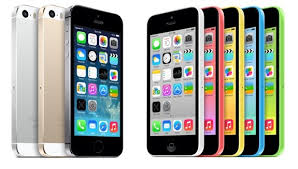
5C-5SI, along with the iOS faithful, waited with bated breath yesterday to hear all about the new iPhone 5C and the iPhone 5S. Considering that the last time I upgraded my phone was for the 4S, I was looking forward to seeing what my upgrade options (that were not Windows or Android-based) were.

I was excited for both models, as I could see these as upgrades. Part of the big upgrade for both will be iOS7, as it is promising to be a more streamlined user experience. While we’ve known about this new upgrade to the OS for a few months, now that it’s close to its release, the excitement can really build up.  There will be more accessibility to the Cloud, more multi-tasking features, easier ability to share data, and a better camera functionality, among other updates. Siri searches are even improved, as it draws more data from Wikipedia and social media now. Maps are improved. Just the OS update alone will make things better for mobile sharing of information. The iWork suite is going to be free, available on the Cloud as well. This is a big boost to creating and editing content, whether it be text, graphics, spreadsheets or video.  My first reaction to this was, “Gee, I spent some good money on getting all those apps a while ago. Do I get a refund now?” I’m sure I don’t, but thinking about this from an educational perspective, this is a big boost. I did use the cloud-based iWork to work on some items while it was available via beta, and I found it to be a great solution for me to work on various documents on both my iDevices and my laptop–and my laptop is Windows-based! I could access it via my iCloud account on my browser, and then work on it later on my iPad or iPhone. It’s a great boost, and I’m sure it’ll help some classroom situations save some money. 

But these new tools–because that’s what these new phones are, new tools–look awesome.  The iPhone 5C and iPhone 5S do open up some new doors to not only use this new OS to the maximum, but they offer new opportunities for mobile learning.

While the iPhone 5C has all the pretty colors now available, the new structure of using a polycarbonate plastic foundation is going to make a big difference. First of all, I’m sure some people are thinking, “Oh my gosh, that thing will crack so easily because it’s plastic, even if it has that silicone case around it.” If you don’t know much about polycarbonate plastics, then you’d need to learn, because you would be wrong. Polycarbonate plastics are often used for children’s eyeglasses because of their strength and rigidity. The same plastic is used for sports goggles and sports eyewear for the same reason. (Being a mom who has a child with glasses, and I own a pair of prescription swimming goggles, I know this.) This plastic is safe enough to protect one’s eyes, even in extreme conditions, as they don’t break easily nor do they scratch easily. So if it’s safe for your kids’ eyes, it’s probably going to be safe for your phone. It’s reinforced with the steel frame that doubles as an antenna, so I think one shouldn’t have any worries if the device is properly cared for, in general.

iphone5c-groupThe 5C will take advantage of all the new functionality of iOS7, which is good, but I think the biggest part of all of it will be its price point. The 16 GB model–it’s “smallest” storage model–will be US$99. For a brand new phone with this kind of functionality, that’s pretty cheap! And because of that price point, people who were buying Android and Windows phones as alternatives because of the price points of those other brands might now be able to afford an iPhone now.  iPhone is known for its customer services, its ease of use, and its ability to have access to more apps than imaginable, so this accessibility will allow it to become a more dominant player in the mobile phone game. I can imagine schools being more apt to buy some of these smartphones or encouraging or subsidizing these phones around the world, because the price point is half of what the “fancy” model is worth, but it still packs a punch.

The 5S device, however, has more bells and whistles. While it does have new colors to its line-up, it’s more about how powerful the device is. It’s really a true microcomputer in the palm of your hand. The 5S is the first smartphone to have a 64-bit processor. How long ago was it that we had 64-bit desktops and laptops? That’s amazing! The CPU performance is now twice as fast as the iPhone 5, including super faster graphics. There is also a second processor in the 5S known as the M7, which is a motion co-processor. It  works more accurately with the compass, accelerometer and gyroscope, so it’s going to spawn more use for health and fitness apps. Who ever thought you might use your iPhone for gym class? All this data can help assess the user’s surroundings more. Imagine using those features for a science class or history class?  The 5S also has an upgraded camera called the iSight camera with a dual-LCD flash with better sensors. In combination with the iOS7 software, it will allow for more accurate photography. There is also a slow-motion video feature and a burst mode on the camera (taking 10 frames per second on the shutter).  The camera alone is pretty cool!

5SThe other big feature is the TouchID, which is a fingerprint scanner on the home button. It’s done for security purposes, but I could see this taken to a higher level, in time, for personalization for access. You know how one can use separate user names and passwords to access a shared device? The TouchID uses a fingerprint to identify a person, and multiple fingerprints can be approved and saved. What if that was used for personalized learning? So, one student would swipe his/her fingerprint, and only certain apps or information would appear. Another student would do the same, and different apps or information would appear. This could work beyond security, and again, I see this as something that could be a money saver for schools. A device could be numbered, and Bobby and Susie could share Device #8 of 10 in a classroom during different periods, and yet have access to different information. The software might not be quite there yet, but that might be the next step, and it’s a feature that could be on future iPads as well.

I think these are great innovations moving forward with both phones.

However, I did see commentary on some social media outlets by some that they were disappointed by the new phones, stating that the new phones were not “innovative” enough. RJ Jacquez was definitely very vocal on his Facebook page, stating, “Absolutely NOTHING innovative from Apple at today’s event. Disappointing! Google is now clearly in control of the Mobile Revolution!”

But I think there were two comments to his Facebook posting in response that caught my eye that I think summarizes these upgrades well. (Yes, I asked their permission first before posting.)

Stefan Gentz, who is a well-known technical communications speaker, responded to a naysayer by replying,

Hey, they just introduced the first 64 bit smartphone in the world! It has a fingerprint sensor that opens up a whole new level of online shopping convenience and security, a new global LTE chip with a whopping 13 LTE bands (which is especially great for continent hoppers) and a superb camera with an aperture of ƒ/2.2 which is even dramatically better than my professional Sony digicam (3.5), even better than most professional DSLR and it can still take 10 pics/sec. And the new motion chip M7 knows when you’re walking, running, or driving. For example, Maps switches from driving to walking turn-by-turn navigation if, say, you park and continue on foot. Not to mention the new iOS7. And this all in a 7.6 mm, 112 g sexy, high-precision case.”

Stefan followed up by stating that all these features don’t add up to nothing!

Paulo Castro, another technical communicator, followed up on Stefan’s comment with the following:

Innovation is not the only thing that matters in a new product. Sometimes you just have to take what you have and make it better, stronger, faster, more reliable, etc. Stefan (above comment) makes a good point in terms of new features.As long as nobody else comes up with something significantly better in terms of new hardware, software, or OS, then Apple may still have a good standing in this competitive market.

I, too, wish we could see an eye-opening product everytime Apple announces something, but the truth I would prefer to have an extremely efficient device at a good price, with high reliability, security, and functionality, rather than a new gizmo with stuff I don’t even need.

I have to agree with both gentlemen. There’s a lot going on with the upgrade of the device itself, as Stefan said. Even Lance Ulanoff of Mashable said of the 5S, “Its new look combined with this more powerful phone and some of the landmark features –- iSight camera, Touch ID –- should make the iPhone 5S feel less like an upgrade and more like a reboot.” But I think Paulo makes a great point as well, which is that in the end, I, too, would prefer to have an extremely reliable and efficient device.  The 5S that I plan to buy will be the third iPhone that I’ve chosen to purchase. I could’ve easily upgraded to a Windows or Android-based phone a while ago, but I chose not to do so.  I would be a rich woman if I had a dollar for every time my son or my husband had to forego using their Android phones, and we relied on my iPhone for something. I’ve never had my phone crash, and I can only think of once when I had to reset the phone and start all over again. Once in about five years, and it was probably five years ago when I was getting adjusted to it? That’s pretty good.

When it comes to mobile devices, there’s no question that I favor iDevices. The new iPhones have a lot to offer, and I can’t wait to order mine!

PS – In case anybody cares to know, I would love to have Lance Ulanoff’s job, or something a lot like it.  Doing social media coverage and blogging about events like this and the tech scene would be a dream come true! 😉