I have a new monthly byline with the STC Notebook blog! Welcome to Villegas Views. Check out this latest entry about continuing education in tech comm.
Adobe Day at the 2013 STC Summit was really great. It took me a while to digest all my own notes and relive the moments promoting the rock stars of tech comm. But like all good music festivals, the “Coachella” of tech comm had to end, but with great memories of fantastic information that will stay with me for a long time. Hopefully you enjoyed this “magical mystery tour” as well!
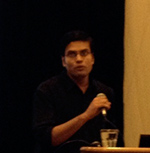
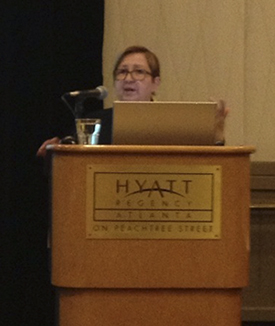
There were several people from Adobe that were truly instrumental in making this event a success, but I have to “give it up” for the two Masters of Ceremony of the event, Saibal Bhatacharjee and Maxwell Hoffmann.
Saibal Bhattacharjee
Maxwell Hoffmann
So many people know them from the Adobe TCS webinars, blogs, and other social media outlets. I know they’ve been two of my greatest supporters, so I want to thank them for inviting me to the event, and as always, making me feel welcome both during Adobe Day, as well as during the STC Summit.
If you missed my series for this Adobe Day event, here’s a recap, so you can relive the day yourself:
I hope you’ve enjoyed all the articles. If you have any questions or comments, please feel free to comment below!
The next time there is an Adobe Day near you, or if you have the opportunity to go to one, I strongly encourage you to go! I’ve now been to two of them, and both were different. It’s amazing to see how perspectives change on the “hot” issues of tech comm in a mere few months! I was glad to hear from leading experts on the pressing topics of the day. And I have to say, I’ve learned so much from both visits. I can honestly say, as well, that both provided information that were applicable to my job, even as a new technical communicator. Keeping up with current trends in technical communication is important, because technology is changing fast, and technical communicators need to keep up with not only the technology itself, but the needs that new technology presents. Adobe does a nice job of bringing the best thought leadership from around the globe to talk about these issues for free. How can you pass that up?
Thanks again, Adobe, for an amazing opportunity to attend this free event!
To continue with the tech comm rock star theme set forth by Adobe for Adobe Day, I thought carefully about who might represent Rahel Anne Bailie, whose talk was titled, “Content Strategy in a Content Economy– Is Your Content Prepared?” It took me a little while, but it finally came to me. Rahel is the Alanis Morrisette of tech comm. Both ladies are Canadian, and they both have a no-nonsense approach to their craft. Alanis Morrisette became famous with her breakout album, “Jagged Little Pill” not only because the music was good, but she broke her ideas down simply and didn’t mince words. Morrisette looked at the good, the bad, and the ugly, and worked on making sense of what was going on around her.
Rahel Anne Bailie The Alanis Morrisette of Tech Comm
Rahel does the same thing for content strategy. She breaks it down to a level to ensure that anyone who even begins to think about content understands what content is, and how it should be utilized at the most basic level. She tells it like it is, and why we need to employ it.
Rahel began her Adobe Day talk by talking about economic evolution. She started by pointing out that our economies have progressed from an agricultural economy, to an industrial economy, which in turn progressed to a service economy, then evolved to a knowledge-based economy, to an information economy, then to an attention economy, which has resulted in what we have today–a content economy.
Content includes the sub-sets of content that are location-based content and verified content. Location-based content includes geo-locational and geo-fenced information like Yelp, or information that is blocked from outside countries. Verified content deals with endorsed and social relevance; it has the user questioning, “How do I know that the content is true?” Facebook or TripAdvisor “likes” are an example of this. Cultural relevance applies to this as well. Topics such as Canadian versus American, demographics, and interests act as filters.
Rahel stressed that content has value! It’s recognized as a business asset and it deserves to be managed with as much care as other assets. The problem is that we don’t inventory content in most cases–it’s not like managing our finances or physical inventory at a plant. This means that this is a big necessity! In order for this to happen, content has to work well. Like design, it’s only noticed when there’s a problem with it.
Rahel shifted the conversation to explaining how sub-sets relate to content. She explained that new user experiences these days include smaller screens as the first entry point to content, such as m-commerce and m-banking. Tablets are also being used as entertainment devices. We also have to content with multi-screen and multi-dimensional content, which are viewed as
ancillary, such as television plus social media,
sequential, where users use a desktop and mobile device interchangeably, or
simultaneous, in which there is a collaboration requiring instant synchronization between devices.
One also has to think about market maturity, and must look at market differences, social network penetration, the mobile market and growth opportunities. Cross market content involves a single language for many markets. By offering native languages in other markets, cross-border commerce incurs content needs as well.
Using language to meet adaptive needs makes a difference! How do we meet this head-on? Rahel suggests a repeatable system that governs the management of content throughout the entire life cycle creates content strategy. The life cycle consists of continually analyzing content, collecting content, publishing content, and managing content. Rahel reminded us that a tactic is not a strategy, but rather a strategy is the analysis and the prescription. Content touch points occur throughout a customer’s journey, and can include multiple variables and outputs, but also need to include localization.
In a content economy, we need ALL the right factors at the right time using right media. We need to work towards an integrated content strategy.
As this is a topic that can go even deeper, Rahel recommended her book, http://TheContentStrategyBook.com , which talks more at length about content strategy.
As most of my own current work revolves around content strategy these days, I was really happy to listen to Rahel talk about the benefits and necessity of content strategy. It’s something that I try to explain and promote at my own job, because so much of it really involves analyzing and pre-planning the usefulness and necessity of content. Rahel’s talk brought that concept home to me even more, and helped me validate what I’ve been telling others. She reminded me that it doesn’t matter what the medium is–print, web, or some other digital means–but content needs to be clear, concise, and cogent, as my favorite professor used to tell me (who was also, coincidentally, Canadian). Rahel’s talk definitely set a positive tone on content strategy and its place in technical communications. I was glad that Adobe made sure to include her in Adobe Day, because content strategy isn’t going anywhere right now–it’s more important than ever!
Rahel, if I’ve misquoted you, or something that I wrote needs further clarification, or if you’d like to add anything to these notes, please feel free to let me (and the readers) know in the comments below!
I’ve noticed a disturbing trend that seems to be happening in the English language–at least in American English. Every time I heard this mistake, I cringe and wonder why it’s happening.
Evidently, people are not using adverbs correctly anymore. I keep hearing the “-ly” dropped from words in sentences often, and it makes me wonder why this is happening. Is it a lack of proper verbal education–not being taught to speak properly? Is it ignorance? Or is it part of an evolutionary process occurring in American English? (I haven’t noticed it when listening to British English on British television shows, which is why I think it might only be in the United States.)
Let me use some of the sentences that I’ve used above as examples, in which I’ll drop the “-ly” from the descriptor of the verb in the sentence.
“Evidently, people are not using adverbs correct anymore….Is it a lack of proper verbal education–not being taught to speak proper?”
See what I mean? This bothers me to no end, because I’m starting to see it in written English too, and, well…
IT’S NOT CORRECT!!
Perhaps I watch too much reality television that shows under-educated people who aren’t exactly the living examples of academia or professionalism. Even so, while I’ve noticed this trend in the past few years, it seems like it’s getting worse. Is this evidence of the decay of American education? Perhaps. I can tell you that being the “grammar police” of my household, this is always a concern to me. I want to make sure that my son speaks well and properly as he grows up and makes his way into the world.
While I was writing this, it occurred to me that there is another consideration with this phenomenon related to technical communication. This lack of correct adverb use can greatly affect translation and localization efforts. A huge issue that I’ve been hearing in tech comm is the need to write more clearly and in plain language to aid in better translation for localization. If adverbs are not used correctly, how does that translate? In some languages, it might not matter, since some languages don’t use adverbs the same way English does. But most languages that I’ve ever encountered (and I’ve studied four, but far from mastered any of them) always had adverbs. Adverbs are simply proper grammar! So if improper grammar was used in a document, how would that reflect on the writer and the establishment the writer represented?
I implore my fellow technical communicators to please advocate for the adverb! Please make sure that adverbs are used properly, both in written and spoken language. We need to make corrections to preserve this important part of speech. Save the adverb!
[WARNING: this is a long post, but jam-packed with information!]
Every industry has its own rock stars. Those are the people who have lived, spoken, and written about topics in a particular field. The information and perspective they provide are considered out of this world.
As technical communicators, we are fortunate that we have lots of tech comm rock stars among us. There are several events that happen over the course of a year that allow several of those rock stars to come to one place to dazzle us with their brilliance, and we are the better for it.
Among the ultimate organizers for such events is Adobe. For the 2013 STC Summit’s “Adobe Day,” they put together a lineup that would make any tech comm groupie squeal with joy to be able to hear some of the leading minds and pacesetters in technical communications. The best part is that, as always, the events are not product sales pitches, but truly a compilation of thought leadership.
The speakers included headliner Charles Corfield, the inventor and “father” of Framemaker, content strategist Rahel Anne Baillie, online learning educator John Daigle and content strategist Mark Lewis. I’ll be writing more about each of their talks soon.
For this post, I’m going to start with the panel discussion that was at the end of the event first. The panel discussion wrapped up Adobe Day well, and I’m using it first as I think it will to help set the tone for the next blog posts about the event.
Scott Abel, “The Content Wrangler” asks the panel a question.
Scott Abel, “The Content Wrangler,” served as our trusty moderator for the discussion titled, “The Changing Role of Technical Communication Professionals–Looking at the Decade Ahead.” This was a similar theme to the Lavacon Adobe Day, but with a different set of panelists, the attendees were sure to get a different perspective this time around.
L to R: Joe Welinske, Ray Gallon, Sarah O’Keefe, Bernard Aschwanden and Kevin Siegel
Scott started the panel out with the questions, “What do you think will be going on in technical communication in the next 10 years? What are the necessary things for tech comm going forward?”
Kevin Siegel replied first, saying that technical communicators need to learn how to write content so that content can be consumed quickly, as the average attention span of online consumers is about fifteen seconds, and the mobile is the most viable means of getting content out, so think mobile!
Bernard Aschwanden felt that networking was most important going forward. Face-to-face discussions–not social media discussions–with subject matter experts, your audience, and anyone else who is going to consume your content will help you learn what is required for your content. He stressed that ideas and tools are constantly changing, and technical communicators need to be able to adapt. Bernard continued by saying, “No one wants to read what you write.” He emphasized that readers read the output of tech writers because they have to, so tech writers should making information easier to find and easier to read.
Sarah O’Keefe emphasized that the biggest skill gap in technical communication is how content and information is relevant to business. Business needs content because of…why? The most important skills required in Sarah’s eyes bring relevance–like ROI (return on investment)–so technical communicators need to learn how to write business cases for tools and other resources to be able to deliver effective products and outputs.
Ray Gallon agreed with Sarah’s point of view, and also emphasized Bernard’s point about adaptability. Ray stressed that technical communicators have a unique view, so using that special view plus being adaptable will help technical communications go forward. He believes that software is driving content and making decisions, so we must create it on how software creates things today.
The second question that Scott posed asked, “What is the global impact with tech comm?”
Ray responded first by declaring that all technical communicators should have an understanding of at least three languages, as knowing three languages lends to their global credibility. Since I know that localization is a big emphasis these days in technical communications, Ray’s comment made a lot of sense to me.
Joe felt that in ten years, technical communicators will still be the same people, but traditional tech comm documentation will be less relevant, and QA (quality assurance testing) of documentation will be more prevalent. He emphasized that by testing the documentation, it allows us to truly understand what part of content is not being used, and what part really matters. He also agreed with Charles Corfield (more on his talk in a future post) that voice and multi-screen publishing will be important going forward. He stressed that access to multiple devices are needed as you write, especially to test usability and “Google-ability.” He felt that a technical publications department needed at least three smart phones and three tablets for testing content on commonly used mobile devices as emulators don’t work as well. Real devices, including the ones you don’t like, are needed to see how well your content works.
The next question posed was, “Have you had an ‘ah-hah’ moment with things going forward?”
Scott chimed in his own response, saying that he thinks looking at internationalized English is important going forward. He felt that having a controlled vocabulary and other English language standardization will allow content to be created in form of English that machines can understand.
Kevin thinks localization is highly important, backing this claim up with the fact that the most popular article in his company’s weekly newsletter is about localization. He felt that soon enough, we’ll be converting books to other languages more quickly and easily.
Bernard’s “ah-hah” moment was when he realized that people are the key, not products or tools. He felt that typing was dying, and that technology is leap-frogging. He talked about how younger people today commonly connect and communicate without face-to-face person contact, not caring about political correctness and preferring to connect with those who are like-minded. He said, “Teens have few barriers with race, gender or sexual orientation. We must get over our own barriers to address needs of future consumers.” He emphasized that people are needed in order to work collectively, we need to be able to connect effectively with people.
Sarah’s “ah-hah” realization involves the “rise of the machine” and the machine integration of content.
Ray concurred with Sarah, pointing to Google Glass as an example, declaring that Google Glass is the “caveman” version of the next generation of machines that technical communicators with encounter.
Joe’s “ah-hah” was understanding that mobile apps are not interested in being help documentation. Instead, mobile apps involve how to have product integrated in everyday use.
At this point, the floor was opened to attendees who had questions. The first audience question asked if technical communicators need to be the drivers of change and adaptability. Ray answered for the entire panel with a resounding, “YES!”
The next question asked if there was any empirical data to back up the statements made in this panel discussion. Sarah answered that that her responses were derived from the anecdotal data from client requests. Joe said he based his responses on the QA testing done he’s done over time, and stressed knowing one’s audience. Bernard agreed with both these responses.
The last question asked about relevance–is this a PR problem for technical communication, or is this more of a marketing communication issue? Scott piped in that marketing communication is meant to dazzles customers, but technical communication provides the real customer experience, so in essense, tech comm IS marketing! Customer service is central.
Ray felt that content is permeable and will get more so over time. Various departments will disappear due to unified content strategy; things will get blurred and content will get unified, so tech comm will be an integral part of teams.
Bernard reminded us that, “We must get to know the ‘language’ of our audience in order to stay relevant.” Scott reiterated that idea, stating that globalization is going to be really key going forward, which will affect ROI.
Joe had the last word, stressing that how we present what we do is going to make a difference!
As you can see, it was quite the lively conversation, and the ideas presented here were more concentrated on localization, technology and networking with people going forward. It’s amazing to me to hear a different perspective to the similar questions asked at the Lavacon Adobe Day panel just seven months ago! It does prove to me that adaptability and understanding the bottom line of what content is needed, and how to disseminate content with ever-changing technology is key going forward.
Thanks to all the panel participants for your insights! (Also thanks to Maxwell Hoffman, as I used both my notes and his notes on Twitter to recall this panel discussion.)
To any of the panel participants–if I misquoted or mis-paraphrased you, please feel free to comment below to correct me!
So, this was the closing act of our tech comm “Coachella?” Impressive! Stay tuned to learn more about the main acts of this gig!












 [WARNING: this is a long post, but jam-packed with information!]


 TechCommGeekMom
You must be logged in to post a comment.