Posted in Uncategorized

Villegas Views: Why Bother Learning More in Technical Communication?

See on Scoop.itM-learning, E-Learning, and Technical Communications

Danielle M. Villegas‘s insight:

I have a new monthly byline with the STC Notebook blog! Welcome to Villegas Views. Check out this latest entry about continuing education in tech comm.

–techcommgeekmom

See on notebook.stc.org

Posted in Uncategorized

If Tech Comm had its own Coachella, how would it be done?

coachella[WARNING: this is a long post, but jam-packed with information!]

Every industry has its own rock stars. Those are the people who have lived, spoken, and written about topics in a particular field. The information and perspective they provide are considered out of this world.

As technical communicators, we are fortunate that we have lots of tech comm rock stars among us.  There are several events that happen over the course of a year that allow several of those rock stars to come to one place to dazzle us with their brilliance, and we are the better for it.

Among the ultimate organizers for such events is Adobe. For the 2013 STC Summit’s “Adobe Day,” they put together a lineup that would make any tech comm groupie squeal with joy to be able to hear some of the leading minds and pacesetters in technical communications. The best part is that, as always, the events are not product sales pitches, but truly a compilation of thought leadership.

The speakers included headliner Charles Corfield, the inventor and “father” of Framemaker, content strategist Rahel Anne Baillie, online learning educator John Daigle and content strategist Mark Lewis. I’ll be writing more about each of their talks soon.

For this post, I’m going to start with the panel discussion that was at the end of the event first. The panel discussion wrapped up Adobe Day well,  and I’m using it first as I think it will to help set the tone for the next blog posts about the event.

ScottAbel
Scott Abel, “The Content Wrangler” asks the panel a question.

Scott Abel, “The Content Wrangler,” served as our trusty moderator for the discussion titled, “The Changing Role of Technical Communication Professionals–Looking at the Decade Ahead.” This was a similar theme to the Lavacon Adobe Day, but with a different set of panelists, the attendees were sure to get a different perspective this time around.

The panelists for this talk included:

panel
L to R: Joe Welinske, Ray Gallon, Sarah O’Keefe,
Bernard Aschwanden and Kevin Siegel

Scott started the panel out with the questions, “What do you think will be going on in technical communication in the next 10 years? What are the necessary things for tech comm going forward?”

Kevin Siegel replied first, saying that technical communicators need to learn how to write content so that content can be consumed quickly, as the average attention span of online consumers is about fifteen seconds, and the mobile is the most viable means of getting content out, so think mobile!

Bernard Aschwanden felt that networking was most important going forward. Face-to-face discussions–not social media discussions–with subject matter experts, your audience, and anyone else who is going to consume your content will help you learn what is required for your content. He stressed that ideas and tools are constantly changing, and technical communicators need to be able to adapt. Bernard continued by saying, “No one wants to read what you write.” He emphasized that readers read the output of tech writers because they have to, so tech writers should making information easier to find and easier to read.

Sarah O’Keefe emphasized that the biggest skill gap in technical communication is how content and information is relevant to business. Business needs content because of…why? The most important skills required in Sarah’s eyes bring relevance–like ROI (return on investment)–so technical communicators need to learn how to write business cases for tools and other resources to be able to deliver effective products and outputs.

Ray Gallon agreed with Sarah’s point of view, and also emphasized Bernard’s point about adaptability.  Ray stressed that technical communicators have a unique view, so using that special view plus being adaptable will help technical communications go forward. He believes that software is driving content and making decisions, so we must create it on how software creates things today.

The second question that Scott posed asked, “What is the global impact with tech comm?”

Ray responded first by declaring that all technical communicators should have an understanding of at least three languages, as knowing three languages lends to their global credibility.  Since I know that localization is a big emphasis these days in technical communications, Ray’s comment made a lot of sense to me.

Joe felt that in ten years, technical communicators will still be the same people, but traditional tech comm documentation will be less relevant, and QA (quality assurance testing) of documentation will be more prevalent. He emphasized that by testing the documentation, it allows us to truly understand what part of content is not being used, and what part really matters.  He also agreed with Charles Corfield (more on his talk in a future post) that voice and multi-screen publishing will be important going forward. He stressed that access to multiple devices are needed as you write, especially to test usability and “Google-ability.” He felt that a technical publications department needed at least three smart phones and three tablets for testing content on commonly used mobile devices as emulators don’t work as well. Real devices, including the ones you don’t like, are needed to see how well your content works.

The next question posed was, “Have you had an ‘ah-hah’ moment with things going forward?”

Scott chimed in his own response, saying that he thinks looking at internationalized English is important going forward. He felt that having a controlled vocabulary and other English language standardization will allow content to be created in form of English that machines can understand.

Kevin thinks localization is highly important, backing this claim up with the fact that the most popular article in his company’s weekly newsletter is about localization. He felt that soon enough, we’ll be converting books to other languages more quickly and easily.

Bernard’s “ah-hah” moment was when he realized that people are the key, not products or tools. He felt that typing was dying, and that technology is leap-frogging. He talked about how younger people today commonly connect and communicate without face-to-face person contact, not caring about political correctness and preferring to connect with those who are like-minded. He said, “Teens have few barriers with race, gender or sexual orientation. We must get over our own barriers to address needs of future consumers.” He emphasized that people are needed in order to work collectively, we need to be able to connect effectively with people.

Sarah’s “ah-hah” realization involves the “rise of the machine” and the machine integration of content.

Ray concurred with Sarah, pointing to Google Glass as an example, declaring that Google Glass is the “caveman” version of the next generation of machines that technical communicators with encounter.

Joe’s “ah-hah” was understanding that mobile apps are not interested in being help documentation. Instead, mobile apps involve how to have product integrated in everyday use.

At this point, the floor was opened to attendees who had questions. The first audience question asked if technical communicators need to be the drivers of change and adaptability. Ray answered for the entire panel with a resounding, “YES!”

The next question asked if there was any empirical data to back up the statements made in this panel discussion. Sarah answered that that her responses were derived from the anecdotal data from client requests. Joe said he based his responses on the QA testing done  he’s done over time, and stressed knowing one’s audience. Bernard agreed with both these responses.

The last question asked about relevance–is this a PR problem for technical communication, or is this more of a marketing communication issue? Scott piped in that marketing communication is meant to dazzles customers, but technical communication provides the real customer experience, so in essense, tech comm IS marketing!  Customer service is central.

Ray felt that content is permeable and will get more so over time. Various departments will disappear due to unified content strategy; things will get blurred and content will get unified, so tech comm will be an integral part of teams.

Bernard reminded us that, “We must get to know the ‘language’ of our audience in order to stay relevant.” Scott reiterated that idea, stating that globalization is going to be really key going forward, which will affect ROI.

Joe had the last word, stressing that how we present what we do is going to make a difference!

As you can see, it was quite the lively conversation, and the ideas presented here were more concentrated on localization, technology and networking with people going forward. It’s amazing to me to hear a different perspective to the similar questions asked at the Lavacon Adobe Day panel just seven months ago! It does prove to me that adaptability and understanding the bottom line of what content is needed, and how to disseminate content with ever-changing technology is key going forward.

Thanks to all the panel participants for your insights! (Also thanks to Maxwell Hoffman, as I used both my notes and his notes on Twitter to recall this panel discussion.)

To any of the panel participants–if I misquoted or mis-paraphrased you, please feel free to comment below to correct me!

So, this was the closing act of our tech comm “Coachella?” Impressive! Stay tuned to learn more about the main acts of this gig!

Posted in Uncategorized

A TechCommGeekMom Milestone: A baby blog is now a toddler

WOW!

10KCelebration_041913

I think my little blog just grew up a bit. I not only reached the 10,000 all-time hits mark, but even passed it. For a niche blog that’s 13.5 months old, I think that’s pretty amazing! I’m a proud TechCommGeekMom!

Thank you to every person who’s a regular reader, who just popped in once in a while, or who came only once for a visit. 10,000 all-time hits is a lot! Now, I know of blogs that have definitely had more traffic than me, mostly because they are much more hyper-focused on a particular segment of technical communications, like everything you want to know about a particular type of software, everything you want to know about a particular strategy, or else they’ve been around for a long time, so they’ve built up a following after a while. I do not begrudge these people, as they are my inspiration, and in some ways, they have contributed to this blog too through curated content now and then. TechCommGeekMom wants to be like those blogs as it grows up!

I trust that you enjoy what you read, and that you keep coming back for more. I’d like to think that the variety presented here, mixed with my own eccentric flair, brings about a lot of different perspectives of what technical communications is and what it can be. As I’ve said in the past, this blog started out very small, as a grad school project to build a community via social media, and I chose to work on building my tech comm/e-learning/m-learning community. I’m guessing that perhaps–just perhaps–I may have achieved my goal of creating a TechCommGeekMom community, and yet I hope the family will continue to grow. If you have any suggestions or ideas of things you’d like to see here, or if you’d like to contribute a guest post, please let me know!

Many thanks from the bottom of my heart for helping me reach this milestone! This blog is a labor of love, and it has opened so many doors for me, which I hope continue to open! I truly appreciate the support!

Posted in Uncategorized

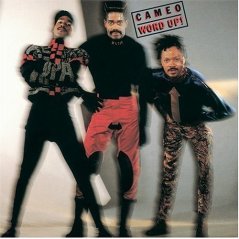
Word Up! ain’t just a Cameo song: A TechCommGeekMom book review

Cameo-Word_Up!Being that I came of age in the late 1980s, my immediate thought when I hear the words, “Word Up!” is the Cameo song playing with all its funkalicious glory.  But now, “Word Up!” has a new meaning for me as well.

I’ve just completed reading an advanced copy of the book, Word Up!: How to Write Powerful Sentences and Paragraphs (And Everything You Build From Them) by Marcia Riefer Johnston. Marcia and I met back at the Adobe Day event at Lavacon last October, and since then we’ve bonded over several interests, including our love of writing. I had first heard that Marcia was in the process of writing this book during the Adobe Day event, so when she asked me to read and possibly review the book, I was thrilled that she considered me as someone who could provide a constructive critique. When she sent me the copy, she stipulated, “[Please write] any kind of review you feel inspired to write: short, long, thumbs down, thumbs up. Or write nothing. No expectations, no strings.”

WordUp-cover-AFTEROkay, Marcia, I’m going to take you on your word about that!

So, I prepared to truly dig in to see if I could pick this book apart, and to find reasons why someone should read this book and have it in his or her library of writing resources.

Unlike most readers, I do have the advantage of knowing the author, so I found myself reading the book in her voice. Even if I hadn’t heard Marcia’s voice in my head, the casual, jovial tone and language she used throughout the book sounded very natural to me. Someone who has never met Marcia will enjoy this book very much as well, and would read it the same way I did. I enjoy her casual approach to this formal subject, and her sense of humor was infused into each chapter!

Marcia wrote in her chapter titled, “Mastering the Art of Knowing Your Audience”,

“…I find it satisfying to write for a reader whom I can imagine fully and accurately. Writing for someone I know–someone real or imagined, someone just like me in many ways or in few–is like making a gift for a friend. While I’m working on it, whatever it is, I confidently imagine the recipient opening it and saying, “Yes!”

I am happy to say that I had this “Yes!” response she described as I read this book. I write as if I’m talking to friends that share the same passions as I do, so to read that Marcia composes her words in the same way as I do was a revelation, and I was glad to see she made this recommendation.

Throughout the book, Marcia addresses common sticking points in writing as well as some that are not quite as obvious. One of the difficulties in reading any style guide is that the information can be rather dry since it is very factual. Dry and factual can be boring. Fortunately, Marcia doesn’t do this. With each chapter, she paints each new layer upon the last one, slowly building upon each topic so that the reader can see the big picture that writing is full of color and light. She uses everyday and personal examples which illuminate the point she’s making for a particular chapter much more apparent. In the process of reading this book, I ended up learning several tips that have helped me fine-tune my own writing.

Word Up! starts with a section that addresses common grammatical errors that just about everyone uses in one way or another.  Once those details are conquered, the second section of the book takes the basics up to an intermediate level, where further common grammatical errors, sentence structure, and paragraph building are addressed. The last section of the book ties everything together, teaching the reader how to be his or her own editor, and learning the fundamentals of technical writing, even for a creative writer. The last chapter itself shows Marcia dissecting one of her own essays apart using all the tools provided in the book. (Sorry for the spoilers!)

I’ll give you an example. How often, either in speech or writing, do you use the word, “just?” I have to admit, I do it ALL the time. It seems like a catch-all to emphasize the immediacy of an event’s occurrence. Marcia shows the reader how to avoid using the word as often as possible. Some other themes covered in the book include the proper use of metaphors, how to use contrast in a sentence, how to avoid the verb “to be” and most of its conjugations whenever possible, writing for one’s audience, and the importance of continually revising one’s content.  While these topics are just a sampling of what Marcia covers, there is so much more!

As you may or may not know, I teach a technical writing class on behalf of World Learning to students from various Microsoft offices in Asia. While I was reading Word Up!, I kept thinking that this would be a great book to recommend to my students. My students are often technical managers who are seeking some help to sharpen their business and technical writing.  World Learning has provided me with a great curriculum that I have found to be very thorough, and actually ran parallel to the information that Marcia provided in Word Up!. In fact, Word Up! provides more information in a compact volume than I do over the weeks that I teach the course.

I’m definitely going to add this book to the resources list that I provide at the end of the course. I know it will supplement the classwork effectively in a highly approachable manner that will be easy for my students to understand.  Having the reinforcement of the material in a relaxed, humorous, and informative way will help the students retain the information much better than remembering my lectures alone.

So, as you build your writing resources library to include copies of the Chicago Manual of Style, Strunk and White‘s Elements of Style, and Fowler’s Modern English Usage, be sure to add this new book to the collection. I guarantee you will find it an incredibly accessible writing resource, and I suspect it is destined to be one of the classic style guides in years to come.

The book will be released on April 27, 2013, which is also National Tell A Story Day, and available through Amazon and other fine book retailers. Click on the title below to find out more information about how to order this fine tome.

Word Up! How to Write Powerful Sentences and Paragraphs (And Everything You Build from Them)
ISBN: 978-0-9858203-0-5
Publisher: Northwest Brainstorms Publishing

**Disclaimer note: I did not receive any compensation for writing this review, and did my best to provide an unbiased review even though I know the author. **

Posted in Uncategorized

Adobe Day is Back– STC Summit Style! Don’t be Tardy for the Party!

KZ-ATLOne of my favorite indulgences offline is watching reality shows on the US cable channel, Bravo, and one of my favorite shows is the Real Housewives of Atlanta. During a past season, one of  the Housewives, Kim, decided that she was going to be a singing star, and recorded the song, “Tardy for the Party.” It was a minor one-hit-wonder song, but it still sticks with me, just because it’s a fun song, and it makes me think about fun in Atlanta.

So, as I start thinking about the upcoming STC Summit in a month, lo and behold, I receive news about a tech comm celebration. Adobe is having another Adobe Day–this time in the ATL!  Adobe is hosting another one of its fabulous free networking and thought leadership Adobe Day events in Atlanta, GA (USA) on 5th May 2013 (Cinco de Mayo!), from 8:00 AM-1:30PM.

If this Adobe Day is anything like the one that I attended at Lavacon in Portland, OR, then we are in for a treat and a good time! You can access the details for this event and register by accessing the event microsite.

The thing that is really great about these Adobe Day events is that they are free (I can definitely afford that), and the talks presented are not a long-winded infomercial for Adobe products. The talks are about the leading trends going on in tech comm right now.

I was SO glad that I was able to attend the one at Lavacon, because the information I learned at that Adobe Day actually helped me get my job. No, seriously. Because the Adobe Day talks gave me a better understanding of current trends in content and mobile strategies, I was able to speak competently about these topics when I had my interview for the content strategy job I have now. It really helped! That’s how good this event is.

At the Lavacon Adobe Day, I met some of the top movers and shakers in the tech comm industry, and was blown away by all of them. It was an incredible experience for me.  For the STC Summit Adobe Day, the speaker line-up looks fabulous. I met or saw at least half of them at the Lavacon Adobe Day, and they were all creative, smart (and friendly) people who had great information to pass along. I’m looking forward to hearing them speak, as well as meet and listen to some experts I haven’t seen before.

One of the highlights that should be exciting is that the “father” of Framemaker himself, Charles Corfield, is scheduled to speak. How cool is that? I mean, Framemaker is a long-time standard in tech comm software, so to hear about its origins and what he has to say about the tech comm industry now? That’s going to be a treat in itself. And yet, there will be so much more!

It should be a great time! So, don’t be tardy for the party! You don’t even have to be attending the STC Summit to attend Adobe Day. You just have to be sure to register on the event website.  If you are in the greater Atlanta area, and want to attend, or you are attending the STC Summit and can come into town early, it’s definitely worth the trip. I’ll be going for sure! I’ll be blogging and tweeting about the event, so keep your eyes peeled for that as well!

NeNe Leakes
My favorite of the Real Housewives of Atlanta,
Nene Leakes

If you do attend, please make sure to thank the Adobe TCS team members present for such a wonderful opportunity to learn, and then make sure you say hi to me, too. I’ll be the one with the Nene Leakes haircut. 😉