Today, in the United States, it’s a holiday. Thanksgiving is a day that we Americans celebrate to remember the sacrifices that the first English pilgrims made after their first year of survival in the New World. The celebratory tradition started with those pilgrims sharing the bounty of the harvest they reaped with the Native Americans who lived in the area and taught them some of the survival skills, and gave thanks for everything that came their way. Many generations later, we Americans, use this day to remember and give thanks for what we have as Americans. We celebrate with family, friends, and a huge feast.
OK, so that’s the general idea of the holiday–or at least that’s what it’s supposed to be. The legend or fairytale has been marred over the years with the realities of those who were cast out due to religious oppression in their own country coming to this one and taking horrible advantage of the native people, eventually driving them out over time and making the Native American nation into a minority that is still, to this day, trying to culturally and literally survive. America, for all the pretty stories of pioneering, didn’t always get there in a nice and clean way with hard work. There are some ugly stories too. I just wanted to put that out there, just in case anyone thought that I was unaware of any atrocities in our nation’s history and had notions of any overly lofty American ideals.
But for a moment, let’s just run with those lofty ideals for a moment, and get back to the core idea of how Americans celebrate it now–Americans of all races, religions, cultures, ethnicities and creeds celebrate. Thanksgiving is a nice concept of a holiday, no matter how one celebrates it. I’m sure there are other holidays in other cultures that have something like it, where it’s just a day to celebrate family, friends and whatever good fortune has come by in the past year. There’s been a lot of bad things that have happened over the centuries, and even more recently. Heightened wars in the Middle East, poverty and starvation in different parts of the world, and even closer to home, the devastation of what Hurricane Sandy did to my home state and area. This is a day that I’m thankful that the worst thing that happened during Hurricane Sandy was that a tree fell on our house and ruined part of the roof, and that I didn’t lose my home or more importantly, my family.
It’s a time to realize that while no life is perfect, and all people have their own issues, that some good things can come out of life, and to be grateful for those good things, whether they are big or small.
For me, it’s been a very interesting year. While I’m sure I’ll say more as the year draws to a close, I’ll just summarize the good things I’m thankful for this year, as much of it does deal with my entry into the technical communications world. I’m thankful that there was a program at NJIT in technical communications, and that I could graduate with my Master’s degree in the topic this year. I’m thankful for the professors and students in my program who helped me get out more into the social media world to make my voice heard, and continue to support my endeavors post-graduation. I’m thankful to have met so many people through social media–Twitter, this blog, Facebook, etc.–who are professionals in the technical communications world who have mentored me as well as become my friends. I’m thankful for the opportunities I’ve had through these associations, such as the chance to go to Adobe Day, have my webinar, do the NJIT promotional video, get my teaching job or meet other professionals in person. I have learned so much, and continue to learn so much from all of them. But most of all, I’m grateful for my husband and son, for without them, none of this would be possible. Allowing me to be me, allowing me to continue to learn and grow, and supporting me every step of the way is so important to me. Without those two wacky guys of mine, I would not be in the technical communications field, and would not be continuing to pursue a technical communications career.
So, whether you are in the United States partaking in a big holiday, or it’s just another Thursday or Friday (other places, it’s Friday already from the time I’m writing this!), take a moment and remember what it is that you are thankful for, even if it’s just being glad the be able to pursue a technical communications career that is growing and expanding each day, and that you are part of the great changes that are happening in this world–one little bit at a time.
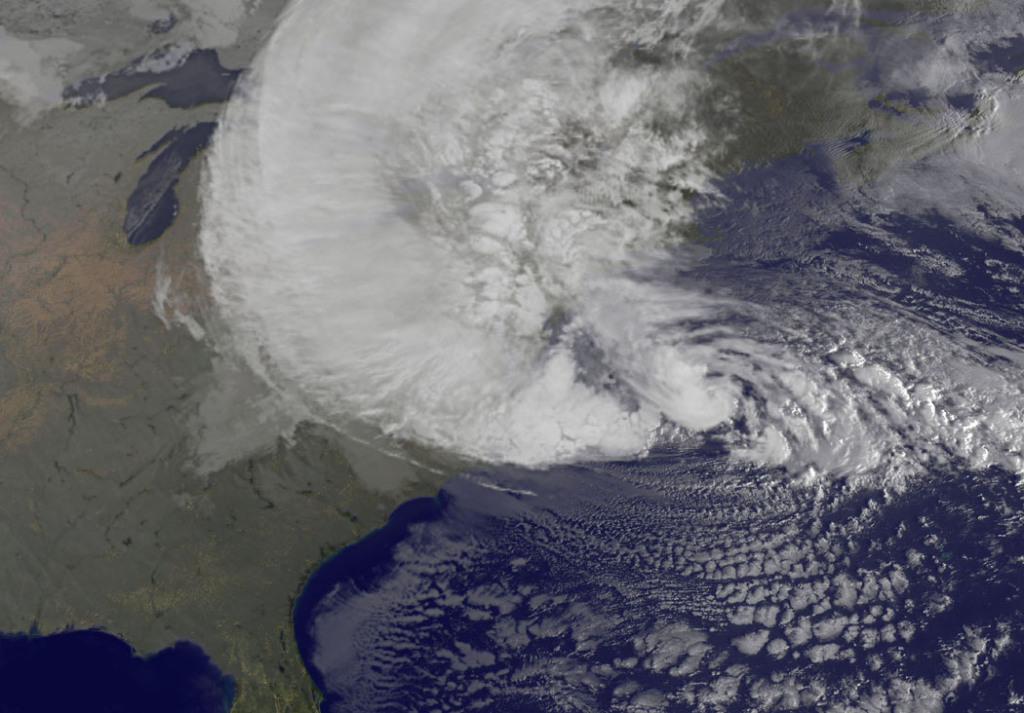
Hurricane Sandy satellite photo as it hit New Jersey
Hello all, and excuse my absence of late! If you hadn’t heard (ha!), Hurricane/ Superstorm Sandy hit the eastern coast of the United States, and headed straight for the state of New Jersey in particular. That means it hit where I live.
I initially started to write this while I was sitting in my car, writing on my iPad while my iPhone was getting recharged using the car battery, but I’m finishing it up on my laptop almost a week later. Hurricane Sandy hit my home, and we were without power for almost four days. A tree fell on our house, but fortunately not through the roof. There was a state of emergency in my town for a couple of days whereby no one was allowed in or out of town. Unless you were emergency personnel, you were not allowed to drive the streets. While we were lucky to get power within a few days (especially with very cold weather setting in), there are still thousands without power where I live, and even those who have lost their homes entirely. I was actually one of the lucky ones. So, you can understand why I might have had other things going on this week. 😉
My house the day before the storm.
Originally, I really struggled with an idea of what to write about this week, but this hurricane made some things very clear, and they are things that needs to be strengthened as a global necessity, not just as a local necessity. This storm made the following very evident to me: mobile technology and social media are critical in this day and age.
I only knew what was happening in the “outside world” and was able to make connections with my cell phone–a smartphone. Granted, the 4G network was incredibly slow, especially in the beginning, because everyone locally was doing the same thing. Something was better than nothing. Since I didn’t have power for my TV or radios, my phone was everything. It made me wish I had a MySpot mobile wifi connection created from my cell phone so that I could transmit the wifi signal to my other devices, but having at least the 4G did the job.
My house after the storm.
In the end, everyone who knows us had a way of knowing that we were okay. Between my husband and I, we texted my brother-in-law, my father-in-law in Ecuador was able to call my husband, and I had sent notes on Twitter and Facebook to let people know we were okay. There wasn’t much more that I could do. Until we had full power and Internet capabilities, I could only recharge my phone on a car recharger and send out the occasional note to update our status on social media. Saving battery life was essential to make sure that we could always be able to communicate. So writing up a blog entry was less important than making sure that our loved ones knew what was going on around us.
We were without electrical power for almost four days, and they were four of the longest days and nights I can remember. You have to remember that I live in a first-world country, where having constant supplies of electricity not only for powering things is commonplace, but it also runs things needed for basic survival, such as keeping perishable foods cold, and providing heat on cold nights (and we had some very cold nights). At my house, having had some Scouting training (I was a den leader for my son’s Cub Scout group for almost 5 years), and just even having a fireplace, we had some advantage. We had done some preparation so it wasn’t so terrible–just terribly inconvenient. There are others, such as my sister, who didn’t have power for more than a week. (She stayed with my parents who had power restored quickly.) There are still work crews from all over the Eastern Seaboard and the MidWest who have come in and have worked around the clock, and continue to do so to still get the rest of New Jersey power again. It is still not done. We’ve become a society that is dependent on its electricity, for sure. But we also have become a society that mostly depends on the power of internet connectivity and having means of communication powered by electricity.
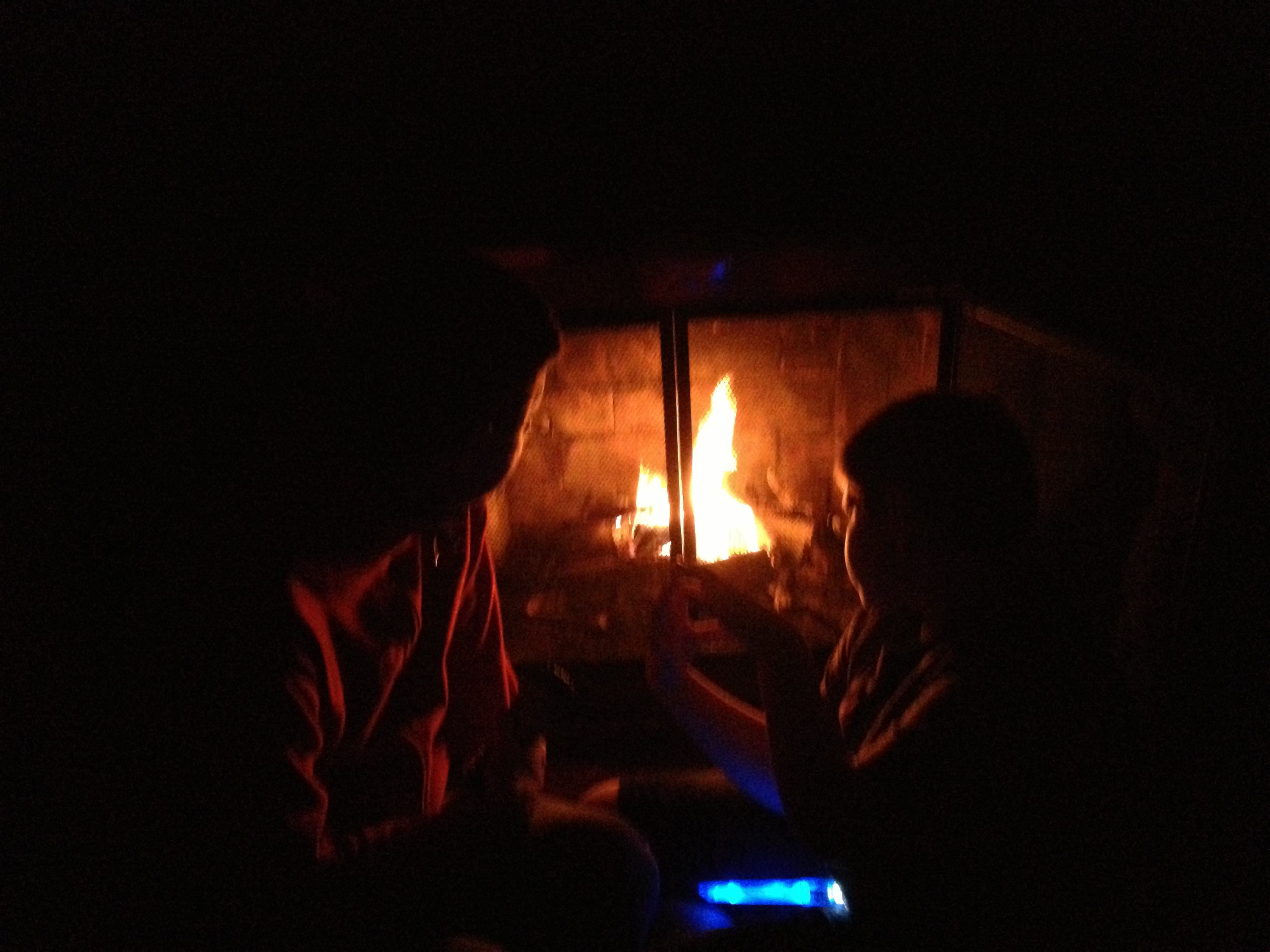
My husband and son keeping warm by our fireplace while we had no power.
Every day that we’ve had with power since it’s been restored, I’ve tried to remind myself about the many people in my state who have lost their homes and/or still don’t have power. I was greatly inconvenienced, but in the end, even with the tree falling on my house, I was still blessed and one of the lucky ones. My town, overall, didn’t sustain the kind of damage that other towns did. The big pond/lake and our town was drained before the storm in order to prevent flooding, and that worked. We didn’t have the water damage or flooding that other places did. Most of the damage we had was due to wind damage, so there were a lot of downed trees that took down power lines. Once trees began to be removed, and crews fixed the wires, then things started to get back in order. As I write this, there is still gas rationing in part of the state, which people need for their cars or even for generators to power their houses until regular service is restored. We’re not quite back to “normal,” but we are fairly close. Schools are starting to open back up for classes tomorrow after a week’s absence, many are returning to work, and shops are opening up again. New Jerseyans may have never been through something like this, but we are a resilient group of people. There is an expression that was often said well before the storm of “Jersey Strong.” That, we are.
But during this storm and its aftermath, I’ve had a lot of time to think about the importance of mobile technology and social media. Through SO much of the storm, my mobile phone was my lifeline to the outside world. Not only could we tell people that we were okay, but if we had been in serious trouble, it was our lifeline out. We would get messages and updates from friends and other resources through our phones. Was the storm over? I could track the storm either through the Hurricane Red Cross app or the Weather Channel app. Was it safe to go out? I’d receive text messages and emails from my town government to let us know what roads were blocked due to downed trees or wires. Where were there shelters if we needed heat, a warm shower and a solid meal? I could find that out as well. What markets had reopened after the storm for food, which gas stations were open with shorter lines, and where could we recharge our devices so we could continue to stay in touch and know what the news was? Different friends who had ventured out told me through social media. Having mobile devices and connectivity made knowing all that information possible. When we needed to have the tree removed from where it was leaning on our house, my husband called up our local tree guy, and his crew was out the very next day. And in a totally 21st century way, having mobile devices kept us entertained at night, as I had loaded up some old episodes of our favorite television programs on my old iPad for my son, and on the new iPad for me. (During the day, we’d be cleaning up our yard and doing other things that would take advantage of the daylight.) Without these modern technological conveniences, it would have been a lot more difficult to get through those days.
But it also got me to thinking about how that technology could have been even better, and where greater improvements could be made. Two things from the technological side were apparent to me. First, connectivity could be improved on a global level, not just at a local level. More communications infrastructure and stronger communications infrastructure are needed to create reliable wireless hotspots. While 4G connectivity was available, it was spotty, and not always reliable during the storm. My husband does not have 4G on his phone, although I have it, so we were solely dependent on my phone for information. A secondary but equally important problem was, however, that using 4G exclusively drained the battery of my phone quickly, especially when the 4G service was very slow. In a stressful and possibly dangerous situation like this storm, that’s a bad thing. I know there are several cities that have wifi service throughout the town, such as Philadelphia. We have many wifi hotspots, but they are not well connected between them, and they don’t reach to households around here. I found, once we had power and connectivity restored, that wifi connectivity on my phone or other mobile devices did not devour battery power on my mobile devices as much as the 4G did.
I started to think of places far, far away from me–and realized this is a global need. How are children in remote places supposed to get electrical power, more specifically battery power for a smart device? And even if there are miraculous power sources for these devices (which there are not at this time, especially in certain regions of the world), how would these children connect to the rest of the world? Both improving battery life/power sources for mobile devices and improving the infrastructure for internet communication are key. It all needs to be set up in such a way that it doesn’t cost a fortune, is readily accessible, and can literally weather anything. It should be similar to using a radio–we can still get AM and FM signals, but we need a wifi version of this. I know that the network services in our area, especially AT & T and Verizon, said they were doing their best to provide and repair the 4G and LTE services damaged from the storm. Okay, I understand that. But in the US, as well as everywhere else globally, we need to start thinking about how to step up the technology so that getting wifi signals are as common as getting an FM signal on a radio. I’m sure that this is technology that is being worked on, but I feel like this storm proved that point very much. Perhaps the internet access providers needed to get ready for the storm by temporarily increasing the network bandwidth and boosting those wifi signals already present. I’m sure that I will be charged an arm and a leg for the amount of data I did use during this time, and the provider companies won’t be giving any storm discounts of any kind under the circumstances.
The other thing that became highly apparent was the importance of social media during this time. It was one thing to receive text messages and emails from my local government (I signed up for emergency messages), loved ones and friends, and to have access to a tiny web browser on my phone, but social media, especially Facebook and Twitter were essential! It was an easy way for me to check in with everyone who needed to know how my family was doing, but also for me to know how all my friends and family were faring as well. Even now, those family members and friends who are still without power are posting status updates letting us know that they are safe, with family or friends with power, or if they are toughing out another cold night. As I mentioned earlier, it was through social media venues that I could see the scale of the storm, through various messages posted on a continual basis. We found out that our local supermarkets were open through Facebook with fresh food, warm place to stop, and outlets to recharge our devices. It allowed communities to come together–multiple communities–to help each other. As I write this, it continues to be working. Posts on Twitter and Facebook are still working to gather supplies for those who are in more trouble than us, provide information for those who seek a safe shelter until their home is habitable again, and moral support, too, for each other. The power of social media is incredible.
When I took my social media class last spring, there were several purpose categories in which social media communications fell, namely broadcasting the self, the netizen, participatory culture, or how social media related to work/labor. To me, there were instances were all these purposes were used during this storm. Social media users broadcast about themselves, providing status updates on their well-being. The netizens were the local governments and other information providers such as internet news agencies, or even Twitter feeds of local government leaders (like Newark mayor Cory Booker) who kept apprised of his city’s situation by staying in constant contact through Twitter to help citizens who had extra needs. All social media users who got through the storm were part of a participatory culture, namely, they were part of the group of “storm survivors” that grouped together. It related to work because we could see how the power companies and other service companies were keeping their customers informed about the progress they were making with restoring power, and would ask customers for feedback on which areas needed more help. Even if one barely posted anywhere on any social media outlet, one could easily understand the breadth and width of this storm’s impact merely by reading the feeds coming from these outlets. I had more information that my husband at any given time because I was looking at all of this and absorbing it, whether it was for personal safety or just for information. It was invaluable, and truly emphasized the importance of social media not only now, but going forward.
Mobile technology and social media were essential in helping my family get through this storm, and it benefitted millions of others through this storm as well. Both of these things continue to be vital as the job is not done in recovering from the storm.
As technical communicators, I think you can see my point, but there is yet another point in which technical communicators are vital in pushing our agendas in our field. That is, helping to provide concise, cogent, correct, and clear information for our end users. One of the problems that I encountered with various apps and communications was that they were so poorly written and explained that sometimes it was difficult to understand the information being provided. This is part of why social media was so vital–there was more of a conversation among users to clarify what a website said, or what a communication said. So many who were providing the information were clearly not writers or natural communicators, and this in itself could be dangerous in certain situations. I’m hoping as we recover from Hurricane/Superstorm Sandy, as a technical communicator, I can try to push the agenda that experienced social media writers and technical writers are needed so that information is provided in a clear way that all people can access it easily, whether there’s an emergency or not.
I hope that technologists are working to make the means of communication stronger with stronger internet connectivity that doesn’t require much power, and that smart devices available can have stronger battery power so that recharging as often isn’t necessary, especially when needing to rely on those communication networks for information. I think social media has proven itself as a strong communication tool during this storm, and it has reinforced the notion to me that I need to continue to stay tied to it, because it’s not only connected to my career livelihood, but my livelihood at large.
Right now, I just have to try to recover and try to get life back to “normal.” Appreciating mobile technology and the power of social media make me glad to live during a time when we have these available to us. Now, I need to get back into the swing of being more technologically immersed after being mostly “off the grid” for almost a week.
This post is just a quick summary of the Adobe Day at LavaCon 2012 series from this past week. As you see, there was so much information that it took six posts to try to summarize the event!
Being in Portland, Oregon was great. It was my first trip there, and being a native Easterner, my thoughts pushed me to that pioneer spirit of moving westward in this country. Once there, I saw a hip, young, modern city, continuing to look towards the future. The information I gathered at Adobe Day was general information that was endorsement-free, and practical information that I can use going forward as a technical communicator, and that by sharing it, I hope that others in the field will equally take on that pioneering spirit to advance what technical communications is all about, and bring the field to the next level.
To roundup the series, please go to these posts to get the full story of this great event. I hope to go to more events like this in the future!
As I said, I really enjoyed the event, and learned so much, and enjoyed not only listening to all the speakers, but also enjoyed so many people who are renowned enthusiasts and specialists in the technical communications field and talking “shop”. I rarely get to do that at home (although it does help to have an e-learning developer in the house who understands me), so this was a chance for me to learn from those who have been doing this for a while and not only have seen the changes, but are part of the movement to make changes going forward.
I hope you’ve enjoyed this series of blog posts. I still have many more to come–at least one more that is inspired by my trip out to Portland, and I look forward to bringing more curated content and commentary to you!
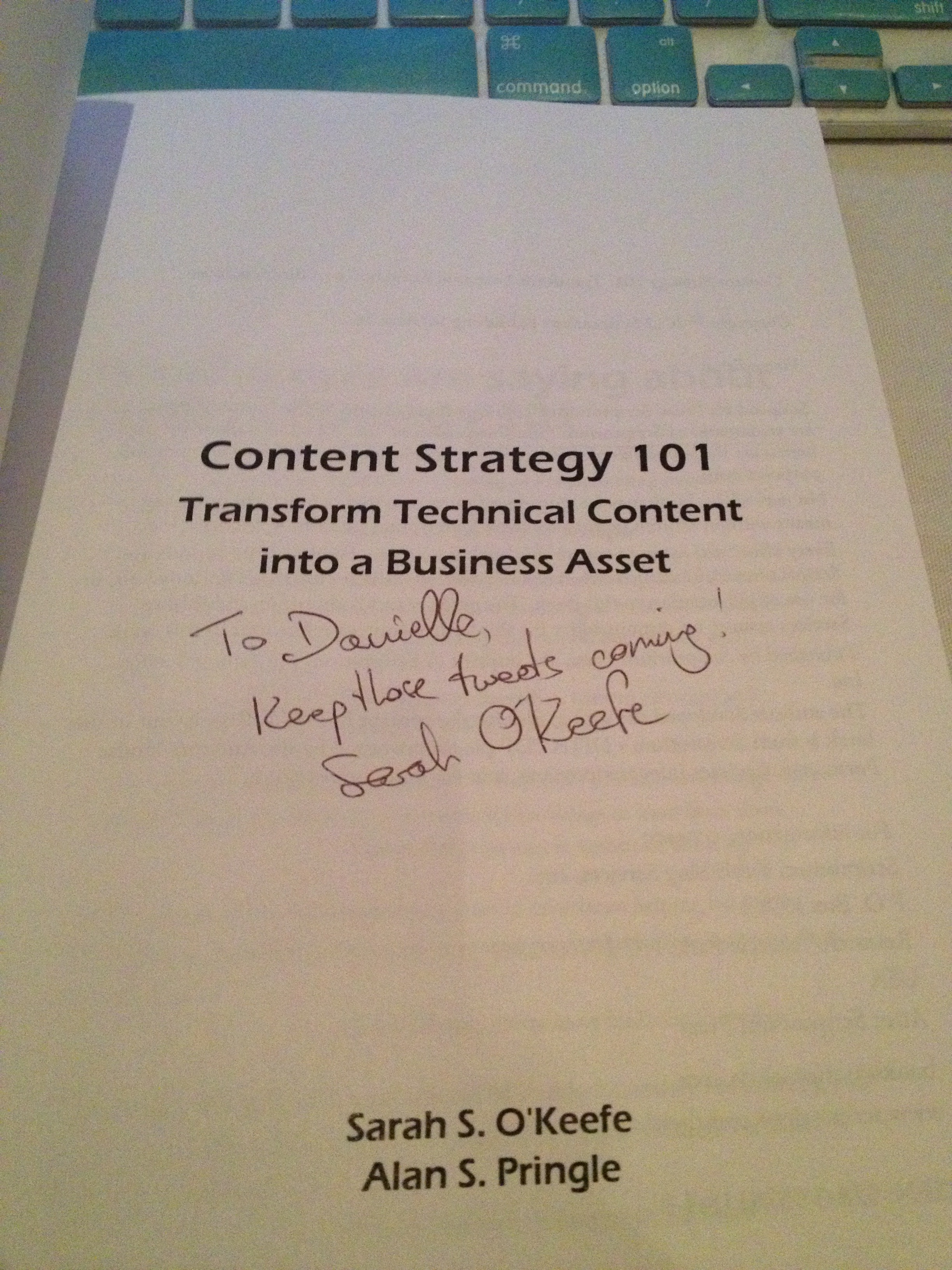
The autograph from my copy of Sarah O’Keefe’s book, Content Strategy 101. Awesome!
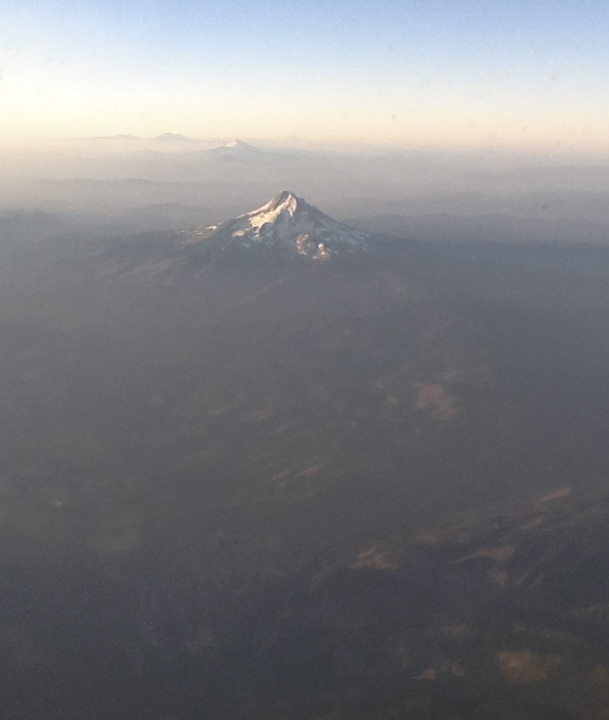
One of the “Three Sisters” mountains outside Portland (don’t know which one–took this from my airplane seat coming home!)
As I write this, I am still recovering from quite the whirlwind of a weekend! I flew out to the West Coast on Friday night, and returned to the East Coast on Sunday. I met SO many people who are not only leaders in the technical communications field in one capacity or another, but they are also nice and SMART people in the field. You couldn’t help but be inspired or feel smarter once you walked out!
Now granted, this was the first time I ever attended a conference-type event within the tech comm field, so I was excited to be there and soak everything in as much as I could. This is not to say that I’ve never been to a professional conference or travelled to this type of event; I just never have done it with the tech comm crowd.
Like I said, for me, at least, as the “new kid on the block”, I didn’t know exactly what to expect of the event, the topics, or the people I would encounter, and I’m glad to say that everyone was very welcoming to me, and I felt included as a fellow technical communicator very quickly. It was a little surreal in some instances, because many of the people I met were those whom I had only met online through Twitter or Facebook–Twitter mostly, so to be among such a collection of established tech comm thought leaders could have been a lot more intimidating, but it was not that way at all.
There was so much great information that came out from the morning that I will be splitting up my report over the next few days. Each day going forward will have my summary about each speaker at the event. And I have some photos as well!
So, let me get started into the Adobe Day event itself –with some photos!
Saibal Bhattacharjee (@saibalb79) from Adobe setting up.
The Adobe Day event started with an introduction from LavaCon organizer Jack Molisani welcoming everyone to the event. Jack, thanks for organizing and running LavaCon! Although I’m missing the main conference, I’m hearing awesome stuff about the speakers on Twitter, so I think you deserve some kudos for helping to assemble all of it!
Jack Molisani
Jack was followed by a short introduction and welcome by Maxwell Hoffmann, who is one of the key players of Adobe’sTechnical Communications marketing team. If you’ve ever attended any Adobe Tech Comm webinars, more than likely you’ve heard Maxwell moderating the webinars. He is also one of the bloggers for Adobe’s Tech Comm blog. Having worked with him while creating my own webinar for Adobe, I can say that he does a fantastic job at what he does.
Maxwell Hoffmann of Adobe
One thing I’d like to mention, before continuing, is that the nice thing about Adobe Day was that is wasn’t actually about Adobe or promoting Adobe products. I don’t recall during the entire duration that any speaker promoted any Adobe product or the brand other than possibly to thank the company for the opportunity to speak. All the speakers spoke broadly about technical communications as a whole, so whether one supported Adobe products or not, everyone could benefit from the information being provided. This really was a collective presentation of the best and brightest in thought leadership, and an opportunity to network and learn from those who are considered top in the technical communications field.
Now, for this post, I’m actually going to start this Adobe Day series going backwards in the day’s event, starting with the panel discussion that was at the end of the morning.
The panel topic at the end of the Adobe Day event was titled, “The Decade Ahead: Opportunities and Challenges for Technical Communications Professionals.” Scott Abel, who is also known as “The Content Wrangler,” moderated the panel. The panel included several of the leading thought leaders in the tech comm industry. The panel consisted of Joe Gollner, Beth Gerber, Bernard Aschwanden, Joe Welinske, Val Swisher, Sharon Burton and Joe Ganci.
Adobe Day Panel. L to R: Joe Gollner, Beth Gerber, Bernard Aschwanden, Joe Welinske, Val Swisher, Sharon Burton, and Joe Ganci
As far as the opportunities in tech comm right now, Sharon Burton said it best when she exclaimed, “We are in the Wild West!” meaning that the field is still so very wide open that anything done right now would be in the pioneering spirit. Another point that Sharon summarized was that 99% of the content consumers are not happy with the tech comm content they are receiving, and so a revolution is brewing. It was agreed by all that so many new ways to deliver content are out, such as using audio, video, shared content, personalized content and mobile content. The choices are limitless and there is so much to explore that there is room so that we can all contribute! Interactivity and structured content will be key to communicating information as well.
That said, the group presented the challenges ahead, which included providing technical communicators with an education on understanding all the available possibilities, combating management’s misperception of cost, the general resistance to progressive change, business models still tied to old metrics, and too many tech comm specialists instead of tech comm generalists. An additional challenge mentioned dealt with the relationship that technical communicators have among themselves as well as to the rest of the world. It was suggested that technical communicators are not creating appropriate relationships with other business departments, and need to be proactive in business affairs to prove the value of tech comm as a whole and how it integrates with other business needs, thus providing a good ROI (return on investment). When the panelists were asked what skills were needed to go forward, they replied that the need to create communities to support each other and learn from each other was key, which could be done through such activities like participation in branding and discussion on the Twitter website with other technical communicators. Bernard Aschwanden did comment, “People are not lazy enough!” which elicited a laugh. However, his point was that in this day and age, people just want more direct route to complete tasks, and community building was part of that.
Nolwenn Kerzreho, another attendee at Adobe Day, noted on Twitter during the discussion that “[T]ech writers need to change, have to get an education in structured writing and writing for a global audience…Key is that needs to be promoted…everywhere!” Good point that I missed noting on Twitter myself, Nolwenn!
In other words, the panel felt that while this is a time with a lot of changes due to technological advances with plenty of opportunity to use different kinds of content to deliver information, there are still obstacles in the way that prevent those opportunities from coming to fruition. However, those obstacles aren’t anything that can’t be conquered over time. A big part of making these opportunities happen will be adopting the use of structured content and community building.
Now, if this was the caliber of the discussion just for the panel at the end of the Adobe Day event, then you can only imagine that each of the presentations before this were equally great as well, and why I’ve come back with renewed enthusiasm.
I’ll also just add here that I had the chance to meet SO people that I had only met through social media or featured in various technical communications media. It was like a parade of tech comm stars to me, and I was a little in awe to be among them! I enjoyed meeting so many people who really enjoy what they are doing and trying to make a difference in this field.
Waiting for Adobe Day to start! Me and Kyle Johnson of Rocket Software (photo courtesy of @barriebyron, also of Rocket Software)
I also have to say that in addition to Maxwell Hoffmann, I met others from the Adobe team as well, including Saibal Bhattacharjee, Ankur Jain (the Robo(Help) Cop!) and Tom Aldous. They did an excellent job putting this event together, and I appreciated their kindness and support in having me there to attend. I felt so welcomed! I was really happy to meet them in person after so many months of corresponding through Twitter or email.
I’ll be going through each presentation given prior to this panel in the next several posts over the next week, and I know you will find the information as educational as I did.
PS– To anyone featured in this post or who attended this event, please let me know if I need to append or correct anything featured in this summary or in the future posts on the presentations. I am working off my “notes” that I tweeted during the event, so my recollection may need some tweaking. 😉
As someone who participated in Adobe’s TechComm Conundrum contest on Facebook, I can confidently say that it was not for the faint of heart! It combined one of my favorite topics—technical communications—with the thrill a researcher gets when hunting for clues. Many of my favorite television shows and movies often combine finding historical facts and clues to find a treasure of some sort at the end, whether it be an “ah-hah!” piece of important information, or some physical prize at the end. As it turns out for me, it was a matter of having both at the end of my journey!
The TechComm Conundrum, for those who did not participate, was a series of questions and clues to learn more about technical communication history, as well as Adobe’s role in technical communications, on the way to find Adobe’s missing employee, Tina. Being that I was trained to do research while I was a graduate student at NJIT’s MSPTC program, I knew that sometimes answers would be very obvious, and sometimes I would have to read between the lines.
Like many who did participate, I hit some brick walls along the way. Many of the answers were right in the Adobe Technical Communications Suite 4 videos, blog, and product page. Other answers required deeper searching, and using extensive Google searches, I found the information I needed. Some responses were more obvious than others, and I admit I learned a few new things about the technical communications field and its fantastic history. It made me proud to call myself a technical communicator, and reinforced the idea that I was glad to be a part of this field. It was fun.
For those who got that far but got stuck, like I did initially, the last question was the trickiest of all. Finding a connection between a photo of actors Annette Bening, Julianne Moore and Mark Ruffalo, the logo of FrameMaker, and a photo of produce at a market was daunting. I found a connection between the actors, as they were all in the film titled, “The Kids Are Alright.” But beyond that, I couldn’t figure out what that had to do with a photo of vegetables or FrameMaker. I tried so many combinations of ideas to figure out the answer, and wasn’t getting very far. I wrote down all the answers on a sticky note by my computer, and for at least a good week, I would enter all the answers for the questions and get stumped at the last one.
Finally, I decided to look more carefully at FrameMaker’s history to see if that would yield any clues. It was Wikipedia that finally yielded the clue I was seeking. In Wikipedia’s first line of the history of FrameMaker, it explains that FrameMaker’s original author, Charles “Nick” Corfield, designed FrameMaker to be a WYSIWYG document editor. Wait…WYSIWYG…that acronym stands for “What You See Is What You Get.” My mind started racing, as that’s an acronym I like to often use myself. Was it really that simple in the end? I was told later (after the contest) that Mark Ruffalo’s character in the movie owned a restaurant called “WYSIWYG”, although I didn’t know that since I hadn’t seen the movie. Nonetheless, I tried the acronym as my response, and gingerly hit the “Enter” button on my laptop to submit it.
EUREKA! That was it! The explorer finally had her “ah-hah” moment! There was true joy in deciphering something that was still stumping everyone else still playing. So, yesterday, when I found out that I had actually won one of the “grand prizes”—a new iPad—I was actually thrilled. I was informed that only two people—I was one of them—figured it out. The hard work to crack the code paid off!
Hopefully, Adobe will bring this contest back as a fun game, as I think the quiz is great for new technical communicators to learn about the rich history of the technical communications. Talk about your active learning exercises through e-learning! (And I’ll bet it was created on Captivate, which is a featured product within Technical Communications Suite 4, too.)

 Today, in the United States, it’s a holiday. Thanksgiving is a day that we Americans celebrate to remember the sacrifices that the first English pilgrims made after their first year of survival in the New World. The celebratory tradition started with those pilgrims sharing the bounty of the harvest they reaped with the Native Americans who lived in the area and taught them some of the survival skills, and gave thanks for everything that came their way. Many generations later, we Americans, use this day to remember and give thanks for what we have as Americans. We celebrate with family, friends, and a huge feast.











 TechCommGeekMom
You must be logged in to post a comment.