This is a great article that I will be rereading over and over again! Thanks to Scott Abel for sharing it on LinkedIn. I know I suffer from writer’s block often for my blog, but it’s mostly because much of what I do in my professional life right now is rather mundane, and not much exciting stuff to share or analyze at the moment.
What do you do to break out of a rut? Include your comments below.
Microsoft has been largely dead to Silicon Valley because for the past decade they struggled in — or completely missed — the last five major technology movements. Those five movements, and who they lost to are:1/open source (to Linux, MySQL, etc.)2/search (to Google)3/mobile (to Apple)4/social (to Facebook)5/cloud (to Amazon)In this piece: why MSFT failed (dividends), why they’re back (Satya) & what 7 things they can do to be as important to the future as Apple, Google, and Facebook.[ Click to
This is an article found on LinkedIn. I will be very curious to see how Microsoft re-emerges from its "down" years. I have still held by Microsoft for a long time, and except for phones and tablets, we are still a family entrenched in Microsoft at my house. I can’t let go. I’m hoping that the new developments described in this article bring back the innovation and "cool" factors that Microsoft so desparately needs in order to stay in the game.
‘Social Media is not working for me!’ I hear it all the time… Here are 5 reasons why I think it might not be working for you – and how to fix it!Let’s see why Social Media is not working for you1. Your Website SucksSometimes clients still ask me if they can just use a Facebook page and not bother with a website. No, no and no. As I mention in my e-book, your website is your home, and with Social Media you are sending out invitations to come visit your place. But let’s say you are hosting a big
Since this is turning out to be a week where I’m concentrating on social media, this great article appeared on LinkedIn. All the reasons that the author lists is true, and so many companies fail to see that. I admit, I need to freshen up some of my websites soon! Take a look, and pick up some good pointers.
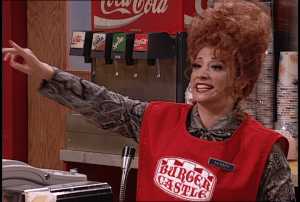
Nadeen says, “SIMMAH DOWN NAH!” at the idea that tech comm will be playing a more active role at customer satisfaction. Click on the image to see the OPPOSITE of customer satisfaction–a la Nadeen.
As I continue to study my digital marketing course, and I start to delve more into trying to understand content marketing, to me, I end up going back to my foundation, which is customer service and consumer relations, and how that all ties into what technical communication is about.
My career did not start in tech comm. My first job out of college was doing field sales for a gift novelty company. I wasn’t good at it, to say the least. The next two jobs were working on the other side of a toll-free number for customer service, specifically for a consumer goods company, then a pharmaceutical company. As much as I wasn’t a fan of those jobs, they laid a strong foundation for work that I would do later. When you get calls for a medication that’s been temporarily discontinued that are literally a life-or-death medication needed for someone, yet you can’t say, “Sure, take some of our reserves!” to potentially save that person’s life, it has a big impact on you. Nothing after that, short of other truly life-or-death situations, are important in the big scheme of things. I found that if nobody died and the economy didn’t crash if I didn’t do something, then it wasn’t quite that important in the grand scheme of things if I couldn’t get it done on time. It would just be an inconvenience that the content providers could’ve avoided if they did their jobs in a timely manner.
But there are a few things I learned during my years in customer service that have stuck with me, other than most things are not life-or-death situations. Customer service is a two-way communication. All situations, even non-business ones, require providing customer service to each other. There can’t be full understanding unless there is a full give-and-take from all parties involved. You can’t talk without listening. And listening alone doesn’t work unless you give feedback. This applies to personal relationships as well as professional ones, if you think about it.
So as I’ve gotten older and transitioned careers from customer service to technical communications (and random IT-like jobs in between), the idea of providing customer service has stuck with me–how can we communicate information so that everyone is happy in the end?
This is an important point as to why being a technical communicator has been a good fit for me. As a technical communicator, it seems to me that we produce what creates and maintains customer service. We write product manuals, we write help files, we write FAQs…we are the ones who write the content that makes customer service happen. We fill in the information gap!
Now, content strategists are starting to lean towards content marketing. In my mind, marketing has always been the push for the product, or the “razzle dazzle” to entice you towards that product or service. Customer service, and by extension tech comm, was the post-sales process that helped keep the customer experience smooth and happy, thus promoting brand loyalty. I’ve felt that customer service always had the harder job of retaining sales and customer loyalty than those who hawked the products and services.
But with the advent of digital marketing, and more and more use of the Internet for searching before even getting to the marketing part, those lines between marketing and customer service are seriously starting to blur. Digital marketing is now, from what I can see, turning traditional marketing upside down. People will look at product instructions and specs and the FAQs before purchasing now. Wait, that’s backwards by traditional marketing standards! The sale of goods or services is now based on reaching individuals as closely as possible through searches and website content. The “bling” of media ads are still around, but don’t have the same impact as finding websites that can provide you with exactly what you want at the right time, when you want it. Technical communicators, especially those in mobile, know this already. It’s something that I’ve heard time and time again before I’d ever heard of “content marketing”.
Having a technical communications background along with my customer service background will help with this topsy-turvy new world. But when content marketing jobs continually advertise asking for heavier emphasis on marketing skills and experience rather than content strategy skills and experience, those prospective employers are wrong. Moving forward, the internet is where customers will find more information, and content strategists and tech writers know this already. We’re already grounded in this. We can learn the marketing stuff, but understanding how to write the content that customers want and need is something that often eludes marketers, but not technical communicators.
Time will tell how this pans out as the call for “knocking down the silos” between content strategists and marketers has bellowed, first by the content strategists, from what I can tell. The way we search, heck–the way we acquire any information anymore is through the Internet more and more. Why not let those who are more experienced get a crack at making the marketing experience in this new digital age more effective?
What do you think? What is your experience? Do you agree with the idea that tech comm holds a bigger place in customer satisfaction than people are giving it credit for? Share your comments below.




 TechCommGeekMom
You must be logged in to post a comment.