Good listener. People person. Lifelong learner. Sound like you? No, we’re not trying to arrange a first date. These are some common traits of people with successful careers in a booming job market: instructional design. Colleges, K-12 schools and companies increasingly turn to instructio
I wish I had seen this article several years ago. Getting into Instructional Design isn’t easy if you don’t have a degree in it, but you still have a lot of the foundational background to break into the field. Some just “fall” into the field, but I have yet to see a job listing for an entry-level instructional designer in the last five years. Even so, this article will let you know some basics about what it takes to be an instructional designer.
Do you agree with the article’s assessment? Include your comments below.
Oh, when I read this, I knew this would appeal to the history geek in me, while also satisfying the tech comm geek in me as well. When the click bait of this article says, “What do Alexander Hamilton, Harry Potter, and Bayesian Statistics Have in Common?”, you know I went for the bait. And knowing that Alexander Hamilton’s reputation is becoming more relevant thanks to the Broadway musical, “Hamilton”, I thought this would be relevant to share.
Not only did I come away with a cool story about The Federalist Papers and statistics, but the thing that kept coming back to me was how tech comm has become advanced enough that we use many of the same techniques in content strategy now. To be more specific, Mark Lewis and his talks and book about XML metrics instantly popped into my head, and how we use similar statistics to figure out how to economize our content, and provide the best ROI for the content that is created.
Read this article, then go back and read my articles about Mark’s talks about XML Metrics here and here. You’ll see where I was making a connection.
What do you think about this? Do you think that The Federalist Papers project laid the groundwork for XML metrics and other metrics we use today in tech comm? Why or why not? Include your comments below.
The BBC has done it again with another excellent article about English language. I have to admit, even though I am a native English speaker, there are times that I don’t understand some of the abbreviations used, and I prefer to spell things out (I think that abbreviations can be a little bit lazy sometimes). But this article makes a fantastic point that native speakers don’t always think about the larger audience of those who speak English as a second or third language. I have no problem asking what something means even in my own language, but that shouldn’t be necessary. One of the things I didn’t like about a job I had was that I was expected to write content in native English, and not try to make it closer to some sort of standard English. “Leave that to the translators to figure out,” I was told. That response irritated me, but I had to comply with what they wanted, even though that’s the wrong way to approach it.
With the advent of the Internet, global communications are much more frequent and common now than even 10-15 years ago. While other countries are making an effort to use the lingua fraca of the Internet, native English speakers should make more of an effort to meet the non-native English speakers part way in being more clear in our communications as well. If someone says they don’t understand me, I’d rather they tell me, because then that’s MY fault, not theirs.
What do you think? Include your thoughts in the comments below.
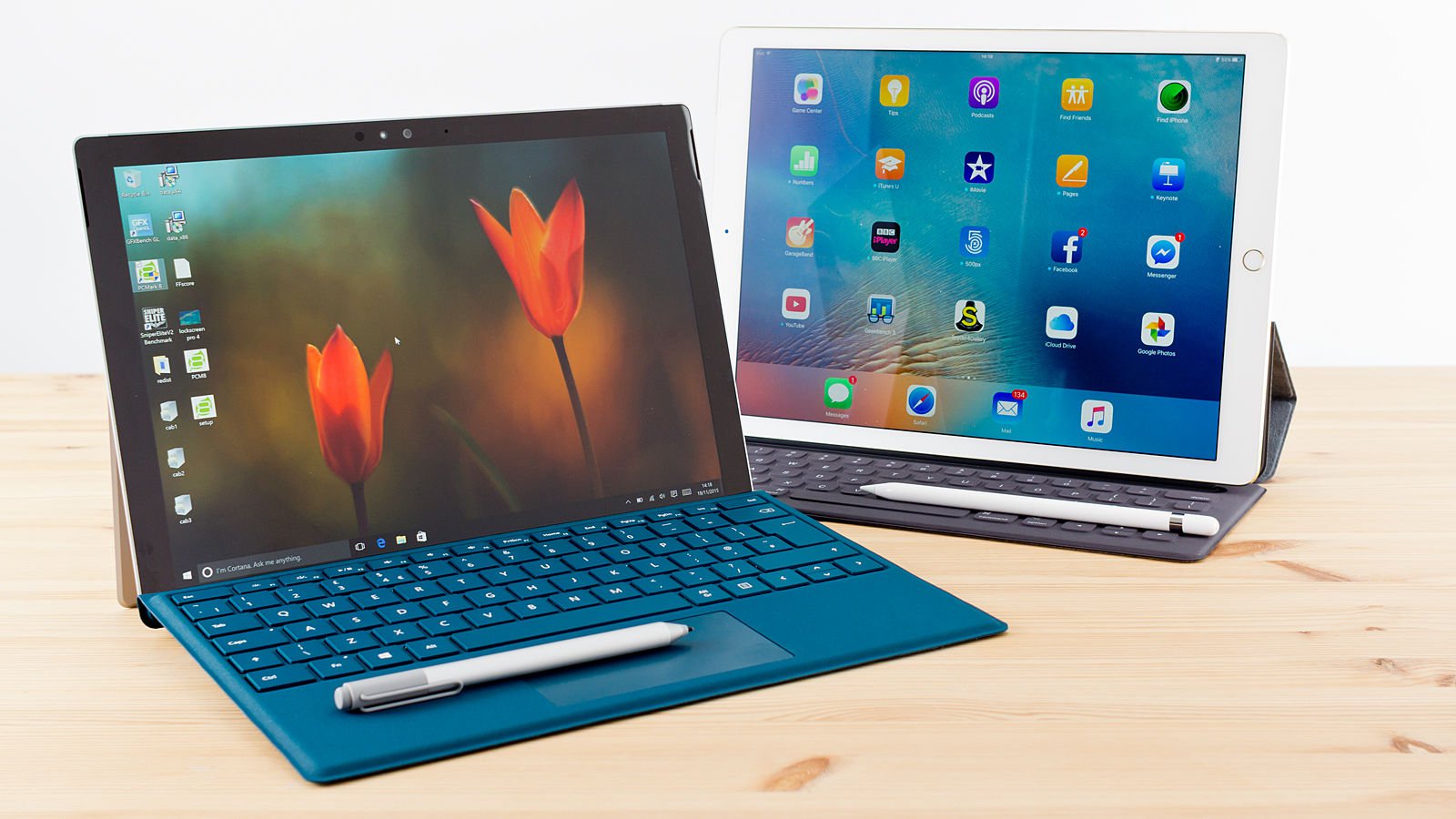
RJ’s argument was that while mobile was the wave of the future, he felt that the Surface was not a mobile product. Since the Surface still ran full programs rather than streamlined apps, it really didn’t qualify as a mobile device, despite its tablet-like form. His argument was that the industry needs to learn to streamline code to make lighter programs for heavy duty use so that mobile can become more prolific.
My argument at the time, more or less, was that while I agreed with his thinking and supported more use of mobile, I didn’t think it was going to happen anytime soon because PCs enabled people to use more powerful programs that tablets just couldn’t handle. I supported the idea of cloud technology, which was just barely emerging at the time, but I knew it wasn’t there yet. Only when cloud technology could catch up, I contended, then we could start making a bigger move to mobile devices as our primary work tools.
Well, here we are, four years later. Have we made huge strides in moving more to mobile? Yes and no.
More tablet-like devices have been created in these four years, and the main leaders in this arena, Surface and iPad, have made improvements over the years. Surface has its standard version of the device, as well as a “Surface Pro” and “Surface Book”. iPad has developed its competition creating iPad Pro, but the various MacBooks continue to be the competition for the Surface Book.
Surface’s OS is still the same thing that runs on laptops, namely full versions of Windows 10. Windows 10 runs regular, full version programs, but it also runs on apps that can be bought through the Microsoft Store, including many cloud-based apps such as Microsoft Office 365. But, it’s still a really flat PC in a tablet format. People still use it like their PC, running more powerful programs in it, and use it as a laptop, just smaller. It’s certainly more portable than a standard laptop, but as laptop design gets thinner and thinner, it doesn’t make much of a difference. Additionally, the price tag on the Surface is still pretty high. To get a powerful enough machine that can create and edit video, you’d pay somewhere around US$3000.00+ for a Surface, when you could get something just as powerful in another brand of laptop for less than half that price (like I did for my current laptop).
iPads, in the meantime, have become more robust, and while still more dependent on cloud-based apps such as its own Work suite and it does run the cloud-based Office 365, other apps like Adobe’s Creative Cloud aren’t the same. There are Creative Cloud apps available for iPad, but they are still the watered down versions of them, and not the full versions that can be used on a laptop. Even though Adobe claims that Creative Cloud is cloud-based, it’s only cloud based insofar as it will save your work in iPad to your storage within Creative Cloud, but that’s about it. iPads have definitely been a frontrunner in promoting cloud-based storage, but running robust apps that are memory-intensive isn’t part of its anatomy.
Still, with these minimal advances, they are still steps forward in the right direction. For example, I do used Office 365 or iWork on my iPad when I help my son write up his homework assignments, and I can store them on my OneDrive or my iCloud. If he’s working on a bigger project, he can use PowerPoint or Keynote on my iPad, save it to OneDrive or iCloud, and then continue working on the project using my laptop or his desktop. Cloud-based storage, and some other cloud-based apps have definitely gotten better, for sure. I like this ability to switch from my laptop to my iPad to work on low-impact project, like doing my son’s homework.
There are some apps that won’t ever happen on iPad. For example, I’ve been working heavily in Dreamweaver this past week or two. This is not to say there aren’t other HTML/JavaScript editing tools that are probably iPad apps out there, but this is the most popular one and a standard one to use. Is there an iPad version to access? No. I need to use my laptop for this. This might be where Surface would be the better choice, but again, it’s still really a laptop in a different device shell, as mentioned before. I doubt that Flare or Adobe TechComm Suite tools are ready for the iPad treatment either. They can probably run on a Surface, but would you really want that?
Even a StarFleet Captain like Benjamin Sisko can find this sort of thing daunting, and needs to seek Kira’s help in straightening this out!
It looks like the PC versus tablet/mobile wars will continue to rage on for a while. I don’t think they’ve gotten that far in four years, but the few improvements made have certainly been in the right direction. We’re not quite there yet. I think RJ’s original thought that all apps need to be streamlined for mobile use was a great observation then, and it’s still one that needs to apply now. If we are truly going to move towards the mobile age, bigger steps have to be made. These are steps forward, for sure. I think more has been concentrated on mobile phones, to be honest, since more people own them. And that seems appropriate. I don’t bring my iPad or my laptop with me everywhere, but I bring my phone everywhere. Then again, I’m not working on HTML code on my phone, so there has to be some sort of balance at some point.
Mobile devices are becoming more powerful all the time, but it looks like we’ll have to be a little more patient before we see another big leap with technology. I know there are some “big” announcements from Microsoft and Apple about these tablet products sometime this week, but I’m not holding out for any big advances, even though they are certainly overdue.
What do you think? How will this lack of technology development–or the future of mobile technology–help or hurt tech comm? Include your comments below.
My husband, always one to find fault with the English language, found this article and passed it along to me. His first language is Spanish, and while he speaks English with near native fluency, he always is saying, “English is WEIRD” because of the crazy nuances and strange rules. This article backs up his argument. I imagine for a non-native speaker of any kind of English, let alone American English, it can get rather confusing. I know Southern American English (meaning from the Southern US) can get confusing for my husband, but he does understand “y’all” since I picked that up during my years in the South. But accusations of being one that would say, “youse” as a native New Jerseyan would be untrue, as I’ve never said that. Regional dialects are crazy!
Read this article, and tell me what you think of this. Is this something that we should work to correct, or leave it be? Put y’all’s comments below. 😉

 Good listener. People person. Lifelong learner. Sound like you? No, we’re not trying to arrange a first date. These are some common traits of people with successful careers in a booming job market: instructional design. Colleges, K-12 schools and companies increasingly turn to instructio








 TechCommGeekMom
You must be logged in to post a comment.