Posted in Uncategorized

Being a specialist or a generalist? Which is better for a technical communicator?

I feel like I’ve stepped into quite the conundrum by entering the technical communications field. As I continue to search for full-time work, a problem that I seem to find almost everywhere I go is that technical writing jobs in my area seem to require that one be a specialist in their field, or do very, VERY specific types of work. Both before and after my technical communications studies, I had always been taught that with few career exceptions, being a generalist was more often a desired skill set, simply because I couldn’t get stuck in one specific direction and find little to no work. Having a broad range of skills and abilities made one more marketable, flexible, and thus desirable as an employee. I know the last place that I consulted for full-time appreciated that generalist ability of mine, because I ended up being the go-to person for web editing, web design, and general graphics design. There were those who had the title of “web publisher” but didn’t even know basic HTML, and I actually did.

However, I’m finding that as much as I did my best in both my career and my graduate studies to study a broad range of subjects, including social media, e-learning design, content management strategy, UI strategy, and technical writing and editing, to name a few, I end up as a Jack of all trades, but master of none. However, it seems that because I don’t have specifically five years of medical or proposal writing background in XYZ software, I’m useless. I was recently criticized for having an “unfocused” resume because it was so broad. When asked what specialization I wanted to follow, I listed all the subjects I mentioned above and then some others. I feel I have the skills to start out in any of those fields if someone gave me a break to go in any of those specific directions.

One of the things that stuck out in my mind from Adobe Day at Lavacon last month was commentary by the panel at the end of the morning, in which the group said that one of the issues right now in tech comm is that there are too many tech comm specialists instead of tech comm generalists. When I heard that, it was music to my ears, and I felt vindicated for taking the approach I had with my career! I’ve already taken steps–specifically getting a Master’s degree in Professional and Technical Communication–to provide myself with an education on understanding all the available possibilities in the technical communications field, and be able to adapt to it. However, one of the other challenges listed in the panel talk was the general resistance to progressive change. I fear that the resistance to change is far more widespread than anticipated, based on my own experiences. Every job listing and every recruiter I talk to seems to want to pigeonhole me into one specialty, and I don’t want to do that. The reason I went to graduate school was to allow me to gain opportunities beyond my knowledge of content management alone, and allow me to flex my editing, writing, design and e-learning muscles some more.

Perhaps because I’m a “newbie,” I don’t understand this strict adherence to being a specialist in only one kind of tech comm. Becoming a specialist is a double-edged sword. On one side, being able to work in a niche field makes your skills more desirable for that niche. However, on the other side, it limits the kind of work one can do if there are layoffs or one finds him/herself out of work.

Since I’ve been looking for full-time work for almost a year now, I talked to my husband recently about this idea, and questioned whether I should commit more to one particular area of technical communication than another. While I’ve done a lot of content management work, I find it constraining when I want to be able to edit what I see as just plain BAD writing, and I feel limited to not flex my brain muscles on all the things I’ve learned in grad school in the last two years. I’ve tried to immerse myself in the tech comm world and the e-learning world to varying degrees, but again, I find myself as a generalist since I don’t have any job to help me hone my professional focus as of yet. Even so, I wondered if I should just resign myself, and just try to figure out what specialty I should focus on, perhaps in the hopes of increasing my job prospects. After voicing this concern, my husband vehemently disagreed, feeling that it was better just to continue to be able to look at a little bit of everything and do a little bit of everything, as it broadened prospects by giving me multiple directions to follow.

It makes me wonder how other graduates–whether they are from undergraduate or graduate school–find a job at all. How is someone supposed to be able to do a technical communications job with little to no experience? How the heck can they become specialists without first being generalists given a direction from their first jobs? I know I have the flexibility and know-how to go into many jobs, but it’s autobots that read my resume instead of people more often than not, and autobots don’t understand the value of what I can do and my ability to learn on the spot. I’m sure I’m not the only one in this rut, and yet there doesn’t seem to be any flexibility on the part of employers. There are plenty of us who are more than willing to be dedicated employees with a strong skill set foundation, and we aren’t given a chance.

So, what is better? Being a specialist or a generalist? Write your opinion in the comments below.

For me, I’m still torn, and my problem is that if I do need to be a specialist, I don’t know what direction to follow, because I like so many aspects of tech comm. Should I find work as a full-time blogger, pursue my desire to be an instructional designer, go back to content publishing and management, become a technical evangelist, become a teacher or trainer…or what?

(If you know of any telecommuting/remote jobs or jobs in the Central NJ area along these lines, let me know!)


Posted in Uncategorized

Lady Shotgun: taking on childcare and capitalism

See on Scoop.itM-learning, E-Learning, and Technical Communications

How one indie studio is killing crunch and sharing profits…

Thanks to @cfidurauk for pointing me to this article.

One of the tough things about being a mother in any industry is how to balance responsibilities of being the primary caregiving parent and giving full attention to a job/career. Ann-Marie Slaughter, formerly of the US State Department and now back at Princeton University, wrote a controversial article for The Atlantic magazine (I think it was the Atlantic) which gave her case of while she had it all, she felt she really didn’t.

In this day and age, we need to rethink and rework what the work process is. I’m sure the hours of “9 to 5” were based on daylight hours during the 19th century or something. I’ve always tried to work different hours than that–usually earlier hours so that I could be home at a reasonable hour for my child. Additionally, I have found that there are very, VERY few things in this world that depend on work being done RIGHT NOW or needed to be done YESTERDAY. (Immediate emergency medical care is the only thing I can think of that is THAT urgent.) I applaud Lady Shotgun for their endevour, and hope that more and more people–not just moms, but dads too–start thinking in the terms that this outfit set up shop.  If I could find a place like that which could use the skills that I can offer and paid decently, and had the flexible hours that are presented here, I would jump on that bandwagon in a heartbeat.

As technical communicators and e-learning/m-learning specialists, this seems like it should be a viable work solution for so many of us–all parents alike. There are rare instances that documentation has to be out THAT quickly because someone’s life is in jeopardy. Lady Shotgun should be a model for us going forward.

See on www.gamesindustry.biz

Posted in Uncategorized

American Elections and Technical Communication

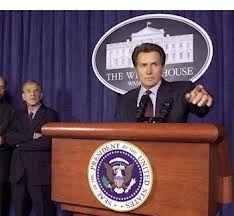
Today is Election Day in the United States, and it’s a big one this year as we are having a presidential election between Barack Obama and Mitt Romney. I wish I could vote for the fictional character in the photo on the left instead, Jed Bartlet from the old television show, “The West Wing” (one of my all time favorite shows), but that’s neither here nor there.

One of the things that gets me fired up when watching “The West Wing” or even watching real-life politics is the rhetoric. One of my secret dreams is that I would become a speechwriter for the president. One of the things I loved doing when I was younger was write up speeches or documents meant to make strong positions clear on particular subjects. Even when listening to the political speeches of the current presidential candidates, you can hear very different styles being put forth to explain the ideals and issues of each candidate. One famous politician, former President Bill Clinton, is famous for having great speeches that run on for a very long time.

That got me to thinking. Perhaps speechwriters don’t need to be wordsmiths that look to expound in great detail all the pomposity of the issues and ideals of candidates. Political candidates should look for technical writers and technical communicators to help them write their speeches. Why? Instead of using big fancy words and blaggering on and on, technical writers would get to the heart of what the issues are, and what the plans of a candidate would be in addressing those issues. A technical writer’s  job is to make the complicated simple, to break down the most technical topics down to bite-sized, manageable pieces that can be more easily digested by any person reading or listening to the information being distributed.  Wouldn’t that make an election much easier? Wouldn’t that help voters have a better understanding of what each candidate stands for and what he or she represents?

I’m sure it’s mostly marketing and advertising types that work on these campaigns. After all, each candidate is trying to sell themselves to the public, and the information distributed through debates, flyers, robo-calls, and emails scream of advertising so that they can get contributions to help fund his or her respective campaign.  But in the end, voters need clear reasons on why a candidate is the better candidate for the job, and cutting right through the flowery “blah blah blah” and getting straight to the heart of issues would be much more accepted by the voting public. I think technical communicators as speechwriters and communications staff would have been optimal to make this a less complicated election.

And maybe, someday, I’ll have that speechwriting job after all.

If you have the ability to vote in this election, please remember that your vote really does count. If you feel passionately about your candidate of choice, don’t assume that he or she will get plenty of votes. There was one election in my home state a few years ago that showed in polls that one candidate was going to win, so people just stayed home. Instead, we got the other guy, and it hasn’t been that great for us since (can’t wait to vote him out!).  Even if it’s not election day where you live, do remember to exercise your right to vote if you can. It is the one opportunity for your voice to be heard. It only takes one person to turn over an election, and that voice could be yours.

Posted in Uncategorized

What Does Knitting Have To Do With TechComm and m-Learning?

I’m so glad that this is now my 200th post on this blog! TechCommGeekMom has come a long way since it started out as a class project in grad school, now hasn’t it? For this particular post, I’d like to share my thoughts on something that I’ve been thinking about for the past two weeks or so.  It reveals one of my hobbies to you, but hopefully you’ll like the analogy.

As you’ve seen in the subject line of this post, I’m going to be talking about knitting and how it relates to tech comm and m-learning. Now, I know what you are going to say. Knitting is for grandmothers who make ugly stuff for everyone, and you are obligated to wear it when she comes over and visits. You couldn’t be wrong. Knitting has had a huge upsurge in the last ten or so years, and more and more people are adopting it as a hobby. It goes back to the 9-11 attacks, when people were trying to get back to a sense of security and home. I think with economic times, it’s also a relatively easy and inexpensive hobby to have (unless you are a true diehard like some of us).

Knitters these days make more than clothing items, accessories and toys, but it’s become an artform unto itself. (Ever hear of yarn bombing?)  I can’t remember when I started knitting exactly…but I’m guessing it was around 2004 or 2005. I know I was knitting in 2006 when I went to California for a convention for the now defunct Body Shop At Home businesses, and met Anita Roddick, as there’s photographic evidence of knitting in my hands during the event. In any case, it gave me a chance to learn something new that spoke a whole other language of its own, had a different vocabulary, and I got to work with all sorts of colors and textures in the process. For someone with sensory integration issues, it’s a great outlet for sight and touch. Even the rhythm of knitting up something has a calming effect, and following patterns forces my brain to focus.

So what does all this have to do with tech comm and m-learning? Well, as I thought about it,  there’s definitely an analogy that could be made about the benefits of knitting and how they lend themselves to these topics.  All this first came to me after I had spent the day at Adobe Day, and later took a small soujourn into the city of Portland with four fabulous technical communicators who also happen to be knitters. They had invited me to go on a yarn crawl with them (similar to a pub crawl, but in search of high quality yarn instead of libations), and I readily accepted. We only made it to one store, but we had a great time checking out all the high-end yarns and knitting notions available.

Pardon us drooling over the yarn!
Five technical communicators who
are also knitters! We know!
At KnitPurl, Portland, OR, during LavaCon
L to R: Sharon Burton, me, Sarah O’Keefe,
Marcia R. Johnston, and Val Swisher

As I reflected on Adobe Day, one of the big themes of the morning was the idea of using structured content. Without structured content, all of one’s content could fall apart and lose strength. An architecture needs to be created to make it work. Well, knitting is like that. If one doesn’t follow a pattern, and just knits in a freestyle, haphazard manner, instead of a nice jumper/sweater, one could end up with a garment with no neck hole and three sleeves. Without the structure of a pattern, and even reusing good content (or stitches, or groupings of stitches describing appropriate methods for structure), the whole thing falls apart. The beauty, too, of reusable content in content management, just as in a knitting pattern, content that is produced well, is solid, and the reader can understand clearly and concisely will produce good results, and can be recombined effectively in different instances without losing its meaning.  Take a look at a sweater or knit scarf you might have. You’ll find that each stitch makes sense, even when you look at different pattern of how the cuffs and collar differ from the sleeves and the body. But it all fits together.  In my mind, this is how reusable content can be used.  Very tight, well written content can be reused in different combinations without losing its context and form if done correctly.

The other way I thought of the analogy of knitting again had to do with how one learns how to knit, and how it relates to m-learning. Knitting fair-isle sweaters, Aran sweaters or lace shawls doesn’t come on the first day of learning how to knit. Heck, I’m even still learning how to do all these techniques! It comes with learning a foundation–namely the knit stitch and the purl stitch–and building upon that foundation. Any piece of knitting you see is all a matter of thousands of knit and purl combinations to make the item. But first, one has to master the simple knit and purl stitches by learning how to understand how to gauge the tension between the needles, the yarn and your fingers. Once that is mastered, then learning how to read the “codes” or the knitting language of K2, P2, S1 (that’s knit two, purl two, slip one), for example, then the real fun begins. Knitters have to pay attention to details in the directions, because knitting can be a long task. Except for tiny baby sweaters or sweaters for dolls or stuffed animals, I don’t know any sweater that could be hand knit in a single day, even if it was done from the time the knitter woke up until the time the knitter went to bed. It just couldn’t happen, even for a fairly experienced knitter.  So, each part of the knitted pattern must be learned or read in chunks so the knitter can understand where he or she left off.  Talk to me about lace patterns especially, and it’ll make more sense. But each technique takes time to master, and most knitters learn these techniques a little bit at a time. Whether a knitter is self-taught or taught in a conventional learning environment, nobody learns all there is to know about the most advanced knitting techniques on the first day. Just getting knitting and purling down takes a while. It’s an arduous task to learn to knit and knit well, and to be patient enough to see a pattern all the way through.

Just like in m-learning, things need to be learned in small chunks for comprehension. Information has to be short and to the point so that the reader, just like the knitting pattern reader, can take that information, mentally digest it, and then work out how to use the information. There is definitely trial and error in both m-learning and knitting; if one doesn’t succeed, then it’s possible to go back and try to re-learn the information and correct it, and in doing so, retains the information better.

Now, if one happens to be BOTH a technical communicator AND a knitter, then these are easy concepts. Reusing content, breaking down information into smaller portions for better learning retention, structuring the content appropriately and consistency comes both with our words and our stitches.

A variety of tools can be used in either case to create the content. For technical communicators, it’s the use of different software tools that help us achieve our goal. For knitters, different sized needles, different kinds of yarns and other tools can be used in the process. Is there only one way of doing things? Of course not. Is there any single tool that will do the job? Generally, no. This is the beauty of both technical communication and knitting. In the end, the most important tool is the mind, because without the individual mind, creativity and intellect cannot be expressed. When all of these tools and factors work together, it is possible to create a fantastic piece of work. When this combination of factors aren’t followed, it can look pretty disastrous.

So, next time you see someone with a pair of knitting needles in their hands, look carefully at the workflow that person is following. You might learn something from it.