Posted in Uncategorized

Be a warrior with Technical Communications Suite 4!

One of the things that many people don’t know about me is that I have a first-degree black belt in Songham Taekwondo. I was even a state champion in weapons as a color belt for my age group. I enjoyed TKD a lot, until a knee injury took me out. What I like about taekwondo is that it’s a versatile martial art; one doesn’t spend all of the time studying forms alone, but rather a student learns basic moves that will help in other areas such as sparring and weapons. The more skills one gains, the more adept to changes when sparring or using weapons. This is what trained the ancient warrior as well as the modern day warrior.

This kind of mentality is also needed to be a technical communicator. How, you may ask? Well, like a black belt in taekwondo, one has to have many skills to get the job done. One needs to know a little bit of this and that, like technical writing, editing, and content curation–among many other skills–to produce kick-butt documentation and output.  But it also helps to have the right tools as well.

For today’s taekwondo student, one can wear various protection pads, and learn how to use weapons–including hands and feet–as the tools to achieve the end goal.  For technical communicators, there are various software tools out there.

One of the foremost products out there is Adobe’s Technical Communications Suite 4. With this latest rendition of the Technical Communications Suite, technical communicators have even more options and choices in how documentation and other technical writing output is achieved.  There are reliable standbys like Framemaker and Robohelp–both of which have been updated, but there are also additional tools as Acrobat, Captivate, Presenter, and Illustrator. Combined with the Adobe Creative Cloud Suite, it seems to me that there is nothing that can stop a technical communicator from being a tech comm warrior!

Tomorrow, on August 21st, 2012 from 10:00-11:30 AM Pacific Time, one of Adobe’s strongest tech comm warriors, Ankur Jain, is going to be presenting the What’s New in Technical Communications Suite 4 webinar,which is not only going to talk about the strengths of this tool, but also the newest and latest features to make it a more effective tool for technical communicators everywhere, including features that now allow technical communicators to bring finished products to a mobile audience. (And you know how pro-mobile I am!)

Register here: http://www.adobe.com/cfusion/event/index.cfm?event=detail&id=2051812&loc=en_us

Tell Ankur that I sent you by telling him, “I am a TechComm Warrior!” 😉

Posted in Uncategorized

“Hey Mom, you’re a TechComm celebrity!”

(Taken from ElloHollywood blog) Yes, that’s what my son said to me when I discovered something today, and showed it to him. He is a kid who is being raised in a fairly technologically adept home (Mom is a technical communicator, and Dad is an internet developer who specializes in e-learning and LMS programming), so he knows who Adobe is and he knows that if something is on the Internet, it’s the equivalent of what it was like to see one’s own name in the newspaper as a kid, or seeing oneself on TV.

In this case, I discovered this at the bottom of Adobe’s Technical Communications Suite 4 page:

Can you see what I’m referring to? Let’s take a closer look in the Resources section:

Yes, that’s right! My preview of TCS4 is listed as an Adobe RESOURCE!

I’m thrilled and excited about this. It’s no secret that I was happy to see my article included in Adobe’s consolidated list of TCS 4 reviews (mine is fourth in the list) on Adobe’s blog, but to see my preview on the MAIN Tech Comm Suite page just blows my mind.

THANK YOU, ADOBE!

It would certainly explain how suddenly there was a huge surge in hits on this website in the past week. This week, I hit some fairly big milestones (at least in my eyes) with this blog as far as the number of hits it’s received. I hope that anyone reading becomes a regular follower. I do my best to provide both original content as well as curated content that relates to technical communications, e-learning and m-learning, so I hope that anyone new stays tuned, and lets me know how I’m doing, or if there’s anything they’d like to see discussed here.

Thank you one and all for your continued support– more to come soon!

Posted in Uncategorized

Why Mobile, Gamification and Special Needs Are Made for Each Other

As the school year has started for some and will start during the following few weeks ahead, my thoughts start thinking about conventional learning and how educational technology has changed so rapidly, especially in the last few years.

Now, before I continue, I just want to preface this by saying that much of what I will be writing below isn’t based on any scientific study, but rather it’s based on my own experiences and knowledge.

I recently saw this article, and even retweeted it:

Autistic Student Feels Reinspired by Online Learning

I was so glad to see an article like this. We are constantly shown articles or videos about students who are much lower functioning than this kid, who are breaking through the communication wall through various apps on iPad. But I find that higher functioning autistic kids have a much harder time as the gap is much narrower, so it’s hard to define where the fine line between effective communication and ineffective communication is.  As a result, these kids fall through the cracks of the system. Seeing that the young man in this article found a solution through online studies is fantastic, and I can relate to it a lot.

I am sure that I’ve mentioned many times before that my son is autistic, but much like the young man in this article, he is very high functioning autistic. My son is so high functioning that the actual autism diagnosis eluded us until he was 9 years old, and that was after already going through several other diagnoses and still feeling that something wasn’t quite fitting right.  Through my son, while I have not gotten an official diagnosis, I’m pretty convinced that I am an Asperger’s Syndrome person myself; I have displayed so many of the same symptoms as my son, but I did not have the speech problems he had when he was younger (he’s fully language fluent now, due to early intervention and persistence). Even as a mother, I marvel at the various apps that are out there that could have helped my son when he was small, and I wish that we had access to it back when he was small.

My son is a smart boy. However, if something doesn’t interest him or doesn’t serve any meaningful purpose to him, then he’s unwilling to do the necessary schoolwork. As he’s gotten older, this has been problematic. He’s also a kid, and when it comes to mathematics, he doesn’t get the rote information down right away (like understanding his multiplication tables). But, show him how to do a mathematical function, and he can pick it up fairly quickly. He’s not always interested in reading, but he was reading when he was about 3, and when he reads something that interests him, he practically has the resource information memorized. He takes in videos like nobody’s business. Ask him anything about Super Sentai (the original Japanese Power Rangers), Kamen Rider, Power Rangers, Beyblades, Bakugan or Pokemon, and he can tell you everything about them.  He also has a fascination with the sciences, especially physics, so when the Higgs Boson was recently proven, I asked him if he had heard about it, and he said, “Yeah, what about it?” and he explained what it was, and didn’t know that it had actually be proven.  Keep in mind, the kid is only 11.

Yet, he struggles with school. It’s hard for him to focus, and sometimes he’s still processing things in his head when he’s paying attention in class. He can’t take notes to save his life, but he can learn from them.  School is a difficult chore for him, and it takes some creativity to engage him to learn. He’s definitely capable of learning, but he can’t always learn by conventional means. He has a very difficult time with writing skills as well, which has been a struggle since he was small.

I can relate to my son on so many levels academically. I think this is why I end up being the one to do homework with him most of the time–I know how to “translate” things in a way that he can understand. I also had that same combination of hyper-focus on some topics, and total distraction on other topics, and had a hard time with school as well, even though I did well for the most part. If I had half the tools and support he has now when I was a kid, I would’ve been valedictorian of my class, I bet, but instead, I had to fight my way through much of school to get decent grades.

So, when I read the article above, I could relate to it so much because of my son, but also because of my own online experiences getting my Master’s degree from NJIT. My degree was 100% online, and despite what anyone would think, it was a very social event, yet I could pace myself the way I wanted (well, within reason–I still had deadlines for assignments and such).  I want to say that the success in earning my degree and getting a straight “A” average was due to hard work and the quality of the program–which it was, but it was more. It was the delivery system. I’m very convinced that if I had done this coursework solely in a classroom environment, while I might have done well, I don’t think I would have done THIS well.  Being able to set up my own schoolwork routine, read at my own pace, respond to forum threads and work on assignments at my own pace were a huge part of it. I’ve found for years that social media and just being connected to the Internet is not only addictive for me, but essential for me. It’s how I’m able to socialize more effectively and learn more effectively as well.  For all those naysayers that say there’s no such thing as “learning styles,” I say, “Poppycock!” I am a living example of someone who needs to be taught more on a visual level than an audiological level; I have sensory issues but am simultaneously a sensory learner.  My son is the same way.

So what does this have to do with mobile learning and gamification? EVERYTHING! There seem to be more and more studies that “typical” learners learn as much or more with mobile options and gamification methods. Imagine what it can do for special needs learning! My son is a big of a gamer, and I know at his age I love the earliest electronic and digital games myself.  Even now, I’d much rather play an online game to learn than read my dry textbook. The trick for high-functioning special needs people like my son and I is that we–as I mentioned before–fall between the cracks; we don’t need things dumbed down for us, but we do need a different method to get the same information into our skulls, and everything is either over simplified and babyish (like some of the math games that he can play to get those multiplication facts into his head), or there isn’t something that is sophisticated enough that can achieve the same thing.

I envy my son, because e-learning is SO much more than it was when I was growing up. Heck, just having Internet access and email and social media is much more than what I had  when I went to school. Getting my Master’s degree was the first time I could use such resources, and given the right tools as these digital ones, I could fly (metaphorically speaking). I want to see my son fly as well, as I know he’s capable of it. I try to find lots of physics game apps for him on my iPad, which he zooms through with ease. I need to find some age appropriate math apps, writing apps, and other apps that can help him learn without him realizing he’s learning, or at least make it more enjoyable. I want him to feel successful in whatever he ends up doing, and I want him to feel that learning is a lifelong endeavor, and that he is capable of finding the resources he needs to accomplish what he wants. We are still figuring this out, but like I said, the world is his oyster, and he needs to learn how to access it all, and I think he’s already on his way since he found the Super Sentai on his own (and yes, he watches these Japanese Power Rangers episodes on YouTube, in Japanese, sometimes subtitled, sometimes not, but he doesn’t care–he picks up what all of it’s about anyway).

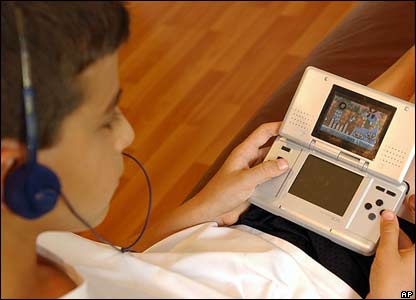
Being that my son is a big gamer, he enjoys and adapts to games well.  He was fortunate, this summer, that his summer school math teacher picked up on the idea of gamification, as every day my son and the other kids in his class would play a card/board game that would teach math skills. He enjoyed it very much, and there was a social skills aspect to it as well, which helped. Granted, it was not a video game or digital online game, but the principle is still the same–it was a game, and he was learning the skills he needed to learn.  So many online games can teach without one realizing it, and making learning so much more accessible.  Even the popular Angry Birds game–one of my son’s favorites–is actually a fantastic game that teaches physics and problem solving skills. I don’t say no to him playing Angry Birds on my iPad or iPhone.  He’s learning, at least, and developing skills that may help in the future as some sort of engineer.  Even as an adult, I can say that I would enjoy something more interactive online than something static or something that’s essentially a page-turner.

This is where mobile comes in. We all know the benefits of m-learning functionality, such as providing just essential information, having web capabilities to interact not only with others, but use tools like social media and researching on the web, and sharing resources is a big deal. Even the nature of m-learning is beneficial, because good m-learning design breaks things up in to small pieces than if it was done as a regular desktop course or classroom lesson. With m-learning, a child can record the class while attempting to take notes, and listen to it later while doing homework, rewinding parts of the lecture while rewriting or filling in missing information in notes.

I know for me, it was a big deal to be able to manipulate my studies to make them mobile. I would use the Microsoft OneNote app on my iPad to do initial drafts of homework assignments during my lunch hour, and then sync up my notes so that I could pull them onto my laptop later to clean them up more on my laptop at home. I could watch video or listen to a podcast on my iPad or iPhone, stop it and restart a section if I didn’t quite catch it–or even just stop so I could catch up writing notes first, then continue. You can’t do that so easily in a classroom. I could pace myself much better, and as a result, my retention was better because I could review details as needed.

This is really important for Aspies as they want to take in everything, and very often it hard to keep up because we are still deciphering and translating information given in our heads while the information keeps feeding. Sometimes our brains can’t process quite as quickly, so by the time we have a piece of information processed and we are ready for the next bit, instead of one new piece of information, then next five have happened. Keeping up and forcing oneself to keep up with the pace can be mentally grueling and exhausting. It’s not that we don’t have the mental capacity to understand the information, but rather that our internal processors are different. It’s like having last year’s processing chip in your computer instead of the latest and greatest. It’s not that the chip can’t handle it at all, but rather at a different pace. If you can gamify the information, then the information is learned on a subconscious level, and just like any video game, new skills are attained little by little as you proceed higher and higher in a game. It’s really THAT simple.

So, for you instructional designers, educational technologists and technical communicators that don’t think that gamification or m-learning makes that much of a difference–IT DOES. Believe me! Keep m-learning and gamification in mind. It not only lends itself well to typical learners, but can go miles farther for those with special needs.

Posted in Uncategorized

Adobe has Tech Comm Suite 4 Superheroes? Find out in August!

Scan of the Adobe TCS4 software cover by TechCommGeekMom

Adobe has a lot going on this year with, seemingly, many of their major product lines. First, they upped the ante with the Creative Suite package by not only upgrading it, but putting it in the cloud and creating the Creative Cloud service, allowing users access to many more products for a fairly reasonable monthly fee (especially with the starter fee for students and those upgrading from ancient editions like myself). I love having access to more products this way.

Then, some other major productivity tools also got updated in a major way as well, namely the Technical Communications Suite 4, which included the latest updates of Framemaker, Robohelp, Captivate, and now included the latest update to Presenter as well as several other programs.  This is a big deal! I’m so thrilled that all these technical communications tools that I can use for both general tech comm and e-learning uses are the latest and greatest versions now. 

Ever since my Adobe webinar in June, I’ve had a very nice relationship with Adobe’s Technical Communications Suite group.  They invited me to the preview of TCS4 several weeks ago, and they are nice enough to keep me informed of new things going on, and now and then ask if I can pass along information to my readers as well, knowing how much I do like Adobe products in general.  So, it was great to see that the TCS4 marketing department is pulling out all stops to make sure that technical communicators everywhere–whether they use Adobe’s Tech Comm Suite or another product–know what’s going on with the Tech Comm Suite products. Saibal Bhattacharjee, who is a Product Marketing Manager at Adobe, let me know that Adobe is making August their “What’s New?” month within the TechComm Suite products, and they have several Adobe experts (seen as some superheroes to some) lined up to do informational webinars to introduce the new Tech Comm line-up of products in Technical Communications Suite 4.

Having been part of Adobe’s “thought leadership” webinar series back in June, as well as having attended several Adobe webinars myself in the past few months, I can tell you that Adobe seems to go to great lengths to provide quality information in a way that is not only easily accessible (they are done through Adobe Connect), but also accessible in that there’s no fancy talk–it’s real people who actually know and have made an effort to know the products and how users are using them.  So I can only guess that this new “What’s New?” series is going to be just as top notch.

So far, for the month of August, there are three webinars–all free of charge–set up to get technical communicators up to speed on the new Technical Communications Suite 4.  They are the following:

I predict that a lot of great information will be coming out of these webinars that will help technical communicators with these great new products, and understanding how Technical Communications Suite will help them become more productive workers producing state-of-the-art documentation and output, especially when it comes to single-sourcing and mobile projects.

For more information about the webinar series, check out the Tech Comm Central by Adobe blog.

Posted in Uncategorized

Upgrade Time! PREVIEW of the NEW Adobe Technical Communications Suite 4!

I’m very excited as this is my 100th post here on techcommgeekmom.com, and with this 100th post, I am able to present all of my readers with a special preview.

Adobe’s Technical Communications Suite 4.0 (TCS4) is now out!

Woo hoo! It’s great to see that along with upgrades to the Adobe Creative Suite and e-Learning Suite, now the Technical Communications Suite is getting a major update as well.

Now, you may be wondering, like most technical communicators, what changes have been made between the 3.5 version and the 4.0 version. Good question! There have been several upgrades to the software package, thank you very much. How do I know? Adobe was kind enough to invite me to a preview a little while ago, and even as a newbie to this software package, I can say that I could see that the company is trying very hard to keep up with the needs of technical communicators, and they are taking the necessary steps to embrace mobile technology, which is highly evident in this upgrade.

Now, I took as many notes as I could, considering the presentation went by faster than I could take the notes, but I know that there are a few major highlights that are important to cover.

As the speakers from Adobe started the presentation, they concentrated on identifying key trends they felt were happening in technical communications, namely a movement to structured authoring, rapid mobile growth in smartphones and tablets, the need to make content more interactive, the concern of technical communicators having to do more with less resources, and the need to provide searchable, personalized and socially enabled content. It sounded to me like they were on the right track, especially if the improvements they were about to present fulfilled these needs.

One of the main anchors of Technical Communications Suite is Framemaker, and here in the TCS 4 Suite, Framemaker has been upgraded to Framemaker 11. From what I’ve been able to gather from my observations, Framemaker had its heyday, then it lost favor, and now it’s starting to regain steam again. Framemaker (FM) 11 seems to be taking the improvements make from FM 10 another step forward. Structured authoring was the main focus of the improvements with this product, including multi-view editing environments providing WYSIWYG (What You See Is What You Get) of XML and author sources as well as getting WYSIWYG output as well. Content creators can edit XML documents in any view, and the changes are reflected in all views without manual changes. This bodes well for working towards single-source creation! DITA and XML support has been enhanced as well, and performance using these has been enhanced as well.

A big addition to FM 11 is ability to include rich media objects like vector images with hotspots, video, and 3D modeling. One of the features I liked that was demonstrated was one where play, pause, and jump buttons were created around a video/animation presentation within the content. Nice! The 3D model imaging that can now be used will be great for how-to manuals, so there is better context at looking or training on physical objects, like looking at a machinery part from all angles. From a productivity standpoint, SmartPaste and SmartInsert features have been added to help auto-format pasted or inserted text or content into a new document, but one can still retain the old formatting as well. Another appealing feature is the ability to create your own Framemaker set-up. Adobe’s goal was to enable content creators to be able to author content faster by allowing the creators to customize navigation and workspaces. That sounds great! Of course, what got me most excited was to hear that FM 11 has been oriented to now enable mobile output, including multi-screen HTML5 content as well as ePub 3.0 and Kindle formats. That’s definitely a step in the right direction!

The second main anchor of Adobe’s Technical Communications Suite is RoboHelp (RH), now available in version 10. RH 10 works seamlessly with Framemaker, as it always has, but again Adobe has focused on streamlining the workflow process as well as improving the product’s output. That output includes new outputs for mobile devices. RH 10 can deliver content to iPad as well as other tablets, smartphones, and desktops now—there are 17 output formats now! It is set up so that authors can work in a multi-author, multi-reviewer environment, where it’s easier to personalize and optimize content relevance. Content can be rich media—again, like FM11, and includes various HTML5 outputs that include mobile apps, ePub 3.0 and Kindle now.

The HTML5 output has also been made to be modern looking, frameless and SEO-friendly. The output is responsive design that works well with fluid layouts like CSS 3 and media queries. Like FM 11, RH 10 can customize and optimize the appearance of the content on each screen as needed. Socially enable documentation can be produced using RH 10, which means that creative native and web mobile apps can now be produced from RoboHelp. This is a big boost for making apps for iOS and Android mobile apps. The workflow view is easier as multi-layout options are available, and there is a preview tool that allows the author to see how the output will look on different devices and subsequently, there is the ability to assign different styles to different devices, including the output publishing settings for each device. One of the other features that caught my attention was that now there is also out of the box integration with MS Sharepoint, so it provides end-to-end workflow. Being someone who’s used SharePoint at my last job extensively, that would make things flow really well for output, and I’m sure that would provide a better product for the end user as well!

TCS 4 has several new features about it. While it includes Framemaker 11 and RoboHelp 10 as mentioned, it will also include the updated Captivate 6, Acrobat X Pro, and now Illustrator has been added (most likely to accommodate vector images better) and Adobe Presenter. I think I’m most excited that not only the newly updated Captivate has been included, but that Presenter has been included as well. I think this is a really smart move on the part of Adobe, because between Captivate and Presenter, more interactive content can be created and put out for mobile. And yes, as I mentioned before, the big push for TCS 4 is being able to provide technical communicators with tools to produce output for mobile devices. To use their words, they are “embracing the mobile revolution” with the multi-screen outputs that are in HTML5 and other mobile formats like ePub 3.0, but also providing tools to make the content context sensitive, providing socially enabled apps, and support for optimizing indexes, glossaries, custom metadata and other content features.

Adobe even made sure that it was understood how TCS 4 would work very well for those in the e-Learning world, saying that TCS 4 provides “new workflows to bridge technical communication with e-Learning” by providing tools that can create m-Learning opportunities and rapid step-by-step authoring. Keeping up with other major trends, cloud-based computing is integrated into the product, as review workflows can now be done using the cloud with TCS 4.

One of the new pricing features also includes using the same cloud pricing model. There will be monthly rates as well as a reduced rate that monthly is cheaper than a month-to-month rate. Due to a lot of these new features–especially the ones that help enable publishing content for HTML5 and other mobile content, I would especially upgrade if I had an older version of TCS or older version of Framemaker and Robohelp. The fact that both FM 11 and RB 10 have customizable views is a big bonus, as well as having the capabilities to produce mobile-friendly content is a big boost. Having more efficient single-source authoring, and cloud capabilities—there are a lot of good things that are added to this.
Now granted, like I said, I’m still a newbie to using the product and using it, but from this reviewer’s standpoint based on the preview, it’s good to see significant upgrades to a product making a strong comeback in the technical communications field. I do hope that as time goes on, Adobe continues to keep up with updates to the product, especially considering the “Creative Cloud”-like option with obtaining the product.

It’s an exciting product, from what I can see, if you are just starting out, or need to revamp your technical communications software.

I hope this review has proven to be helpful. Have you downloaded your copy yet? If so, do you think these changes are big improvements or is there still something missing? Please leave a comment below on what you think about TCS 4 so far.

Adobe notified me just as I was writing this post (before I posted it) that I will have a chance to test-drive the product itself very shortly, and once I have it installed, I’m hoping that I can give my techcommgeekmom readers more information about this product–from my newbie perspective, and see if the preview information holds up to the real deal. Stay tuned!