Posted in Uncategorized

Rest in Power, STC

I know it’s been about a minute (ha!) since I’ve written here, but it seemed appropriate under the circumstances to write this.

Last week, I thought I was having a heart attack–a REAL heart attack. My chest hurt, my heart was racing at a million miles an hour, I was having some difficulty breathing, and when I had a head-rush for no reason, I knew something was wrong. With a family history of heart disease, I didn’t want to take any chances. I had my husband take me to the doctor, and she determined that I was experiencing a panic attack. Well, I guess I’m glad it was a panic attack and not an actual heart attack!

But why?

Today, the world figured out a big part of what has been contributing to my stress for a while now. The STC announced that it had shut its doors and is filing Chapter 7 bankruptcy. I was one of those people who had to make that decision. While it was not my decision alone, I know that those on the STC Executive Council and Board are also feeling this stress and sadness as well. While it sounds cliché, believe me when I say that this decision was not made lightly and was very difficult. It was a build-up of years of issues coming to a head despite many best efforts to reverse those issues, and rather than depending on unpredictable “hope” that it would get better, it was the right decision to stop everything. Otherwise, an already bad situation was only going to get worse, and that would not be fair to anyone–the members, or those on the future Board trying to keep things afloat.

While I could go into deeper details of the last seven months as I experienced them as Board Vice-President and what led to this, I won’t. It’s not worth it at this point. Maybe if I ever meet you in person over a drink or lunch, I could tell you the story, but not here.

Rather, I want to use this to express how I’m mourning this loss. I’ve been reading comments from all over the world about the announcement, and trying to help others through this as best as I can.

As someone who started a new career in her forties, STC was introduced to me when I decided to go back to school. I joined as a graduate student, and haven’t left since that time. While I haven’t been a member as long as many people that I know, I can honestly say that STC has been my chosen family. I’ve made a lot of professional connections with people I consider my mentors. The knowledge I’ve gained with my association with STC has been tremendous. It took my knowledge and experience in tech comm to the next level to make my career what it is today. Heck, I don’t know that I would have the job I have now without my STC connection, as that was a “preferred” qualification when I applied.

I’ve also formed many friendships with my colleagues over the years. There’s a large group of technical communicators who I met through STC that are my “touch base” people–they are the ones I don’t have to mask my autism for and can totally be myself. That says a lot. These are friendships I hope to sustain for many years to come through social media and other means, because these people do mean a lot to me, and I might not see them as often now since we won’t have STC to connect us the same way.

So, for me to be one of the main people to push for this closing because it was the right thing to do? This was like taking a loved one off of life support to let them pass on. No one really wants that beloved person to go, but you don’t want to prolong any suffering either. That’s what this feels like for me, and I know it’s felt that way for a lot of longtime STC members and associates.

I’ve been grateful that most of the messages I’ve read or received were of support for the decision. Most people are sad, but they understand that this was not an easy thing to do, and that it’s for the best. It does comfort me that other people can attest to the knowledge and energy that the organization had, which brought some of the best of the best in technical communication out there, and that STC helped with their careers, too.

For myself, it’s disappointing that I’ll never have the chance to apply to be an Associate Fellow or Fellow. But I’m not alone–several people applied for those honors this year, and that’s not even going to be fulfilled now for them either. If things were in a better state, I could have been in line to be the Board President. Well, I got pretty close with being Vice-President, so there’s that. I am grateful that I’m one of the few people who has received the STC President’s Award–that’s nothing to sneeze at. So many people contributed to the long-term success of the organization but will not be able to reap the benefits anymore, which is a hard pill to swallow. But it is what it is.

A lot of us are mourning for this big loss. And it is a loss. I wrote about the benefits of belonging to STC plenty of times over the course of the years on this blog. Sure, there are other organizations that we can explore and join, and other avenues for gaining knowledge, education, and certifications. But STC was truly a different kind of organization. I’ve never felt more supported by any other organization like this in my life. Everyone wanted you to do well. Everyone encouraged you to learn, discuss, and innovate. The genuine kindness and support were unmatched. The STC alumni are incomparable in these respects, and I hope that this will continue as we connect in other ways and carry this legacy forward.

I do want to give an extra special shoutout to two people in this whole thing.

First, to Tim Esposito, the Immediate Past President of STC. Tim and I go way back from trenches of the STC Philadelphia Metro Chapter. While he’s been in STC longer than me, he always encouraged me to step up, has been an incredible mentor, one of my biggest cheerleaders, and a great friend and confidant. I can’t thank him enough, and so glad that we’ve moved up the ranks together (usually with me on your coat tails). Sir, I salute you.

The other person is Liz Herman, the current STC President. So much of this entire process has been on her shoulders, and I couldn’t let her bear this whole thing alone. She did so much of the heavy lifting, and we owe her a debt of gratitude for her grace and leadership under pressure. (This is an understatement.) I’m glad we were able to work together and support each other through this process, and we’re going down like Thelma and Louise–together!

There are so many other people to name, but I don’t know that I could remember or fit them all in. You know who you are. Thank you all for supporting my journey as I’ve become a better technical communicator, teaching me how to fight against imposter syndrome at my weakest moments, and helping me learn how to be a leader. You have my eternal gratitude.

The Society for Technical Communication had a 72-year run. We all contributed to making it a good run while we could. The organization will be sorely missed by many, and definitely by me.

Posted in Uncategorized

Is a membership into a professional society worthwhile?

Yesterday was a gray, blustery Saturday, where it would’ve been easier to stay in bed, drink some hot tea, and curl up with a good book. Instead, I was actually happy to go out in the horrible weather, because I was meeting up with a fellow STC member who lives about an hour’s drive away from me here in New Jersey. Over the years, we’ve become good friends, and we always have a good time together when we do get together. I ventured out to meet up with her for lunch, and we talked for almost 4 hours (and could’ve talked longer).

Why should you care about that? Well, one of the things that the STC friend and I talked about was that STC has a unique culture that if you choose to get involved and embed yourself into the Society, you not only reap the benefits of learning professional skills, and networking with others, but there’s a real sense of support in STC. My friend mentioned that she’s been involved in other professional communities, and very often, it’s more about one-upmanship amongst the members, volunteers, and leaders. While you can make connections, it’s every person for themselves. My friend commented that one of the reasons she’s been in the STC for so long (and she and I started with STC within a year or two of each other, coincidentally), was that the sentiment of “every person for themselves” really wasn’t present in this community. The general vibe truly was one of consistent support for each other and for the Society.

I have to agree with her! Since I truly started getting more and more involved with the Society, I’ve had nothing but support as I’ve ventured along. The members are genuinely friendly overall, and the passion they have for technical communication is palpable. Almost everyone I’ve met is a tech comm geek. Conversations are passionate about content strategy, proper grammar, UX writing, technical writing, and nowadays, conversations about AI. When I entered this profession, I figured it was going to be people who were rather dry because of the type of work we do. I’ve found that the opposite is true, and my friend commented the same. We noted that technical writers are not boring or strictly the grammar police (okay, we ARE the grammar police), but rather we are a lively group with creative tendencies. When you look at the outside hobbies of most of the people we know, there are artists of all mediums (we do have the Tech Comm Knitting Cabal, after all), musicians, actors, food and libation connoisseurs, people who participate in historical societies, and other fascinating hobbies. Don’t let the concept of most technical writers being introverts fool you! (I mean, many are, but not around other technical communicators.) All those interests aside, these are generally not mean-spirited people.

Why is this important? Speaking only for myself, I can say that in all these years that I’ve been involved with STC, I’ve been allowed to take calculated risks and test the waters when I want to try out my project management and leadership skills. As a contractor, one never really gets the opportunity to show or grow in those skills because you aren’t somewhere for very long or you’re in a position–or rather not in a position–to be able to learn how to take the reins of a project because you are a temporary worker. As an STC volunteer, I’ve had so many opportunities to gain experience as a community leader when it couldn’t happen professionally due to my being a contractor. At the same time, one of the things I’ve learned at STC is that a) you can’t exactly terminate a volunteer (it’s very difficult), but b) it’s also a safe place to make mistakes for the same reason. You can try again, and you have the support of your fellow community members who want you to succeed.

My friend noted the same thing for herself. She’s held various community positions, and at one point, we ever worked together on a committee. While we have our home state/location in common, we come from very different backgrounds and experiences, and we both were able to see how we could bring our collective strengths to the table. I think she was the first chairperson I met of any kind who clearly understood and always tried to put forth that she understood that our volunteering wasn’t our job, and that we did have lives outside of STC and she respected that. That was a great example for me to follow, especially since I always wanted people to understand that I was giving all I could within my bandwidth. That said, she and I also agreed that you get out of STC what you put in, and that as a volunteer, if you make the commitment to do something, you really need to do you best to stick with it and not sign up for something just to have your name on the committee roster.

The one thing that we also noted–which isn’t always possible–is that member try to make the trip to the STC Summit if they can–at least once. We’re a global organization, so it’s nice to be able to put actual humans with names and photos and videos of people we’ve met online over time. You also meet a lot of new people in the process, too. This not only builds up your professional network, but so many of the people I’ve met have become my friends.

Due to the nature of my job and my responsibilities at home, I really don’t get out much, despite what people things of me as an extrovert. But I was thinking of all the people who I’m hoping to get together with this year outside of Summit, and they are all STC people. These are all people who have my back, and I have theirs. And that’s saying something on my part, because I don’t throw my support to people lightly. You have to earn that right and trust from me. These are people that I’ve learned to respect and learn from, as well as have a good giggle with sometimes. Even yesterday with this friend, we talked about STC things, technical communication things, and things simply going on with our lives, like trivia contests and travel.

STC, through all the ups and downs that have gone on in recent years, is my “home”. It’s been there to support what I do, and connected me with others who are as passionate about tech comm as I am. I don’t feel alone. I feel empowered. When I didn’t have a job, my STC community was there for me to help me move forward. My friend and I talked about “company culture” and how many companies will talk the talk but don’t always walk the walk–that it’s more lip service or propaganda than actual “family”. I mean, it’s your employer, not your actual family. STC feels different in that it IS family in a sense. It’s a positive “company culture” that is real, and as a Board Director now, I work with others who are as passionate as I am to keep that culture and community going as the world and the world of tech comm transforms. It’s a constant.

So, have I been assimilated? Yes. Resistance is futile for me.

Have you experienced either the good–or not so good with an association that you are affiliated with? Include your comments below.

Posted in Uncategorized

So, how was your 2020? Good for you, too?

Let’s face it–2020 was a horrible year for everyone for a variety of reasons. And it was no different for me. One of the things I’m trying to do as I reflect back is understand how lucky I was in so many respects. No one in my immediate family has gotten COVID at this point. No one in my immediate family had died from COVID. My husband didn’t lose his job (since he’s the main breadwinner of the family), we didn’t lose our house, no one got horribly sick with anything that couldn’t easily be treated, no one went hungry–nothing like that. In that respect, I count my blessings.

Things that weren’t so good were included that we lost my father-in-law during this pandemic. He was located in another country, and my husband couldn’t even travel to say goodbye or pay his respects. He had to be on a video call with his half-brother to watch his father be buried. I lost two friends this fall from STC, which made me sad, and one of my best friends lost her mother a few weeks ago. A year ago exactly, I was let go from a job I wasn’t happy with, but the release from my contract was sudden and without much warning and was not handled well. I thought I had something lined up…a friend from graduate school had given me the lead, and I got the job. It would’ve been the most lucrative thing I’d done, and I was up to the challenge, but that fell apart before the pandemic hit. Having missed the new year window of job opportunities (most job listings are around the new year and the fiscal new year in July), I struggled to find opportunities and get interviews. And then…the pandemic hit, and hiring freezes were abound. While I had unemployment insurance funds to get me through for a while, it was a good thing that I am always saving money and conservative with my money, because I had to go into my nest egg for most of the year. I did pick up a few small side gigs–and that helped to not only buoy my finances, but also my confidence when it was at an all-time low.

You see, for most of this year, I was in a deep funk of depression. People would call me “inspirational” for constantly trying to pursue work and keep things going. I can assure you now, there’s nothing inspirational about it. It’s called survival and doing what you have to do, even if you aren’t up to doing it. 

Job hunting constantly is exhausting in and of itself, but constantly getting “ghosted” and rejected takes a toll on you after a while, or getting some big rejections when you thought you were getting close to securing that job that you wanted…it can be a big blow to your ego. Now, imagine doing that for almost a year. I even had one job offer that I was looking forward to, only to have an opportunity–for the second time in the same year–retracted due to no fault of my own. I mentioned the first one at the beginning of this year. It was a situation where I was the sub-contractor, and the client decided that they were not ready to go through the project after all, so they dumped the project, so I had to be dumped in the process as well. No fault of mine.  The second one was the fault of the recruiter. Because of some sort of legal mumbo-jumbo going on with drawing up the contracts for my consulting employment with the client, the deal didn’t go down–after I had already faced some daunting and difficult interviews to secure the job in the first place. I was really starting to lose hope, and I spent a good part of my year trying to figure out the answer to the question, “What’s my next move?” Frankly, I had no idea. Part of that involved reminding myself that I probably wasn’t doing anything wrong at all–it’s just the circumstances of what’s been going on with a pandemic. 

Add to that other stresses going on. My son started college at the local community college at the beginning of the year. He’d had problems with the program he was in during the last quarter of 2019, and he’d been asked to leave–essentially because the educational facility where he was didn’t have any clue how to support his special needs appropriately. It was a blessing in disguise, because now he’s in a good program at this local community college. However, he still has to get general education requirements out of the way, and those have been a challenge. Between his dad and I (mostly me), he’s halfway through the general education classes, and passing with what’s probably a mid-to-low B average.  He was just starting to gain some independence when that was taken away because he couldn’t go into classes on campus. That was a big step for him. and the pandemic set him back quite a bit.

The last stressor was my chapter–STC-Philadelphia. For whatever reason, pulling in new volunteers has been difficult for the last few years, and I knew that if we continued in the same way we have been, the chapter wouldn’t be sustainable for much longer, and it would fold. We lost some money due to the CONDUIT conference we had to eventually cancel due to the pandemic. So, a big part of my year was trying to reorganize and try to keep the chapter afloat, bring in new people, and set new expectations to stay afloat. I couldn’t bear the weight of it all on my shoulders anymore.

Things didn’t finally start to turn around until the end of October, which was good because I thought I was on the verge of a nervous breakdown by that point. But they started to improve, just in time.

First, I was grateful that I had those smaller gigs, because when I needed a little boost that validated that yes, I do have the skills and experience needed to do something, I had it. Thanks to Kevin Siegel for being one of those people who gave me a chance, even though it was short term. I enjoyed the work very much. But I was also happy for finally finding work that I’m enjoying now and getting compensated appropriately for. I like working for a manager speaks the same content design and UX design language as I do. One of her requirements was that she wanted someone who’s active in STC, and I’ve got that in spades! My suggestions and recommendations are not nixed, and I actually feel valued again. That’s all anyone really wants with their job, if you think about it. They want to feel productive in what they do, valued for what they do and think, and compensated fairly for being productive and valuable. I’m getting that now, so just for that, much of my depression has been lifted.

Next, my chapter is still afloat. We have a new team that’s starting to come together now, and the new chapter president is doing fine. I still advise, but the weight is off my shoulders. In fact, I was able to move into new volunteer opportunities. I was invited to be on the STC Education Committee and the STC Community Affairs Committee (CAC), both of which are high profile groups at the Society level. I’ve been working hard in those groups, and finding my value there, and getting great support from the chairs of those committees.

And…while the deaths of friends and family weren’t due to COVID, COVID did have an impact. I’m hoping that now that the US has a new president and vice-president elected, things will get better. Like many in the US, I was on pins and needles until that final count came in. I cried for joy for hours–something I’ve never done in a situation like that before. Why? Because of the relief that some semblance of “normalcy” and decency is going to be brought back to our government. The US is not out of the woods yet–it’s still going to be ugly for a while, but decency and morality and ethics prevailed in the end. That anxiety was alleviated a bit, too.

So, as 2021 begins, we still have a pandemic. We still won’t be able to do what we want to be doing. Not having a vacation or leaving the state is taking a toll. I need to break away, but being slightly immunocompromised, I really don’t want to take my chances outside my immediate area where most people are generally good about wearing masks and all the other stuff. (Yes, even in hard hit New Jersey.) I was looking forward to going back to conferences and seeing my friends. I’ve seen them online and in video chats, but it’s not the same. I haven’t seen any friends for ages except one and that’s only because she’s my dermatologist, too.

I think when all this pandemic stuff started, it hit me very hard and pulled me down hard because there seemed to be no end in sight. As a person with high-functioning autism, and just as a human being–I needed something that gave me some structure and something to look forward to. I couldn’t look forward to a vacation or anything like that all year. Now that a vaccine is out (even if I am not probably able to get it for another year), that means there’s some hope again–that there is an end in sight. In my eyes, it’s about a year from now. I’m thinking that things will be different this time next year. I will have probably finished up my current contract, and will be sad to go but on the hunt again. My son will have started the classes in his major and gained his newfound independence again. And “normalcy” will start to bloom again, albeit slowly, but surely.

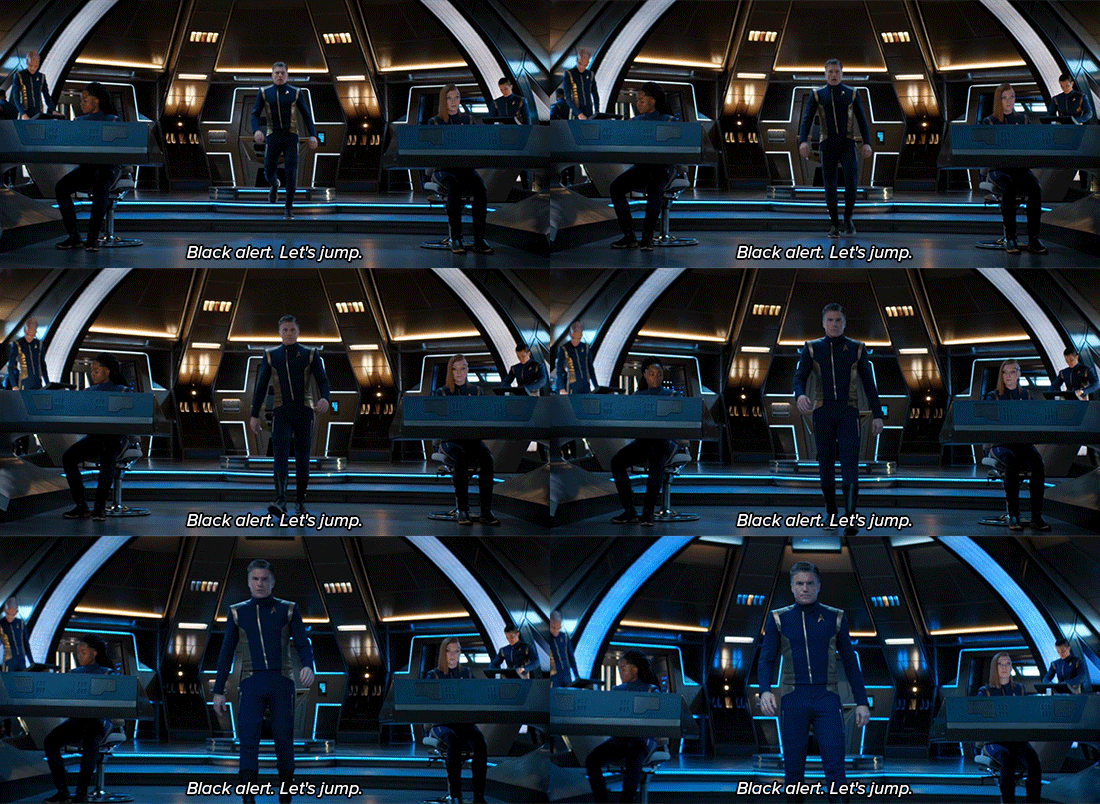
One of my tech comm friends recently was down on herself because she didn’t hit any of her goals this year. Frankly, neither did I, except for one that I made later–stay alive! This is my goal for this year as well. We shouldn’t be hard on ourselves for not always attaining what we want to do. First, we’ve been in a pandemic, so we need to adjust. Secondly, this year, as horrible as it has been, has helped many people–including myself–realize what’s really most important to us. Survival and supportive personal relationships are key. You do what you have to do–physically, mentally, and emotionally to stay alive. Most of us have been on “Red Alert” all year, and haven’t had a chance to back down to “Yellow Alert” (sorry, I’ve been watching a lot of Star Trek this past year), but I’m hoping that 2021 is that “Yellow Alert” year–where we still have to be cautious and use our heads, but pure survivalist instincts will take over. 

I’ve often reminded people of two things– humans are adaptable creatures, so anything thrown our way, we can learn to adapt. This was definitely a year of learning how to adapt! The other part of it is that life is not a race. Only matters of life and death should be rushed–all the rest is nice to have sooner than later. Even earlier today, I was talking to my husband (who is an IDL developer/programmer) about this, especially in relation to IT or tech comm work. Forcing patterns and speed help nothing. Agile is good in theory, but I’m seeing more and more often that good content and UX is sacrificed for the sake of speed getting it up. The “bling” of UX layout and visual design is still overridden over content. We talked about SCRUM and DITA, and where is works and other instances that it wouldn’t work. All of these things are worthy discussions and have valid guidelines for practice. Perhaps in light of what’s going on, it’s time to take a few steps back, take out time, and rethink things. What’s REALLY important? What’s more important to you and your users–that they get the info they want and need, or that your site looks “sexy”? 

My goals for 2021 are simple:

  1. Stay alive
    1. Get the vaccine when eligible
  2. Eat more veggies this year
  3. Move a little more (not exercise or exercise more regularly, just move)
  4. Stay in touch and support the people who I care about and support me in return
  5. Stay flexible and learn what I can in my current position. 

We never know what’s going to happen from year to year–despite the best laid plans. Keeping your plans simple will help you achieve them, and also help keep you feeling sane. Self-care and self-love can go a long way, so do it when you can. 

Here’s hoping for a better year ahead in 2021. Let’s be stealth and jump to Black Alert. (Really–it’s worth it if you watch a lot of the current Star Trek series. Great entertainment as well as mental motivators.) 

Posted in Uncategorized

Content in the Age of Coronavirus

Man watching TV intensely Welcome to day 4-ish of my self-quarantine from the coronavirus pandemic. I say 4-ish because I went out on Sunday, but once I came back, I’ve stayed home every since. I went for a walk with my husband around the neighborhood yesterday for a little bit of fresh air, but now most of the weather is expected to be wet and soggy for most of the next week, so other than a doctor’s appointment that hasn’t been cancelled yet, I plan to stay indoors.

This post was inspired by something that I just watched on Twitter. Normally, I don’t watch Jimmy Fallon and the Tonight Show much (we’re more Late Show with Stephen Colbert people), but I saw he had posted a “home edition” post, and I was curious. I didn’t watch the whole thing, but he said something in his conversation with Lin-Manuel Miranda in passing that perked my ears up. He mentioned that right now, it’s “all about the content”.

BAM!

In the conditions that all of us are in right now, with most of us on self-imposed quarantines, many don’t know what to do with themselves if they aren’t doing their work from home or helping their kids with schoolwork. Being generally sequestered indefinitely, they yearn for content to keep them abreast of what’s going on in the world as well as something to entertain them to help pass the time. Many business-related companies that have means of broadcasting through webinars or the like are already taking advantage of this, and trying to help the “cause” of needing content to help people get through these times. So many people are not used to staying at home for long periods of time, unless they’ve been seriously ill, or snowed in from a blizzard or other natural disaster. Perhaps because I’m a bit of an introvert, and I’ve worked from home for a long time, I’m used to staying home and not going out for long stretches of time. I am a natural couch potato–my mother used to criticize me for it, but I’ve always loved watching TV to watch all the comedies, action shows, and documentaries I could. I swear half of my knowledge comes from pop culture from those years of intensely watching TV from the 1970s-1990s especially.

So, this is an opportunity to either appreciate the content that is out there or start creating your own. I’ve been watching documentaries, movies, and TV shows that were on my watch list for the longest time, and I’m starting to read some books again. At the same time,  I’m working with my programming chair/vice-president of the STC-Philadelphia Metro Chapter and another STC person on creating other content and events to go on virtually in the coming months.

Now, you might think that you need to have fancy equipment and lighting and audio to create content. Nope. Heck, this blog post is content. It’s taking up some of your time, and giving you something to think about, doesn’t it? Additionally, it’s not about the “bling”. Again the point is the content itself. What is the big message? What value does the content–whether it be text, video, audio, or whatever–have? Does it need to be “perfect” in order to get that main message through? In my opinion, it doesn’t not have to be glitzy. It’s nice when it is, but it doesn’t have to be. All content, as we’ve been told by content marketers, is about storytelling. Yes, that procedure manual you are writing or those instructions that you are writing as a technical writer are still telling a story. Any kind of entertainment we watch right now is content and it’s storytelling. Content storytelling comes in infinite forms, after all.

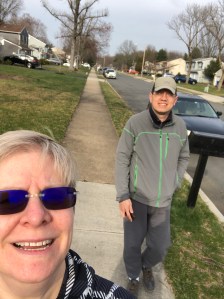
Photo of TechCommGeekMom and hubby walking in their neighborhood.
Here’s my contribution. Here’s a photo of me and my husband taking a walk around our neighborhood. It’s usually this quiet around here for the most part anyway. We didn’t stay six feet apart for long!

What kind of content are you either going to consume or create today? For me, it’s watching a mini-series on Hulu, then watching Star Trek: Picard and the Ready Room later today. I might create some storytelling by submitting my resume to another job opening. I know I’ve definitely been having conversations via social media and instant messaging with friends and family during this time. For me, most of this is generally the same as usual–I fill my life with content. Content is storytelling, but it’s also how you fill your life with experiences. Going out for a walk to get some fresh air is still absorbing content–you are using all your senses to create your story of taking that walk outside. You can translate that into further content by either video recording that walk, taking photos along the way, or writing about it later. No matter how it’s processed, it’s content.

So, while it’s frustrating to be sequestered for this long, we all know it’s for our own health and for the greater good of the PLANET. Coronavirus has definitely hit my area, and with my bad asthma, I’m hesitant to leave the house–other than a neighborhood walk–for anything for the most part. I know a lot of people are having a hard time with this, but we really are in this together. My recommendation is to concentrate on the good content that is out there. Be aware of the “doom and gloom” to be educated, but focus on the better stuff. Pay attention to how others are helping each other. Look at the content that people are putting out to ensure that you are recognized, loved, helped, and that your mind is staying active. Watch webinars and video conferences. This is a great opportunity to hone your verbal and written communications skills because working from home involves better communications skills than when you are in the office. Appreciate and enjoy all the entertainment and education that the media offers. You know I learned how to cook better over the years from watching a lot of the Food Network? My husband I have learned a lot about DIY projects and real estate from watching HGTV. It’s an opportunity for you to read all those books that you’ve been collecting to read and “will get to eventually”. This is time to spend with your families. This is a time to break out your creative side and draw, paint, knit…whatever. Learn to exercise at home doing something different–there are plenty of “dance parties” and yoga classes online where you don’t need equipment. Use this time to absorb content that will help you be a better person when you emerge from the quarantines. It will help distract you from the doom and gloom. Contribute content when you can, even if it’s a one-to-one instant message conversation with a friend, or an email. I know an email checking in on my parents lifted their spirits that I was checking in on them. Or heck, a blog post. 🙂

It’s all about the content right now. Learn to absorb and appreciate what’s out there right now that we can use, and help contribute positive content to share.

What are your thoughts? Include your comments below.

Posted in Uncategorized

How do we determine the bounds of digital literacy?

Yes, you are seeing this correctly. There’s a blog posting from me. No need to double-blink in disbelief. I am still alive and well. I don’t always get much of a chance to write here because I’m busy! One of these days, I’ll try to catch up with what’s going on with me, but in summary, I’m busy teaching a technical editing class at NJIT, working a part-time gig for BASF, working a “freelance contract” with a pharmaceutical company as a digital content strategist, and working my tail off for the STC-Philadelphia Metro Chapter as president, conference chair, sponsorship chair, and competition chair.  Not a lot of time to come up for air these days!

But as I do have a short moment right now to put these thoughts down, I thought I’d start this conversation, because it is a frequent topic that comes up again and again in all the things I’m working on these days.

Where are the boundary lines what constitutes digital literacy? Just like a person needing to know how to read and write, we live in an age where almost everything is done digitally these days.  You can’t do a lot of what you used to be able to do on paper or manually. You call a toll-free helpline, and you are most likely to get an automated chatbot responding to you before you can even get to a real person. Credit cards use chips increasingly more than the magnetic strips, or even use Apple Pay, Samsung Pay, or the like. To get help for anything, most people go online to find answers through browser searches.  So where’s the line of what’s considered digitally literate and digitally illiterate?

I bring this up because I often get into discussions about what is acceptable and user-friendly UX, and what’s not. I usually follow the tech comm mantra of “know your audience”, so many of the audiences I have to deal with aren’t necessarily the most digitally savvy bunch. I’ll argue to include something to make interactivity with the site more apparent, whereas others will argue that it’s not necessary.

I also wonder about people who still can’t figure things out like social media, or GMail or Google Drive, or things like that. These have been around for a decade–or more! There are other apps and sites that have also been around for a long time, and people still have no clue how to begin to use them (and it’s more disturbing to me when it’s someone who has to either work with digital on a daily basis, write for digital, or is teaching digital).  Now, some may argue that it’s a generational thing, but I don’t agree. I know people who are my parents’ age (into their 70s) who have a better clue than I do about how to use digital, and are very good at it. And then I know people younger than me who have no idea how to use word processing or a simple spreadsheet. It runs the gamut.  Digital has been a part of society for at least the last 30 years, and there isn’t anybody who isn’t touched by it these days. Those who don’t adapt fall behind. Digital is pretty much everywhere, and it’s even easier to use now than it was in the decades before.

Case in point: I recently had to go for my yearly eye exam. My optometrist is still scheduling in a paper book, does her bookkeeping in a paper book (the receptionist writes out receipts rather than prints them out), and most of the records are still done solely on paper. Additionally, they don’t have an up-to-date database or access to one to look up insurance information. I was told that I didn’t have certain kind of coverage, but when the place that I got my glasses (a different place than my doctor) looked the information up, I did have the coverage. Why? They could access the information online more easily.  While it seems old-fashioned, my doctor is actually severely behind the times, and she’s going to have issues keeping up with more modern practices soon enough. She complains that there’s no software that meets her needs, but she doesn’t know that no software will meet ALL of her needs, and she needs to work with a vendor to customize things as much as possible so that it WILL meet her needs.

I also had to deal with someone for whom I had help them sign onto Google Drive and Gmail. I’ve told this person many times how to do it–in writing, no less–and they still can’t figure it out. I don’t think it’s my instructions, as others have used the same instructions without any issues. I think part of it is a conscientious mental block that person puts up, because they don’t want to learn.

So, this is why I ask…

As a society, we put great emphasis on the basics of learning how to read and write. Same thing for understanding the basics of mathematics. So what’s the functional literacy level for using digital? I will grant you that understanding how to use digital has evolved over time. But there’s a point where, even as technical writers, we need to be promoting better ways to be literate. For example, if you are on a webpage, and you see text that’s in a different color or especially if it’s underlined, wouldn’t that tell you that it’s a hyperlink, and it’s going to take you somewhere else or open another window? Then why do we still have text like, “Click here to view the video” instead of “View the video”–or better yet, if the title of the video is mentioned in the sentence, just hyperlink the video title? This is especially true when it comes to writing for mobile, as you can’t “click” on something, just as you can’t “tap” on a desktop/laptop interface unless you have a touch screen.  This is an example of something that’s incredibly basic, yet there are those who still don’t get it.

So how do we define the parameters of being digitally literate versus being digitally illiterate in this day and age? I know I have my own ideas, but I would like to hear yours.  How would you define these parameters? Include your comments below.