Posted in Uncategorized

TechCommGeekMom’s TechComm Predictions for 2014

sarahjane-crystalball
Sarah Jane Smith of Doctor Who is gazing into her crystal ball, trying to figure out why the 3rd Doctor and the Master aren’t going at it with more mobile tech.
Happy New Year! Welcome to 2014!

I had set several goals for 2013, and for the most part, I achieved many of them.  Due to finally having a job this past year, I was able to pay for my new kitchen outright (okay, we saved on labor costs because my multi-talented husband installed everything–and I mean everything–except the Silestone countertops), so I have a new kitchen that I love.  I definitely travelled more, as I visited Atlanta for the first time in 21 years due to the STC Summit, and I got to visit Portland, Oregon again for Lavacon.  I didn’t get to go to the UK, however. And I still don’t look like a supermodel yet.

My 2014 goals are still fairly ambitious, I think. I would like to build upon my web publishing experiences at work, and figure out how to become a content engineer, rather than merely a content manager. I’m hoping that attending the Intelligent Content Conference in San Jose, CA this February and attending this year’s STC Summit in Phoenix, AZ will with help with that. I’m not sure if I’ll be able to make it to Lavacon again until later in the year. I still want to go to the UK, but I think I may have to wait a little longer for that. If there’s a way to combine a vacation and a conference there at the same time, perhaps I can pull it off later in the year instead of going to Lavacon (just to vary things up a bit).  I had hoped to become a certified Muse expert last year, and that didn’t happen. Perhaps I can try this year. I also got the “WordPress for Dummies” book this year, which has inspired me to become more expert at using WordPress. I currently use the version hosted by WordPress itself, but I think it might be helpful to understand how the independently managed version works, too. If I can achieve some weight loss in the process during all of this, I will consider 2014 a success. 😉

As for predictions for 2014 in tech comm, I decided that I would be a little more analytical about it. Two years ago, it seemed that the push in tech comm was that we needed to think more carefully about content management reuse of content, and think in terms of mobile content.  This past year, that was extended to translation and localization of content, taking it a step further. So with those concepts in mind, what’s the next step? In my mind, it’s implementation of all of these with more vigor. Some companies are on top of this, but it wouldn’t be surprising to me if many companies–even large, global companies–are not on top of any of this yet, or on top of it in an effective way. I think about companies that I’ve worked for in the past, and how, despite their size and availability of resources, these companies wouldn’t be cutting edge in distributing content for desktops or mobile, and regional sites were not as localized nor standardized as they should be. So, in my mind, this is the year of implementation.

googleglassAnother thing to consider is technology changes. Over the past few years, we’ve been adapting not only to desktop or laptop interfaces, but we’ve also been adapting to more mobile devices like smartphones and tablets.  Marta Rauch, a technical communicator friend of mine who is part of the Google Glass beta testing, pointed

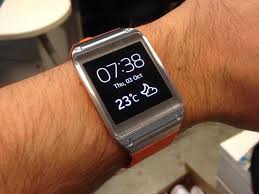
samsungwatch

out that 2014 is due to be a year in which even more portable, wearable mobile devices will become relevent. These devices would include something like Google Glass or similar products, but it also would include devices like Samsung’s wristband device or devices that are synchronized with car components. She’s got a point. Components are getting smaller, and technological portability is becoming more and more mainstream all the time. How do we decide what content is most user-friendly, reuseable, streamlined, and pertinent for these kinds of mobile devices? It’s something we need to start thinking about now.

riker-commbadge
“Riker to the Tech Comm community–are you there?”

So there you have it. At least in my mind, if we aren’t all wearing Comm Badges like in Star Trek by the end of the year, I don’t know what this world is coming to. 😉 But it’s hard for someone like me to figure out where the future is going. I’m grateful there are those who are on the cutting edge that can help me figure that sort of thing out, and can educate me on the latest and greatest so that I can bring it to my own workplace, as well as talk about it here on TechCommGeekMom.

I’m sure that there will be plenty of surprises coming up in 2014. As I said, I have three conferences that I’ll be attending in the first half of the year, and I know with the continuation of this great work contract I have, I will probably be learning a lot of new things through that opportunity, too. My philosophy is to never stop learning, and I plan to continue to learn a lot more going forward in the coming year.

What are you predictions for the coming year? Am I on target, or off-base? What did I forget to mention? Let me know in the comments.

Posted in Uncategorized

Adobe Day @ Lavacon 2013: Scott Abel’s 5 Technologies Tech Comm Can’t Ignore

voodoodonutsignI realized as I was writing this post that this would be my 500th post on TechCommGeekMom. Who knew that so much information and thought could accumulate through original posts and curated content?  I’m also very close to my all-time 15,000 hits mark (only a few hits away at this writing). I wouldn’t have believed you if you told me that I’d hit these benchmarks when I started this blog, but of course, I’m going to keep going! I debated about what I should write for my 500th post–whether to finish my Adobe Day coverage or do something else, and in the end, it seems fitting to finish my Adobe Day coverage, because in many respects, knowing and writing about the presentation of Scott Abel, aka “The Content Wrangler”, shows how far I’ve come already in my tech comm journey from beginner to covering internationally known presenters.

Scott is one of the most prolific and vocal speakers out there on the conference circuit speaking about content–whether it be content management or other technical communication topics.  It also seems like he has written the forewords of many of the best tech comm books out there. He’s everywhere! To boot, he’s an accomplished DJ, and I found myself “bonding” with him over dance remixes and mash-ups while at Lavacon, because I always enjoy when he posts either his mash-ups or his favorite mash-ups on Facebook. (I’ll be writing a post about the relationship between tech comm and dance mash-ups in the near future.)  He is a person who is full of so much kinetic energy that you wonder when he’s going to explode, but he doesn’t. Even the time I saw him at the STC Summit last spring with a bad cold, he was still more on top of his game than a lot of people would be on a good day.  Much like Val Swisher, my love for all things Scott Abel also knows no bounds.  He knows how to stir things up at times, but there is no denying that in his frenetic pace of delivering a presentation, you learn SO much. I’m lucky that he’s so kind to be one of my cheerleaders!

ScottAbel
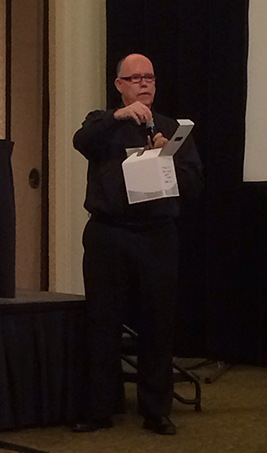
Scott Abel checking his files before his presentation

So when it came to thinking of a garden in Portland to use as an analogy to Scott, I had to deviate. In my mind, he’s the Voodoo Doughnuts shop located about four or five blocks away from the Chinese Garden. Scott’s talks always have lines going out the door, and like many of the Voodoo Doughnuts themselves, the unique flavors dispensed open your mind up to new and delicious possibilities and ideas, and you come back wanting more (hence, more long lines!).  They are both crazy and sweet at the same time. You can’t beat that combination.

Scott was the keynote speaker for Adobe Day as well as the moderator of the discussion panel later in the event. Scott’s topic for his talk was called, “Five Revolutionary Technologies Technical Communicators Can’t Afford To Ignore.”  If Joe Gollner went fast during his presentation, then Scott went at lightning speed, so my notes below are the highlights.

Scott started by telling us that translation is going to be an important part of automated content going forward. It’s important to understand that for the web, the World Wide Web (WWW) is equal to the “land of opportunity.” The WWW can reach a global market reaching new consumers. As American users, we forget that 96% of web users are not in the US. We don’t all speak English globally. In fact, less than 6% of the global population speaks English well, but don’t necessarily read or write it well.

Scott’s list of the five technologies the Tech Comm can’t ignore were as follows:

1) Automated Translation
Why would be need automated translation? We write for the *worldwide* web.  There are over 6000 languages in the world, so translation is a big deal for a global reach and global connection. We need to recognize that content is written for both machines and humans. Even though we write for both machines and humans, we need to write for machines first, as they are the “gatekeepers” of content, such as for searches. Everything goes through the machine first. We need to recognize that writing rules learned in elementary school are no longer sufficient for a world in which language science is needed.  We need to examine our content from the vantage point of a rules-processing engine and ensure it’s optimized for machine translation.

2) Automated Transcription
Automated transcription involves software that translates speech to text for machine use. Without transcription, content is locked and hidden from view. Transcription allows for better searchability of content.  Scott recommended Koemei as a good transcription software tool for video and general transcription, as it can help transform editable content into other languages.

3) Terminology Management
Terminology management controls words in a central place, namely the words used the most and used consistently for branding, products, etc. Terminology management is important for consistency as well as for regulatory reasons. This is an instance where seeking a global content strategist is needed to help standardize processes.  It’s best to adopt a terminology management system, such as Adobe partner and Scott’s suggestion, Acrolinx.

4) Adaptive content
Adaptive content is content that is structured and designed to adapt to the needs of your customer; it’s about substance of the content. Adaptive content adapts to the devices, e.g. laptops, GPS, and smartphones.  Customers are demanding exceptional experiences, so we need to meet their expectations, so it’s up to responsive designers to meet that challenge. Adaptive content makes it possible to publish to multiple platforms and devices.  It is content separated from formatting information. By allowing authors to focus on what they do best, adaptive content makes content findable and reuseable by others who need it. We need to rethink content, as the move to adaptive content involves work, but the ROI (return on investment) can be realized in months instead of years.

5) Component Content Management
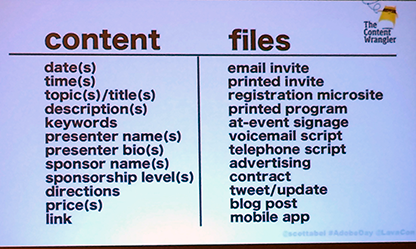
Component content management systems are needed. They focus on the storing of content components that are used to assemble documents. Components can be in all sizes, and can be photos, video, and text. It’s about managing CONTENT not FILES.

Scott provided these slides as his example to show this:

ScottAbel_ExampleA ScottAbel_ExampleB

Structured content, combined with a component content management system, supports personalized content and  targeted marketing, which in turn increases response rates. In this end, this process can save money! The key is to remember that all customers are not the same! Reusing content without the “copy and paste” methods produce the best results. You can ensure that content is consistent by seeking a content strategist who understands content and is a technologist. Implement a component management system. Scott suggested checking out Astoria Software for a good component content management system. 

At this point, Scott’s talk had pretty much finished, but in answering audience questions, he pointed out that there’s a lot more than just these five technologies to watch. He suggested that we should look out for wireless electricity, flexible surfaces, more wireless devices, wearable computing, and augmented reality as well. He also said that in order to mature as a discipline, we need to be content craftspeople, content designers and content engineers. We need to leverage using content and code. We need to think more like engineers, and less like writers and editors. Even websites that are very localized still need to be written for global purposes to improve the English used for the native speakers as well. Controlled vocabulary helps all end users!

Scott covered a LOT of information in a short amount of time, and he set the tone for the rest of the session, as the presentations that followed repeated much of the same information. (This is a good thing, because then we know that the information is valid, coming from several experienced technical communicators!)

Scott posted on Twitter than his presentation was available on SlideShare, but I have it below.

And as always–Scott, if I misinterpreted or misquoted any of the information I summarized above, please let us know in the comments!

Posted in Uncategorized

New iPhones! What does this mean for mobile?

5C-5SI, along with the iOS faithful, waited with bated breath yesterday to hear all about the new iPhone 5C and the iPhone 5S. Considering that the last time I upgraded my phone was for the 4S, I was looking forward to seeing what my upgrade options (that were not Windows or Android-based) were.

I was excited for both models, as I could see these as upgrades. Part of the big upgrade for both will be iOS7, as it is promising to be a more streamlined user experience. While we’ve known about this new upgrade to the OS for a few months, now that it’s close to its release, the excitement can really build up.  There will be more accessibility to the Cloud, more multi-tasking features, easier ability to share data, and a better camera functionality, among other updates. Siri searches are even improved, as it draws more data from Wikipedia and social media now. Maps are improved. Just the OS update alone will make things better for mobile sharing of information. The iWork suite is going to be free, available on the Cloud as well. This is a big boost to creating and editing content, whether it be text, graphics, spreadsheets or video.  My first reaction to this was, “Gee, I spent some good money on getting all those apps a while ago. Do I get a refund now?” I’m sure I don’t, but thinking about this from an educational perspective, this is a big boost. I did use the cloud-based iWork to work on some items while it was available via beta, and I found it to be a great solution for me to work on various documents on both my iDevices and my laptop–and my laptop is Windows-based! I could access it via my iCloud account on my browser, and then work on it later on my iPad or iPhone. It’s a great boost, and I’m sure it’ll help some classroom situations save some money. 

But these new tools–because that’s what these new phones are, new tools–look awesome.  The iPhone 5C and iPhone 5S do open up some new doors to not only use this new OS to the maximum, but they offer new opportunities for mobile learning.

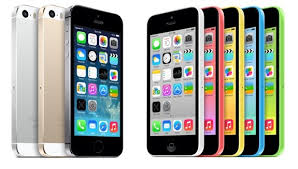
While the iPhone 5C has all the pretty colors now available, the new structure of using a polycarbonate plastic foundation is going to make a big difference. First of all, I’m sure some people are thinking, “Oh my gosh, that thing will crack so easily because it’s plastic, even if it has that silicone case around it.” If you don’t know much about polycarbonate plastics, then you’d need to learn, because you would be wrong. Polycarbonate plastics are often used for children’s eyeglasses because of their strength and rigidity. The same plastic is used for sports goggles and sports eyewear for the same reason. (Being a mom who has a child with glasses, and I own a pair of prescription swimming goggles, I know this.) This plastic is safe enough to protect one’s eyes, even in extreme conditions, as they don’t break easily nor do they scratch easily. So if it’s safe for your kids’ eyes, it’s probably going to be safe for your phone. It’s reinforced with the steel frame that doubles as an antenna, so I think one shouldn’t have any worries if the device is properly cared for, in general.

iphone5c-groupThe 5C will take advantage of all the new functionality of iOS7, which is good, but I think the biggest part of all of it will be its price point. The 16 GB model–it’s “smallest” storage model–will be US$99. For a brand new phone with this kind of functionality, that’s pretty cheap! And because of that price point, people who were buying Android and Windows phones as alternatives because of the price points of those other brands might now be able to afford an iPhone now.  iPhone is known for its customer services, its ease of use, and its ability to have access to more apps than imaginable, so this accessibility will allow it to become a more dominant player in the mobile phone game. I can imagine schools being more apt to buy some of these smartphones or encouraging or subsidizing these phones around the world, because the price point is half of what the “fancy” model is worth, but it still packs a punch.

The 5S device, however, has more bells and whistles. While it does have new colors to its line-up, it’s more about how powerful the device is. It’s really a true microcomputer in the palm of your hand. The 5S is the first smartphone to have a 64-bit processor. How long ago was it that we had 64-bit desktops and laptops? That’s amazing! The CPU performance is now twice as fast as the iPhone 5, including super faster graphics. There is also a second processor in the 5S known as the M7, which is a motion co-processor. It  works more accurately with the compass, accelerometer and gyroscope, so it’s going to spawn more use for health and fitness apps. Who ever thought you might use your iPhone for gym class? All this data can help assess the user’s surroundings more. Imagine using those features for a science class or history class?  The 5S also has an upgraded camera called the iSight camera with a dual-LCD flash with better sensors. In combination with the iOS7 software, it will allow for more accurate photography. There is also a slow-motion video feature and a burst mode on the camera (taking 10 frames per second on the shutter).  The camera alone is pretty cool!

5SThe other big feature is the TouchID, which is a fingerprint scanner on the home button. It’s done for security purposes, but I could see this taken to a higher level, in time, for personalization for access. You know how one can use separate user names and passwords to access a shared device? The TouchID uses a fingerprint to identify a person, and multiple fingerprints can be approved and saved. What if that was used for personalized learning? So, one student would swipe his/her fingerprint, and only certain apps or information would appear. Another student would do the same, and different apps or information would appear. This could work beyond security, and again, I see this as something that could be a money saver for schools. A device could be numbered, and Bobby and Susie could share Device #8 of 10 in a classroom during different periods, and yet have access to different information. The software might not be quite there yet, but that might be the next step, and it’s a feature that could be on future iPads as well.

I think these are great innovations moving forward with both phones.

However, I did see commentary on some social media outlets by some that they were disappointed by the new phones, stating that the new phones were not “innovative” enough. RJ Jacquez was definitely very vocal on his Facebook page, stating, “Absolutely NOTHING innovative from Apple at today’s event. Disappointing! Google is now clearly in control of the Mobile Revolution!”

But I think there were two comments to his Facebook posting in response that caught my eye that I think summarizes these upgrades well. (Yes, I asked their permission first before posting.)

Stefan Gentz, who is a well-known technical communications speaker, responded to a naysayer by replying,

Hey, they just introduced the first 64 bit smartphone in the world! It has a fingerprint sensor that opens up a whole new level of online shopping convenience and security, a new global LTE chip with a whopping 13 LTE bands (which is especially great for continent hoppers) and a superb camera with an aperture of ƒ/2.2 which is even dramatically better than my professional Sony digicam (3.5), even better than most professional DSLR and it can still take 10 pics/sec. And the new motion chip M7 knows when you’re walking, running, or driving. For example, Maps switches from driving to walking turn-by-turn navigation if, say, you park and continue on foot. Not to mention the new iOS7. And this all in a 7.6 mm, 112 g sexy, high-precision case.”

Stefan followed up by stating that all these features don’t add up to nothing!

Paulo Castro, another technical communicator, followed up on Stefan’s comment with the following:

Innovation is not the only thing that matters in a new product. Sometimes you just have to take what you have and make it better, stronger, faster, more reliable, etc. Stefan (above comment) makes a good point in terms of new features.As long as nobody else comes up with something significantly better in terms of new hardware, software, or OS, then Apple may still have a good standing in this competitive market.

I, too, wish we could see an eye-opening product everytime Apple announces something, but the truth I would prefer to have an extremely efficient device at a good price, with high reliability, security, and functionality, rather than a new gizmo with stuff I don’t even need.

I have to agree with both gentlemen. There’s a lot going on with the upgrade of the device itself, as Stefan said. Even Lance Ulanoff of Mashable said of the 5S, “Its new look combined with this more powerful phone and some of the landmark features –- iSight camera, Touch ID –- should make the iPhone 5S feel less like an upgrade and more like a reboot.” But I think Paulo makes a great point as well, which is that in the end, I, too, would prefer to have an extremely reliable and efficient device.  The 5S that I plan to buy will be the third iPhone that I’ve chosen to purchase. I could’ve easily upgraded to a Windows or Android-based phone a while ago, but I chose not to do so.  I would be a rich woman if I had a dollar for every time my son or my husband had to forego using their Android phones, and we relied on my iPhone for something. I’ve never had my phone crash, and I can only think of once when I had to reset the phone and start all over again. Once in about five years, and it was probably five years ago when I was getting adjusted to it? That’s pretty good.

When it comes to mobile devices, there’s no question that I favor iDevices. The new iPhones have a lot to offer, and I can’t wait to order mine!

PS – In case anybody cares to know, I would love to have Lance Ulanoff’s job, or something a lot like it.  Doing social media coverage and blogging about events like this and the tech scene would be a dream come true! 😉

Posted in Uncategorized

Death of the Desktop and Gaming as We Know It

deathofthedesktopIn the past week, I’ve made two observations about how technology is going through an advancement surge. What I mean by that is that there are big changes happening, and it seems like it’s happening incredibly quickly–at least in my eyes.

The first occurrence was last week. My dad called  us because he knew my husband and I had something he didn’t have–more computer knowledge than him. I found it a little ironic, my dad was my first computer teacher in the early 80s when Apple II first came out. My dad, being an educator, was progressive enough to know that these were going to be the wave of the future, and in some respects, he was an e-teacher–an early computer teacher. But here was my first computer teacher asking for help. He admitted that he had let his skills lag, and he was now “a dinosaur”, and didn’t have a clue what he was doing anymore. His desktop had died, but he wanted to retain a lot of information that was still on his old hard drive. My husband declared the desktop was indeed dead,  and suggested that if my dad bought a new desktop, we could probably install the old hard drive as a secondary hard drive in the new computer, and that way he could still access the information.

I took my dad to the local Best Buy and Staples to do some comparison shopping. What struck us both is that there were next to no choices at either store for desktop models. Almost everything was either a laptop, a tablet, or one of those sleek all-in-one units. Considering that my dad wanted and needed one of those BIG desktops–not one of the compact ones, the choices were even more limited.

The irony was that once we brought the desktop back to my house to see if we could install the old hard drive into it, we discovered that it didn’t have a bay inside the casing to accomodate it, but it also essentially only had a motherboard, a power source, a fan, a Blu-ray disk drive, and the hard drive inside. That was it. It was a LOT of wasted space for something that was fairly powerful. The machine also came with the “blessed” Windows 8. I’ve had my hesitations about upgrading to it myself, but my dad had no choice, and the poor chap has been using only Windows XP and Windows 2000 up until now, so he was REALLY behind. Our solution to the hard drive issue was that my husband bought a contraption that you can enclose the old hard drive in a special case, and it turns it into a USB-connected external hard drive. So, that part of the problem is solved.

The Windows 8 solution is not. Dad is struggling to figure it all out, and is perplexed at how Windows 8 works in general. He’s not up to speed with the idea of using cloud-based apps for anything, or even using cloud-based storage.  Since my husband and I are still using Windows 7 (and we’re safe for now), we can’t advise him on how to use it, even though we can give him some advice on apps and cloud-based apps in general. What’s frustrating for my dad is that my mother is even less computer literate than him (she’s been condeming computers for thirty years now), so she’s REALLY thrown by how to use Windows 8. I sent Dad some online resources including an e-book on how to use Windows 8, and he bought another book, so hopefully he’ll be the expert soon enough.

The second indicator to me that things were changing technologically was the closing of our local GameStop store. Now, to be fair, I live in a very small town–one that’s small enough that I questioned why we even had a GameStop in our town to begin with. We liked that store better than the one at the local mall because we got more personalized service, and we liked the staff there. I was only surprised to see that it had disappeared almost overnight the other day when I passed by the shopping center where it was located. I’m sure the store didn’t get enough traffic to warrant it to stay open, so that wasn’t a surprise. I was just surprised that it was done without a lot of fanfare. Related to that, since the store wasn’t there, my son was itching to get a new game for his Nintendo 3DS, and we ended up looking online for choices. Granted, my son is fussy about what games he likes and doesn’t like, so choices seemed slim. But even from my own tastes, it seemed like there weren’t a lot of choices. Here was a portable gaming system that didn’t have many games, even though it’s the most current Nintendo portable gaming system on the market. That didn’t make sense to me. As I later found out, Nintendo is working more and more on putting out games that can be accessed through the 3DS’s wi-fi connection–in other words, accessed through cloud services, and saved on the device’s flash drive or on the SD card that you can install. THAT’S where all the new games were!

As I thought about my dad’s predicament in catching up to the 21st century and my son’s need for more games, it occured to me that more and more access to media of any kind is becoming dependent on mobile services and cloud services.  Really–think about it. As I was finding out from my dad, he could only install or update his Microsoft Office if he subscribed to Office 365–the cloud service. Microsoft has adopted cloud services to deliver its services, as has Adobe. Subscription services are pretty much the main way–and soon the only way–one can get access to this software and applications. It’s rare that anyone gets DVDs to install software anymore–it’s downloaded off the Web now. The same thing was happening with my son. He had better access to games for his device through Nintendo’s cloud services than if he paid for a micro-disk.

These are only two of several observations I’ve made lately that we’re going through a technology surge of sorts that are making what we’ve known and loved for years are quickly becoming obsolete.  Tablets, smartphones, and laptops are pretty much the standard now, pushing mobile to the forefront even more. Touch technology is becoming more prolific, even for the all-in-one desktop computers that are out there, putting it on the same level as its mobile counterparts.  Even the gaming world is getting the clue, with more games downloaded to smartphones and other mobile devices rather than buying the software.  Who buys DVDs or Blu-ray disks anymore when we can download movies and other videos from Netflix or iTunes?

Cloud-based and flash-memory based technology seem to be taking over! Soon enough, DVDs, CDs, and SD cards are going to obsolete like the 5 1/2 inch floppy disks, VHS tapes, tape reels or punch cards! Seriously–think about it–in a year or two (okay, maybe a little more than that), all those things might be GONE.

It’s great that technology is advancing in leaps and bounds like it is. No one is more excited about these advances than I am, in most cases. But I wish I could keep up sometimes! It makes me feel bad for my dear dad, who is getting left in the dust by these advances.  I’m sure he’s not the only one.