Posted in Uncategorized

2014 eLearning Conference 3.0 at Drexel University – Slides!

Today was a bit of a new achievement for me.

I broke out of the tech comm mold a little bit, and actually did an e-learning, or more specifically, an m-learning presentation today at the e-Learning Conference 3.0 at Drexel University in Philadelphia today. I was totally out of my comfort zone, because while I love to talk about and share what I know about m-learning, I’m not an m-learning professional, meaning this is not something I do everyday like the rest of the attendees. I also had never been in front of such a large group (there were 50+ people in the room! New record for me!), and among those who DO use e-Learning everyday. I was grateful that I had people come up to me and tell me they liked my presentation. I was glad that at the end of my presentation, I was able to get a conversation going in the room about m-learning practices.

Not bad for a content strategist, eh? 😉

Due to popular demand (okay, some attendees asked for it), here are the slides that I used. If they don’t make sense for some reason, feel free to ask questions in the comments, or email me directly.

Enjoy!


Posted in Uncategorized

Careers in Technical Communication – 2014

I came across this via Viqui Dill on Facebook. This is done by Carolyn Kelley Klinger, who is a very active member of the STC. This is a great overview of the potential of tech comm in the coming year. The future’s so bright, I gotta wear shades!

Posted in Uncategorized

TechCommGeekMom’s Updated Tech Comm Educational Resources Out Now!

degreeinhandSome updates have been made to my Tech Comm Educational Resources list. There are two new additions.

First, there is a new Master’s degree in Social Media–and it’s an online course of study–available through the University of Florida. I’ve checked out the program and talked briefly with a rep for the program, and it sounds like a great program.

The second new addition is a new Master’s degree in Technical Communication from Arizona State University, which already has a great Bachelor’s program. This ASU program is so new that the first class will start in Fall 2014!  I’ve looked at the curriculum of this program as well, and it also looks very good.

For more information, look for the Technical Communications Education Resource List on this blog by either clicking on the ID/TC Education Resources tab above, or by clicking here.

If you are interested in Instructional Design educational resources, you can click on the same links for the Instructional Design Education Resource List.

If you know of a related program that I don’t have listed for either category, please let me know, and I’ll be happy to add it to my lists!

Posted in Uncategorized

TechCommGeekMom’s TechComm Predictions for 2014

sarahjane-crystalball
Sarah Jane Smith of Doctor Who is gazing into her crystal ball, trying to figure out why the 3rd Doctor and the Master aren’t going at it with more mobile tech.
Happy New Year! Welcome to 2014!

I had set several goals for 2013, and for the most part, I achieved many of them.  Due to finally having a job this past year, I was able to pay for my new kitchen outright (okay, we saved on labor costs because my multi-talented husband installed everything–and I mean everything–except the Silestone countertops), so I have a new kitchen that I love.  I definitely travelled more, as I visited Atlanta for the first time in 21 years due to the STC Summit, and I got to visit Portland, Oregon again for Lavacon.  I didn’t get to go to the UK, however. And I still don’t look like a supermodel yet.

My 2014 goals are still fairly ambitious, I think. I would like to build upon my web publishing experiences at work, and figure out how to become a content engineer, rather than merely a content manager. I’m hoping that attending the Intelligent Content Conference in San Jose, CA this February and attending this year’s STC Summit in Phoenix, AZ will with help with that. I’m not sure if I’ll be able to make it to Lavacon again until later in the year. I still want to go to the UK, but I think I may have to wait a little longer for that. If there’s a way to combine a vacation and a conference there at the same time, perhaps I can pull it off later in the year instead of going to Lavacon (just to vary things up a bit).  I had hoped to become a certified Muse expert last year, and that didn’t happen. Perhaps I can try this year. I also got the “WordPress for Dummies” book this year, which has inspired me to become more expert at using WordPress. I currently use the version hosted by WordPress itself, but I think it might be helpful to understand how the independently managed version works, too. If I can achieve some weight loss in the process during all of this, I will consider 2014 a success. 😉

As for predictions for 2014 in tech comm, I decided that I would be a little more analytical about it. Two years ago, it seemed that the push in tech comm was that we needed to think more carefully about content management reuse of content, and think in terms of mobile content.  This past year, that was extended to translation and localization of content, taking it a step further. So with those concepts in mind, what’s the next step? In my mind, it’s implementation of all of these with more vigor. Some companies are on top of this, but it wouldn’t be surprising to me if many companies–even large, global companies–are not on top of any of this yet, or on top of it in an effective way. I think about companies that I’ve worked for in the past, and how, despite their size and availability of resources, these companies wouldn’t be cutting edge in distributing content for desktops or mobile, and regional sites were not as localized nor standardized as they should be. So, in my mind, this is the year of implementation.

googleglassAnother thing to consider is technology changes. Over the past few years, we’ve been adapting not only to desktop or laptop interfaces, but we’ve also been adapting to more mobile devices like smartphones and tablets.  Marta Rauch, a technical communicator friend of mine who is part of the Google Glass beta testing, pointed

samsungwatch

out that 2014 is due to be a year in which even more portable, wearable mobile devices will become relevent. These devices would include something like Google Glass or similar products, but it also would include devices like Samsung’s wristband device or devices that are synchronized with car components. She’s got a point. Components are getting smaller, and technological portability is becoming more and more mainstream all the time. How do we decide what content is most user-friendly, reuseable, streamlined, and pertinent for these kinds of mobile devices? It’s something we need to start thinking about now.

riker-commbadge
“Riker to the Tech Comm community–are you there?”

So there you have it. At least in my mind, if we aren’t all wearing Comm Badges like in Star Trek by the end of the year, I don’t know what this world is coming to. 😉 But it’s hard for someone like me to figure out where the future is going. I’m grateful there are those who are on the cutting edge that can help me figure that sort of thing out, and can educate me on the latest and greatest so that I can bring it to my own workplace, as well as talk about it here on TechCommGeekMom.

I’m sure that there will be plenty of surprises coming up in 2014. As I said, I have three conferences that I’ll be attending in the first half of the year, and I know with the continuation of this great work contract I have, I will probably be learning a lot of new things through that opportunity, too. My philosophy is to never stop learning, and I plan to continue to learn a lot more going forward in the coming year.

What are you predictions for the coming year? Am I on target, or off-base? What did I forget to mention? Let me know in the comments.

Posted in Uncategorized

Book Review: 8 Steps to Amazing Webinars by Sharon Burton

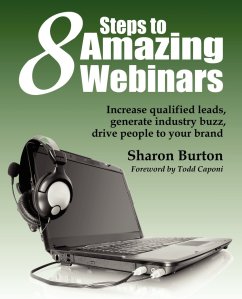
8StepsToAmazingWebinarsIn less than a week from this writing, I will be doing a new webinar that I was asked to do by one of the STC Special Interest Groups (SIGs). I was really honored to have been asked, and it’s about a topic that I think I know a little something about–blogging. After all, this little webspot has been going strong for about 21 months now.

But in putting this latest webinar together, I realized that while I felt that I could whip something decent together, it’s been a while since I had to craft a webinar presentation. This, in turn, reminded me that I had a promise to fulfull, as I sought out a reference in my personal library written by one of my tech comm knitting buddies. Pulling this reference out reminded me that I’ve been meaning to write this review since last spring, but had been side-tracked several times until now–when I really needed it most.

Sharon Burton’s book, 8 Steps to Amazing Webinars, is a slim volume of only 81 pages (and that’s the end of Appendix B), but it’s loaded with very concise information. 81 pages is all you need! Considering that this is a short and concise how-to book, it shouldn’t have taken me this long to write this! I truly try to read any books that I’m asked to review cover to cover, and this was a quick but highly informative read!

There are several things I like about Sharon’s book. It’s short and to the point, as already mentioned. For busy presenters who have many things to do other than solely doing webinars, this is great resource because she gets straight to the heart of what needs to be done. Additionally, one of the things that I’ve found that Sharon and I have in common with our tech comm perspective is that our views are highly customer service-oriented. Before my life in an IT/tech comm world, I came from a customer service/client services background, so much of her advice on the how and why webinars can be great marketing tools geared towards customers made a lot of sense to me.

Sharon’s eight steps take the reader from the point of understanding what a webinar is, through every step of the process of creating and following-up with the webinar, including choosing presenters, topics, technology needed, advertisting the webinar, and all the other preparation steps to creating the webinar. She even includes pointers on how to set up the presentation slides that are most likely going to be used in the presentation.

As I read the book, I was quickly reminded of the first webinar that I did back in 2012 for Adobe’s Technical Communications group (you can find the link on the right-hand column of this blog). I remember not knowing the first thing about how to put together a webinar. At the time, Maxwell Hoffman, who is one of the evangelists for Adobe TCS, guided and coached me through the process, and it ended up being a great success. Looking back, I would not be surprised if Maxwell was already well-versed in the steps that Sharon outlines in her book, because I’m fairly sure that we followed every single step. When I also look back to the first in-person presentation I did, which lead to a recent webinar on the same topic, I realized that I had followed much of the same steps again, and got a great response as a result. These steps are practically foolproof, so I can assure you that if you follow Sharon’s advice in the book–and much of it is really common sense, you should have success in presenting a webinar.

Sharon’s viewpoint in this book is from a marketing perspective, in that webinars are used to drive people to a brand, increase leads, and provide resources to your customers. And for 99.9% of time, this is a main focus for most people who would read this book. But even for people who are academics, for example, who are not necessarily trying to create a brand, but rather disseminate valuable information, this book is still helpful because it put the reader in the right mind-set to create a virtual presentation that is meaningful for his or her audience. For example, while I am promoting my “brand” of TechCommGeekMom, I’m not really selling a product or service the same way that a software company or communications service consultancy would be. (At least I’m not at that stage yet!) Even so, I know that when I present the webinars that I’ve done, there is some sort of value based on the type of information that I’m providing. By referring back to 8 Steps to Amazing Webinars as I prepared for this upcoming webinar, I knew that I was on the right track to maximize the information that I will be delivering. It also made me reflect, based on these steps, what made for a bad webinar, and I’m sad to say that I’ve attended a few of those in my time. I think I even remember one that Sharon and I attended at the same time, and I remember us talking about how disappointed we were with that one webinar, and we had the same sticking points about it.

I highly endorse this book for its strong content and its easy-to-read, straightforward language. Anyone who is doing a webinar–or even an in-person presentation–can gain some great pointers and advice following Sharon’s advice. Hey, it’s such good advice that the book is endorsed by the STC itself, and I know that many of their best webinars follow Sharon’s methods. So that says something right there!

You can find the book on Amazon.com, Barnes & Noble, and XML Press websites. And be sure to follow Sharon on Twitter too– she’s @sharonburton, or on her blog found at sharonburton.com. She always has good information to pass along that goes beyond just how to do webinars!