Posted in Uncategorized

Is it a tech toy or an investment?

google-glass-rachel-king-2948When the one-day opportunity to order Google Glass came up recently, I jumped on it. I had tried on Marta Rauch‘s pair a couple months ago, and had seen her presentations about it, and fell in love with them. This was wearable technology I could use, as far as I was concerned! I was able to order the Glass I wanted, and was very excited about it…until I told my husband. I didn’t tell him how much it cost, but I did tell him that I bought them. He totally flipped out, but not in a good way. He felt that whatever I did spend on them, it was too much money for a “toy”. I’m earning some good money now, and I felt it was an investment–I’d like to explore how they are used, and how technical communication and m-learning would be part of the wearable technology experience for myself. But no.  I cancelled the order, as he had a good point about the cost being too high. Even so, I’m really sad about missing out on this opportunity.

Financial considerations aside, it got me thinking about technological “toys”, and what’s truly a “toy” versus adopting early technology, albeit at a high price initially. I’ve heard Neil Perlin talk about how he had some of the earliest portable computers around–nothing like the laptops of today–that cost a small fortune even by today’s standards. Sure, it’s outdated and obsolete technology now, but so are a lot of other technologies that were around just a few years ago. Children today don’t know what a Walkman is, or that telephones used to actually have a cord and you actually used a dial mechanism to connect your phone to another phone. Heck, pay phones are pretty much obsolete now.  What did people think when the first iPhone or the first flip phone came out? Those are obsolete now, too.  So, sure, perhaps Google Glass is a very expensive “toy”, but how does anyone know if perhaps I was really an early adopter and I’d be ahead of the curve for knowing how to make it work and use it for practical reasons if I had actually gotten one?

I remember when I got my first iPad–it was an iPad 2. I had saved up, and asked anyone who was going to be getting me a gift for my birthday, holidays, etc. to give me gift cards to Best Buy so I could purchase it.  I was so thrilled when I got it, and my husband thought that was a waste of money. He insisted that I already had a laptop, and didn’t need an iPad, that again–it was just a toy. I insisted that yes, there were “toy” elements to it, but I considered it “computing lite”, where I could do many tasks that I normally do, but the ones that didn’t necessarily need my laptop to be powered up. Then, about a year later, I was fortunate enough to win an iPad3 so I could upgrade. My husband had insisted that I sell my old one, but for all his moaning that I should get rid of it, guess who’s been using it for almost two years now? Yep, him. It’s still a little bit of a “toy” to him, but he’s a news junkie, and he loves to read different news sources and some light research on it when he’s not using his desktop (nope, he doesn’t even own a laptop). So, it’s not going anywhere. My iPad has gone with me all over the country–on vacation, to conferences, and has entertained me when I don’t need to be in front of my laptop. I’ve gotten my money’s worth out of mine multi-fold. And yet…I feel like this is the same situation.

Of the emerging techologies that are coming out, whether they are wearables or something else, what do you think is a tech “toy” and what do you think could be the next big thing, or a step towards the next big thing? 3-D printers and Google Glass have my attention–I would love to own both of them. What has your attention? Add your thoughts to the comments below.

Posted in Uncategorized

TechCommGeekMom’s TechComm Predictions for 2014

sarahjane-crystalball
Sarah Jane Smith of Doctor Who is gazing into her crystal ball, trying to figure out why the 3rd Doctor and the Master aren’t going at it with more mobile tech.
Happy New Year! Welcome to 2014!

I had set several goals for 2013, and for the most part, I achieved many of them.  Due to finally having a job this past year, I was able to pay for my new kitchen outright (okay, we saved on labor costs because my multi-talented husband installed everything–and I mean everything–except the Silestone countertops), so I have a new kitchen that I love.  I definitely travelled more, as I visited Atlanta for the first time in 21 years due to the STC Summit, and I got to visit Portland, Oregon again for Lavacon.  I didn’t get to go to the UK, however. And I still don’t look like a supermodel yet.

My 2014 goals are still fairly ambitious, I think. I would like to build upon my web publishing experiences at work, and figure out how to become a content engineer, rather than merely a content manager. I’m hoping that attending the Intelligent Content Conference in San Jose, CA this February and attending this year’s STC Summit in Phoenix, AZ will with help with that. I’m not sure if I’ll be able to make it to Lavacon again until later in the year. I still want to go to the UK, but I think I may have to wait a little longer for that. If there’s a way to combine a vacation and a conference there at the same time, perhaps I can pull it off later in the year instead of going to Lavacon (just to vary things up a bit).  I had hoped to become a certified Muse expert last year, and that didn’t happen. Perhaps I can try this year. I also got the “WordPress for Dummies” book this year, which has inspired me to become more expert at using WordPress. I currently use the version hosted by WordPress itself, but I think it might be helpful to understand how the independently managed version works, too. If I can achieve some weight loss in the process during all of this, I will consider 2014 a success. 😉

As for predictions for 2014 in tech comm, I decided that I would be a little more analytical about it. Two years ago, it seemed that the push in tech comm was that we needed to think more carefully about content management reuse of content, and think in terms of mobile content.  This past year, that was extended to translation and localization of content, taking it a step further. So with those concepts in mind, what’s the next step? In my mind, it’s implementation of all of these with more vigor. Some companies are on top of this, but it wouldn’t be surprising to me if many companies–even large, global companies–are not on top of any of this yet, or on top of it in an effective way. I think about companies that I’ve worked for in the past, and how, despite their size and availability of resources, these companies wouldn’t be cutting edge in distributing content for desktops or mobile, and regional sites were not as localized nor standardized as they should be. So, in my mind, this is the year of implementation.

googleglassAnother thing to consider is technology changes. Over the past few years, we’ve been adapting not only to desktop or laptop interfaces, but we’ve also been adapting to more mobile devices like smartphones and tablets.  Marta Rauch, a technical communicator friend of mine who is part of the Google Glass beta testing, pointed

samsungwatch

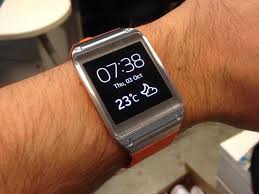
out that 2014 is due to be a year in which even more portable, wearable mobile devices will become relevent. These devices would include something like Google Glass or similar products, but it also would include devices like Samsung’s wristband device or devices that are synchronized with car components. She’s got a point. Components are getting smaller, and technological portability is becoming more and more mainstream all the time. How do we decide what content is most user-friendly, reuseable, streamlined, and pertinent for these kinds of mobile devices? It’s something we need to start thinking about now.

riker-commbadge
“Riker to the Tech Comm community–are you there?”

So there you have it. At least in my mind, if we aren’t all wearing Comm Badges like in Star Trek by the end of the year, I don’t know what this world is coming to. 😉 But it’s hard for someone like me to figure out where the future is going. I’m grateful there are those who are on the cutting edge that can help me figure that sort of thing out, and can educate me on the latest and greatest so that I can bring it to my own workplace, as well as talk about it here on TechCommGeekMom.

I’m sure that there will be plenty of surprises coming up in 2014. As I said, I have three conferences that I’ll be attending in the first half of the year, and I know with the continuation of this great work contract I have, I will probably be learning a lot of new things through that opportunity, too. My philosophy is to never stop learning, and I plan to continue to learn a lot more going forward in the coming year.

What are you predictions for the coming year? Am I on target, or off-base? What did I forget to mention? Let me know in the comments.

Posted in Uncategorized

Get your motor runnin’…Head out on the [mobile] highway…

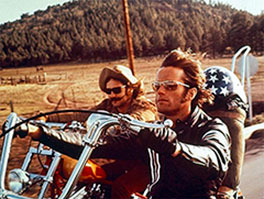
Peter-Fonda-and-Dennis-Hopper-in-Easy-RiderWhen I first read the title of John Daigle’s Adobe Day presentation, “Enjoying a Smooth Ride on the Mobile Documentation Highway,” guitar riffs by Steppenwolf echoed in my mind thinking of the song, “Born to Be Wild” and scenes of Peter Fonda and Dennis Hopper riding down the information highway. OK, maybe not the information highway, but with mobile, it’s an open road right now that is waiting to be explored.

While I hadn’t heard John speak before, I was familiar with his “rock star” status due to social media–mostly through Twitter (you can find him as @hypertexas)–in my e-learning and m-learning forums.  It turns out that John is a big RoboHelp and Captivate expert, so being tied into the mobile highway scene makes sense!

JohnDaigle
John Daigle

The premise of John’s talk was that there are shifts and trends in mobile, and we need to look at organizations as early adopters, figure out the mobile landscape, and look at how user assistance is used on mobile as compared to how reference documentation is used generally. He pointed out that writing and designing for a mobile audience is very different from traditional methods (I agree!), and that he would be offering some hints on how to approach technical communications for mobile.

John pointed out that fellow speaker, panelist Joe Welinske, created the “bible” for Windows Help,  and now has created the “bible” for mobile apps, referring to Joe’s book, Developing User Assistance for Mobile Apps, which talks about the “screen wars” between the smartphones and tablets of various size. These various sizes produce a challenge for technical communicators. John went on to point out that e-readers, such as Kindle and Nook, are still alive and well and doing well as compared to other tablets such as iPads and Samsung Galaxy Tabs.  The initial conversion of print text to Kindle ePubs was a big change in electronic documentation. He also stated that at this stage of the game, Windows Surface and Windows Phone are a little late in the game, but they are catching up rapidly.

Following some of the comments of keynote speaker, Charles Corfield (the post on that talk is forthcoming!), John explained that other products including voice-activated devices, such as those found in some cars these days, are becoming more prolific. Google Glass, which is getting a lot of press right now, is a new game changer in mobile devices, and time will tell what kind of impact it will have.

John told us that as of February 2013, there were one billion smartphones and 150 million tablets worldwide–proof that mobile is becoming more widespread! Corporations are even getting more involved in mobile by buying mobile devices for employees, but many companies are also allowing BYOD (Bring Your Own Device). Companies are starting to embrace the idea of BYOD a little more lately.

Finance and healthcare industries are quickly adopting mobile delivery of information because of the portability of the devices. Mobile devices are being used more in industry and shop floors because they allow users access anytime, anywhere. John informed us that many of the same technical communications skills and experiences needed to write standard information apply to mobile. QR codes are gaining popularity as a  part of the movement of accessing documentation through mobile. John quoted Jakob Nielsen saying, “Killing time is the killer app of mobile.” With that in mind, John advised that technical communicators should learn to use more economic words for mobile, such as  “extra” instead of “additional.”

John also quoted John Caroll, who said, “Minimize the extent to which the systems and the information get in the way of what the user’s really interested in.” Progressive disclosure is key in writing for mobile. It allows one to gain information by revealing what’s needed when it’s needed. Ways to show this in mobile interfaces could be drop-down navigation or overlays. This allows a user to not leave the page, but he or she can still get to information quickly. In this sense, mobile can go right to the source or the heart of information needed.

So the question is, are huge documents (such as what’s in those big company binders) going mobile too? The answer is that technical writers can’t just dump desktop layouts and information onto mobile. This is where technical communicators need to work with developers to do what they do best–help “champion the end users.”

Going mobile is about flattening navigation–but not going button crazy, and getting back to context sensitive help. Technical communicators need to tap into social media to keep content current and accurate, thus becoming curators of user generated content.

It helps to prototype mobile layouts with rapid wire-framing tools, like Balsamic Mock-ups as a popular example. There are many specific tools on the market that are available to assist the developer in facilitate context-sensitive help.

However, there are several design controversies involving the need to upgrade browsers, progressive enhancement, adaptive design and responsive design. Some argue that responsive design is not the best because it makes a device’s CPU works harder, thus it becomes a virtual memory hog when resizing images as needed. Yet, responsive web design can adapt layouts to the appropriate viewing environment with fluid, proportion-based grids.

John suggested using the site, http://HTML5test.com , to help test how compatible your site is with mobile interfaces. He also pointed out that help-authoring tools can do much of the work with single source layout concepts, as different settings in authoring tools can help determine how to make user outputs work properly. Another such tool he recommended was Adobe Edge, as it helps writers to preview and inspect web designs on mobile devices directly ON the devices. For additional tools and information, John pointed us to his website, http://www.showmethedemo.com .

I particularly enjoyed John’s talk, as I’ve been following many of his posts on Twitter for more than a year now. He’s very good at explaining the power of mobile in technical communication, and I think John put this perspective well into view for the Adobe Day attendees.  As many know, I’m a big believer in the power of mobile, and the mind-set for writing for mobile isn’t that difficult if you understand the basics. So, it’s good that Adobe continues to include information about technical communications in the mobile world, as that’s where a lot of change is coming in the future. Adobe made a good choice when asking John Daigle to present information about mobile documentation.

John, if you are reading this, please feel free to add any comments or corrections in the comments! 🙂

Posted in Uncategorized

So this is what Google Glass is about?

I’ve been rather fascinated by Google Glass, to say the least. I could see it as a potential useful tool, especially if it could be attached to my current prescription glasses! I wonder about its usefulness, and how, as a technical writer, content would be developed for such a tool/device.

Evidently, comedian Fred Armisen of Saturday Night Live and Portlandia has thought about it. The first video below was sent to me from my husband. I’m pretty sure that many people think it probably works like this:

SNL’s Randall Meeks Reviews Google Glass on Weekend Update

Shortly after Fred did his bit on SNL, he went to check out a REAL pair and saw how it worked. It’s definitely still a work in progress!

You can read more about Fred’s adventure with the real Google Glass on Engadget.

Either way, it’ll be interesting to see how Google Glass develops in the next year. Will this be the next “it” device? Time will tell. I simply know I’m fascinated by it.

(Edited on 4/24/14 as the video links didn’t work anymore.)