Posted in Uncategorized

So, where do we go from here?

In the aftermath of STC closing, there’s just a lot going on. As the Board VP who is still involved in closing activities, I’ve seen a range of emotions from those who’ve claimed a connection with STC. Most are sad but understand that we had to do what we had to do, and showed appreciation for the organization over the years. Other have expressed things…differently. I have words for those people since they were not involved with the decision making, so I will save those for another day.

Instead, one of the biggest messages from this has been, “Without STC, where can I go for my professional development, networking, and community?” Well, if you do enough research, there are lots of different avenues you can take. Some focus broadly on tech comm topics, and others are more specialized. Either way, there’s something for everyone. Even in these early post-closing days, I’ve seen former members rally to form smaller groups (not affiliated with STC, mind you) to help a grassroots movement to fill in this gap.

Sara Feldman started a post on LinkedIn asking others about these alternatives, and with her permission, the list below is based on all the suggestions that she and others who contributed to her online conversation as potential alternatives to explore.

Please note that these are is listed in alphabetical order so as not to show any preferences or personal endorsements from me for any of these institutions. This is not all institutions, but rather many that either Sara’s LinkedIn post provided or some that I researched. Most descriptions are parsed or paraphrased from their websites. This is simply a partial list that you can use to start your exploration of tech comm professional options:

(Last updated: 5 May 2025)
Organization/ResourceTell me about this
ACES: The Society for EditingACES elevates editorial excellence and empower editors across industries through training, networking, and career opportunities. As an international alliance, they advocate for professionals in journalism, media, publishing, corporate communications, academia, and government.
American Institute of Graphic Arts/ AIGA, The Professional Association for DesignAs the profession’s oldest and largest professional membership organization for design—with more than 70 chapters and more than 15,000 members—we advance design as a professional craft, strategic advantage, and vital cultural force.
American Translators Association (ATA)ATA supports the issues affecting translators and interpreters and actively promotes the value of their services.
American Medical Writers Association (AMWA)AMWA’s mission is to promote excellence in medical communication and to provide educational resources in support of that goal.
Association for Business Communication (ABC)The Association for Business Communication (ABC) is an international, interdisciplinary organization committed to advancing business communication research, education, and practice.
Association of Independent Information Professionals (AIIP)AIIP is a global network of independent business owners running information-centric businesses.
Members offer expertise across a wide variety of industries, services and geographies.
Association of Proposal Management Professionals (APMP)The Association of Proposal Management Professionals’ mission is to be the trusted leader that serves a global community of bid and proposal development life cycle professionals.
Association for Talent Development (ATD)The Association for Talent Development (ATD) is a professional membership organization supporting those who develop the knowledge and skills of employees in organizations worldwide.
Association of Teachers of Technical Writing (ATTW)Members of ATTW work in graduate and undergraduate programs in technical communication, media, engineering, rhetoric, writing studies, and English, among other complementary research programs.
Australian Society for Technical Communication (ASTC)The Australian Society for Technical Communication (ASTC) promotes and supports people who design, write and edit technical and business information.
Button Conference Presented by Kristina Halverson of Brain Traffic, Button content design events and community resources help independent contributors and leads grow in their careers.
Canadian Association of Instructional DesignersThis organization supports professional Instructional Designers in Canada and abroad.
Center for Information-Development Management (CIDM)CIDM is a member organization that facilitates the sharing of information about current trends, best practices, and development within the industry, providing networking opportunities, host conferences, lead roundtable discussions, and publish newsletters.  Hosts of the ConVex conference.
Consortium for Service InnovationThe Consortium is a nonprofit think tank focused on customer engagement. Consortium Members created and continue to develop the widely-adopted Knowledge-Centered Support (KCS) and Intelligent Swarming methodologies.
Content Strategy AllianceOrganization for content strategists, UX writers, content designers and other content professionals. 
The Content Wrangler (TCW)TCW offers over 100 live free one-hour webinars for tech writers each year and maintains an archive of almost 800 recorded shows.
Council for Programs in Technical and Scientific Communication (CPTSC) CPTSC brings together administrators, faculty, researchers, and students to advance the study and teaching of technical, professional, and scientific communication.
Editorial Freelancers AssociationThe Editorial Freelancers Association is the largest and oldest U.S.-based professional association of editorial freelancers. Their members include editors, book coaches, writers, indexers, proofreaders, researchers, fact-checkers, marketing experts, graphic designers, translators, and more.
FireheadEurope’s market leader in finding, placing and training technical communicators. Strong US/ Canada ex-pat community.
Globalization and Localization Association (GALA)GALA serves and supports the global language services and technologies industry which comprises translation, interpreting, localization, and the technologies that support such activities.
IEEE Professional Communications Society (IEEE ProComm)IEEE ProComm supports professional, scientific, engineering, and technical communication, content development, information design, and usability, as well as their potential social impacts.
The Indexing Society of CanadaThis is a global community of like-minded people who enjoy the challenge of providing clear, concise, time-saving guides for readers and researchers.
Information Architect Institute ConferenceThe IA conference exists to promote discourse and learning about the intentional design of information environments. It is a gathering of practitioners from around the globe, who practice and teach Information Architecture and other design-related disciplines.
Institute for Performance and Learning (I4PL)Training, networking, and certification.
Institute of Scientific & Technical Communication (ISTC)The Institute of Scientific and Technical Communicators (ISTC) is the largest UK body representing information development professionals. 
International Association of Business Communicators (IABC)The International Association of Business Communicators (IABC) enables a global network of communicators working in diverse industries and disciplines to identify, share, and apply the world’s best communication practices.
The International Design Association (IDA)IDA is a professional organization dedicated to the design field. 
International Society for Design and Development in Education (ISDDE)The goals of the ISDDE are to improve the design and development process, build a design community, and increase their impact on educational practice.
Knowledge Management Global NetworkKnowledge Management Global Network (KMGN) is a not-for profit network of international KM communities and associations that endeavours to connect KM professionals and facilitate co-creation and sharing of KM assets and resources.
The Kinetic CouncilThe Kinetic Council’s mission is to unite and empower content, data, and semantics professionals through an industry-wide authoritative association. Within this new association, members will create meaningful connections, advance careers through world-class education and certification, and shape the future of these fields together.
Knowledge Management Institute (KMI)KMI provides knowledge management certification and training.
The LavaCon Content Strategy ConferenceVery popular conference where content professionals share best practices and lessons learned, network with peers, and build professional relationships.
The Learning and Development Community (TLDC)Networking and training member website.
 Learning GuildFocuses on elearning, but also instructional design, virtual training, emerging technology, and more.
National Communication Association (NCA)NCA is committed to transforming lives through communication.
Plain Language Association International (PLAIN)PLAIN is the international association for plain language professionals that promotes clear communication in any language.
Rhetoric Society of America (RSA)The Rhetoric Society of America is committed to public facing research, teaching, programming, commentary, training, and engagement in rhetorical studies to confront urgent concerns.
Sunshine State Scriveners Discord ServerFlorida-based tech comm group; made of of former STC members. (Not affiliated with STC.)
Support DrivenThe community dedicated to Customer Support as a career.
Tech Comm ConnectionsTech Comm community sessions on Feb 6 & 11 hosted by Comgenesis.
Tech Comm Group (Slack)Slack Community started by former STC members for networking.
Technical English Association of JapanTEAJ is a Japan-based organization dedicated to promoting clear and concise technical communication. We offer seminars and work opportunities for translators and technical writers who assist Japanese companies in creating effective technical documents in English. Contact us at y_nakayama@teaj.or.jp  .
Tekom Europetekom Europe is the largest professional association for technical communication in Europe whose interest is to promote the professional and business interests of all persons involved in technical communication.
User Experience Professionals Association (UXPA)User Experience Professionals Association (UXPA) International supports people who research, design, and evaluate the user experience (UX) of products and services.
Write the DocsWrite the Docs is a global community of people who care about documentation. We have a Slack community, conferences on 3 continents, and local meetups.
World Information Architecture AssociationWorld Information Architecture Association is dedicated to growing awareness of the discipline of information architecture while promoting social responsibility among practitioners.

While I think it might be a little while before I jump into a new “home” (I’m still dealing with closing up the old one), there are a lot of good suggestions here, and plenty more out there. Here’s wishing you good luck at wherever you land, and hopefully I will meet up with you through one or more of these in the future.


Posted in Uncategorized

Survivor’s Guilt?

Picture shows; JOHN HURT as The Doctor and BILLIE PIPER as Rose Tyler in the 50th Anniversary Special - The Day of the Doctor
Even if you are the last Time Lord standing for good reason, you can’t help but feel guilty sometimes.

I’m in a position that I haven’t really been in before–or at least not for a long time. While my private life is always in flux and stressful, my professional life is generally in good shape for the moment. Even typing that makes me a little superstitious that I’ve now ruined my good luck. But at the same time, I’ve worked hard to get to this point, so I shouldn’t feel guilty. So why do I, at least a little?

Let me back up a little here…this is my reaction to things going on around me at the moment. At this time, there are a lot of companies that are having huge layoffs. ‘Tis the season, unfortunately. The end of the year–especially when many contracts would normally either come to a close or be renewed are not being renewed. We’re seeing huge layoffs at some of the biggest tech companies like Twitter (well, that’s an entirely different story as to why), Meta (aka Facebook), Amazon, Lyft, Salesforce, Microsoft, and the list goes on. Even my company has had some workforce reductions, in that at least speaking for my department, some contractors will not be back after the new year, and there some rearranging going on. Because I’m an employee, I didn’t make the cut–at least not this round.

I say “not this round” because I’ve learned over the decades that there is no such thing as “safe” in the work industry anymore. Generation X was the first generation that understood and experienced that you couldn’t join a company for life and get the mentorship to build a career. We’ve always been on our own, so I learned the hard way very early. Even so, I’ve known people who’ve either been at their company for long periods of time. My husband is one of those lucky souls that’s been at his company for about 20 years now. I know a few others. I believe that my true record for being anywhere is either 37 months, or 7 years–depending on how you view it. The 37-month long job was a permanent position which I left to join a dot-com in the late 1990s. The 7 year one was one which I was a contractor for 2 1/2 years, had a three month break, but then worked part-time (very part-time) as a side gig for another 4 1/2 years. I usually count the former as my true longest gig.

Other than that one long contracting position that was more off than on, I’ve never been in one place long enough in this century to break that 37-month record. I’m hoping I’m on a path to do that, but I don’t hold my breath. I’ve been in my current position for 25 months, of which I’ve been a permanent employee for the past 9 months. I like where I am, and while I’m anxious about what the new year will bring with all the changes, there’s a part of me that’s conflicted about still being where I am, but it’s not what you think.

I don’t have any feeling that I want to leave anytime soon. However, I do have PTSD about layoffs. I’ve seen it too many times. Contractors always are the first to go. But then there’s usually another round that comes to take away the rest. It follows the old saying of “waiting for the other shoe to drop”. The contractors are the first shoe–would I be part of a group that would be the other shoe that has yet to drop? In my head, I don’t think I would be because of the work that my manager and I do–we are relatively critical for ongoing maintenance of the big projects we’ve done in the past two years going forward. That said, I also know that technical communicators are usually underappreciated because so many in leadership don’t understand our value. Many people think they can write, but those in technical writing know better. Even so, I think I’ve asked my manager many times in the last month since finding out that the contractors were not getting their contracts renewed after the new year if we were next. The PTSD kicked in something fierce.

Once I’d been strongly assured that I was “safe” and there was evidence that yes, I have security in the near future and don’t have to start looking for work, naturally I relaxed. But there’s a part of me that said I shouldn’t be so relaxed and feel almost unaffected. My co-workers and friends are being laid off in droves. Some of them are much more experienced than me, and yet, they are out there looking for work. I’ve done my best to try to share job listings when I see them, but it’s now getting to be too much. I want to be a good friend and good person to network with, but part of me almost feels TOO relaxed that it wasn’t my turn for a change. I feel emotionally neutral due to my version of survivor’s guilt. It’s usually me impacted, and for once, it’s not. One part of my brain is telling me that I should not feel guilty, because it’s just business and that I’ve worked hard to put myself in this position of safety. I should enjoy the fact that I’m not stressed out because of my job. Very busy, yes, but not stressed. I know the next month is going to be full of transition learning, transition of my responsibilities, and just getting a lot of normal, high-volume, end-of-the-year work that needs to be done, but I have the support of my manager and the company behind me for a change. I should feel good about this! (And I do!)

But then another part of my brain tells me that’s not being completely cool. I’ve been in the same position as all those people who’ve been laid off WAY too many times myself. I understand the stress, the anxiety, the depression, and the uncertainty that comes with being laid off, even if you know ahead of time. So many of those who were laid off in these past months didn’t deserve to have their livelihood taken away from them, and shouldn’t feel like less when it wasn’t a reflection of their actual work. There are certain habits that I haven’t broken since I was a contractor because of those things, like working a lot (if you don’t work, you don’t get paid), and saving as much as I can in the bank, not spending a lot on big trips or big ticket items, because you don’t know if you might need that money to pay bills and feed your family. I’ve shed the tears, been hysterical, felt lower than low about myself and my predicament more times that I’d like to count. (Hence, the PTSD about layoffs.) So, I should be supportive and try to help when I can– and I do my best.

So, it just feels weird to be in this position–hence, the “survivor’s guilt”. So many are impacted right now, when the world is barely getting its footing back after the pandemic and inflation is higher than it’s been in a very long time, and your paycheck doesn’t stretch as far as it used to…I get it. For the moment, I’m not as impacted as so many technical communicators right now. I do count my blessings, but don’t you think for one moment that I think that I’m smug about not being laid off, or that I don’t care. I do. But for the moment, I’m willing to feel okay about it.

At the same time, for those who haven’t been in this position before, here are a few things to keep in mind:

  • Remember to file for unemployment insurance. Unless you’ve been a freelancer the entire time, you’ve probably paid into that fund even as a contractor for some agency. You may have a lot saved up or not much, but either way, it’s YOUR money–that’s why it’s called unemployment insurance. It doesn’t last forever, but it might help you pay some bills and hold you over a little bit while you look.
  • Don’t stop looking–even during the holidays. My observation over the years is that there are two main recruiting times during the year, namely November through January (for calendar budget years) and between May and July (for fiscal calendar years). So, even with vacations and holidays when hiring managers may not always be available, don’t give up! Keep pursuing and looking because while jobs will still become available during other months, those seem to be the biggest rush months for work.
  • That said, do take time for yourself during holidays. Getting laid off around the holidays is the worst! You’ve already got all the usual holiday stresses, and now you have work/money stress to add on top of that! Even so, cut yourself a break. Take some time to catch your breath, regroup, and enjoy the holidays as best as you can under the circumstances. A new year is ahead, and it’s an opportunity for a new start! (And new starts can begin anytime.) It’s a chance to reassess your personal as well as professional circumstance, and decide how you want to move forward? Do you want a more challenging job or a less challenging job? Are you willing to move? Do you want to work remotely or an office? Do you want to change fields? Are you taking care of yourself and your family, and how does work support that? Now’s the time to do that.
  • On the job hunt, there are several things to keep in mind as well:
    • Make sure you update your resume and LinkedIn profile and take the opportunity to ensure that it’s cleaned up, grammatically correct, and laid out well structurally. A misspelling for someone applying for a tech editor position, for example, would be an automatic “no”. First impressions count. There are plenty of template resources out on the web that can help you with that if it’s been a while. LinkedIn is a HUGE resource for recruiters, and having an incomplete profile does not do you any favors. It should mimic your resume at a minimum.
    • Send out as many applications/resumes as you can. As my husband would remind me all the time, you have more chance of catching a fish if you have multiple fishing lines out on the water–even if you only need one fish. I’ve been through situations with other economic downturns where a single position that used to get 10 applicants now gets 100 or 1000 applicants. As a result that’s no fault of your own, you get ghosted or never hear anything back about a position. So, the more of them you send out, it increases your chances of getting a response.
    • If you see something that you think you might be able to do, but you don’t have experience in “X” (something requested in the job description), apply for it anyway–even if it’s a few things that are missing. There was a study that was done that showed that women in particular were guilty of that–not applying for a position because the job description had a few things required, and the applicant didn’t have 100% of the requirements. Men will more often apply even if they don’t have everything. But I also know men who have that same mentality–if I don’t have all of it, I can’t apply. Not true. I didn’t have any experience in InDesign, Service Now, or how to navigate in Workday, and I was taught all of it in the past two years, and then more. I had the foundational skills that allowed me to learn these quickly, and that’s part of the reason that I got my job. I was able to adapt, and my resume showed that I had the foundational skills to learn and adapt. So take a shot–you don’t know where it might lead you. You can always say no if you get a job offer if you don’t think it’s a good fit. But you have to apply to get to that point first.
    • Keep a spreadsheet–Excel or Google Sheets is fine–to track your search. It doesn’t have to be much, but I usually include the position title, the company (or the client company and the recruiting company), the name of the contact or recruiter with their phone number and email info, the date of contact, the date I forwarded my info, and a field or two where I track the dates of each step going forward. There are times I’ve sent so many applications out that I’ve lost track of where I’ve applied, who I’ve talked to, where I am in the process, etc. This will help keep you on track.
    • Take advantage of your network. For me, it’s always been about my tech comm social media network and my STC network–especially my STC network. Making those connections with other professionals in your field and supporting organizations can make a big difference. They can provide leads, or even advice as you do your job search. Again, with my current job, when I initially applied for it as a contractor, it was the only job I had been offered as a contractor that preferred STC membership. When I asked my manager during my interview why she was looking for that, she said that she felt that those in STC cared about their careers and were the ones that more often went for continuing education to stay on top of the profession. Well, as active as I am in STC, I had that (and still have that) in spades! I also worked my network at the time as I had an STC connection who had gone to my same grad program and used to be in my chapter (she moved) who was in the same company, and I could ask her about her experiences, what kinds of questions they often ask about during interviews, etc. I was able to reciprocate the favor recently when she was looking for a new position, and I could forward her the job openings at my company! That’s how it works. Sometimes it happens, sometimes it doesn’t, but people are always willing to help, so take advantage of that!
    • Take the opportunity to learn something new. Whenever I had a gap in employment, I’ve always used that time to invest in myself. What is a skill I could improve? What’s a software program that is being requested more often that I don’t know? What’s something that I’d like to learn because I’m interested? There are so many educational opportunities and choices! I started my master’s degree because I was unemployed, and I was switching professions (or at least making a course correction), and with appropriate paperwork, etc. I was able to get the state unemployment department to pay for my first three courses of my degree. A bit of savings there! There are also so many other resources out there–STC has a great educational program that I’ve benefitted from, LinkedIn has courses (I took several when it was still Lynda.com), and there’s something to fit any budget. Understanding a skill that you may not have used yet will still get you a little bit ahead of not knowing anything about a skill. For example, you don’t know about structured authoring? Plenty of free resources to teach you.
    • If you are in tech comm, create an online presence. Even if you worked on proprietary stuff, use some items and change it up with fake names and processes that will help you display your aptitude. Create an online portfolio with different examples of the kinds of writing or other skills (like graphic arts, UX design, HTML programming, etc.) that you can show. Another way is to participate in social media forums or heck, write a blog on topics! This very blog was started for that reason–to show prospective employers what I know in a more conversational way. This blog is now 10 years old, so I think it’s been doing a good job for me, even if I don’t write as often as I used to.
    • Do contract work or part-time gigs, as you don’t know where they might lead for the better. One of the things that brings me relief that I’m not currently part of any layoffs is that until I got this current position I’m in, I had not worked a full-time, permanent employee position since the year 2000. Seriously. It’s been 22 years since I worked full-time as an employee, and I don’t mean as a full-time employee of some contracting agency. That’s been a big adjustment. Granted, some of those years were years off to be a stay-at-home mom, but those that weren’t–all contracting jobs. So if you are used to having full-time permanent employment, don’t diss contract work. It might be the difference between having a paycheck or no paycheck. Money is money, right? That said, that also goes for part-time employment. I’ve been in part-time positions, or even juggled two or three at a time so that I had a relatively steady income for a while. All my contracts and part-time gigs gave me an opportunity to learn something new that I could put on my resume, or advance my skills even more. It got me to where I am now, so do what you need to do to be employed. Sometimes even taking a slight pay cut might reap rewards later. There are opportunities where contracts can be converted to full-time permanent employee, or you’ve at least gained an opportunity to apply at a client for a full-time permanent position, but it’s because you put the work in first. It’s not an automatic thing. I’ve had at least two occasions when I was told that they were going to convert me, and then it didn’t happen (would get laid off instead). My current position is the first time it converted, but I still had to go through the same process as if I came off the street. It was not automatic or a shoo-in. But, I’m sure I had an advantage of already knowing the work.
    • Don’t give up. Give yourself a break, but don’t give up. Looking for work is an unpaid full-time job in itself, and it can be really, REALLY frustrating when there is a lot of competition out there. Just continue to work every angle you can, do as many searches through as many contacts as you can, and go back to that first bullet above of advice. The more lines you put out, the more opportunities that someone will “bite” and you’ll get that interview and job. But it can take time–which can be excruciating at times. Just don’t give up until the job is done.

Everyone is worthy of having the ability to contribute to society through a variety of means, and make a living from it. Intellectually, most of us know that when we are laid off, it’s a business decision and not a reflection of our body of work or work ethic, even if it feels very strongly that it’s personal. It will feel personal for a long while–I won’t lie to you about that. But having been in the situation too many times, and falling into the same emotional trap, these are the steps I take to ensure that I can be at my best when that next opportunity does come around.

What are your thoughts and experiences about layoffs in tech comm? Share your experience in the comments.

Posted in Uncategorized

Maintaining Your Principles While On the Job

figure balancing a check in one hand and an X in another hand, showing right versus wrongOoh…she’s going into controversial territory here… (Well, yeah, I am. What’s new?)

I’ve heard some people say that the COVID-19 pandemic and world events really has them looking at life very differently now on a number of levels. One of those levels for me has been dealing with how do a show the world my principles in a positive light? How do I practice my principles through my actions? These are tough ethical and moral questions for anyone, but this time period in my life and our world’s history is truly bringing this to the forefront, for sure.

As there’s a good segment of technical communicators out there who are looking for work due to the pandemic, it’s a good time to be thinking about those things. For me, it’s not only doing what’s right for me and looking for jobs that appreciate what I can offer and that I can enjoy my work, but also what they are doing. As I get older, sticking to some of my principles gets to be a bigger issue, and how I can apply my values within my work and still stay true to my beliefs and sleep at night knowing that I hopefully did the right thing through my work.

Now, looking at my work history, I didn’t always work for places that always had a good reputation. At the time, I kept a blind eye that as long as I wasn’t part of that segment of the business doing the “dirty work” thinking I was okay. As I’ve gotten older, I can’t do that so much anymore. I have to feel okay that what I do serves a better cause overall, and that I can agree with the company’s mission and ethics. We all have different levels of where we stand on issues, so in some instances this can be hard. For example, if you are a person who is strongly against fossil fuels, but the industry where you live is primarily gas and oil, then there are going to be difficulties. But if you also knew about the things that the company is doing to make cleaner fuels and other earth-positive products, you might not be quite as strict about where you work. It’s a slippery slope.

It also applies to the people you work with as well. I’ve been fortunate that most of the people that I’ve worked with hold the same values that I do, and that makes work easier as well when dealing with others. If you come from the same or a similar perspective on something, interpersonal relationships with others is easier. You don’t have to agree with everything, but you generally know that if someone’s holistic ethical approach is the same as yours, you’re going to be fine.

As I continue to find my next gig, this becomes important to me. I don’t want to apply to a company that supports causes that go against my standards. I don’t want to work for a company that cheats people or treats them poorly–whether they be their employees, consultants, or even their customers. I prefer to work for companies that do look out for those who work for them and their customers, and make it a point to make it part of their internal conversations.

Like I said, it’s a slippery slope navigating in this crazy world right now, but it’s something we should all be conscious of. Where do you want to be? What do you want to support? Is where you work a place that supports the betterment of others and helps elevate us all? Our principles and ethics can slide. What might be a deal breaker for you isn’t for me, and vice versa. And that’s okay. But we should all be conscious of this, especially in tech comm work. Why? It’s actually part of our job, if you think about it. We write manuals, how-to guides, policies and procedures, training, and a host of other forms of content that are meant to help others get things done on an equal level, or at least provide a means of balancing things so things can be equal. Localization and globalization is part of that. It’s built into what we do.

So, as you continue, just think about how influential technical communicators can be in this respect. And make choices that are right for you, and right for the world that you want to leave behind.

What are your thoughts? Include them below.

Posted in Uncategorized

Content in the Age of Coronavirus

Man watching TV intensely Welcome to day 4-ish of my self-quarantine from the coronavirus pandemic. I say 4-ish because I went out on Sunday, but once I came back, I’ve stayed home every since. I went for a walk with my husband around the neighborhood yesterday for a little bit of fresh air, but now most of the weather is expected to be wet and soggy for most of the next week, so other than a doctor’s appointment that hasn’t been cancelled yet, I plan to stay indoors.

This post was inspired by something that I just watched on Twitter. Normally, I don’t watch Jimmy Fallon and the Tonight Show much (we’re more Late Show with Stephen Colbert people), but I saw he had posted a “home edition” post, and I was curious. I didn’t watch the whole thing, but he said something in his conversation with Lin-Manuel Miranda in passing that perked my ears up. He mentioned that right now, it’s “all about the content”.

BAM!

In the conditions that all of us are in right now, with most of us on self-imposed quarantines, many don’t know what to do with themselves if they aren’t doing their work from home or helping their kids with schoolwork. Being generally sequestered indefinitely, they yearn for content to keep them abreast of what’s going on in the world as well as something to entertain them to help pass the time. Many business-related companies that have means of broadcasting through webinars or the like are already taking advantage of this, and trying to help the “cause” of needing content to help people get through these times. So many people are not used to staying at home for long periods of time, unless they’ve been seriously ill, or snowed in from a blizzard or other natural disaster. Perhaps because I’m a bit of an introvert, and I’ve worked from home for a long time, I’m used to staying home and not going out for long stretches of time. I am a natural couch potato–my mother used to criticize me for it, but I’ve always loved watching TV to watch all the comedies, action shows, and documentaries I could. I swear half of my knowledge comes from pop culture from those years of intensely watching TV from the 1970s-1990s especially.

So, this is an opportunity to either appreciate the content that is out there or start creating your own. I’ve been watching documentaries, movies, and TV shows that were on my watch list for the longest time, and I’m starting to read some books again. At the same time,  I’m working with my programming chair/vice-president of the STC-Philadelphia Metro Chapter and another STC person on creating other content and events to go on virtually in the coming months.

Now, you might think that you need to have fancy equipment and lighting and audio to create content. Nope. Heck, this blog post is content. It’s taking up some of your time, and giving you something to think about, doesn’t it? Additionally, it’s not about the “bling”. Again the point is the content itself. What is the big message? What value does the content–whether it be text, video, audio, or whatever–have? Does it need to be “perfect” in order to get that main message through? In my opinion, it doesn’t not have to be glitzy. It’s nice when it is, but it doesn’t have to be. All content, as we’ve been told by content marketers, is about storytelling. Yes, that procedure manual you are writing or those instructions that you are writing as a technical writer are still telling a story. Any kind of entertainment we watch right now is content and it’s storytelling. Content storytelling comes in infinite forms, after all.

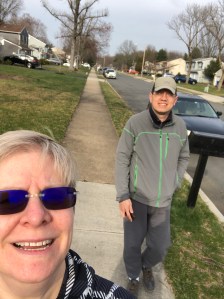
Photo of TechCommGeekMom and hubby walking in their neighborhood.
Here’s my contribution. Here’s a photo of me and my husband taking a walk around our neighborhood. It’s usually this quiet around here for the most part anyway. We didn’t stay six feet apart for long!

What kind of content are you either going to consume or create today? For me, it’s watching a mini-series on Hulu, then watching Star Trek: Picard and the Ready Room later today. I might create some storytelling by submitting my resume to another job opening. I know I’ve definitely been having conversations via social media and instant messaging with friends and family during this time. For me, most of this is generally the same as usual–I fill my life with content. Content is storytelling, but it’s also how you fill your life with experiences. Going out for a walk to get some fresh air is still absorbing content–you are using all your senses to create your story of taking that walk outside. You can translate that into further content by either video recording that walk, taking photos along the way, or writing about it later. No matter how it’s processed, it’s content.

So, while it’s frustrating to be sequestered for this long, we all know it’s for our own health and for the greater good of the PLANET. Coronavirus has definitely hit my area, and with my bad asthma, I’m hesitant to leave the house–other than a neighborhood walk–for anything for the most part. I know a lot of people are having a hard time with this, but we really are in this together. My recommendation is to concentrate on the good content that is out there. Be aware of the “doom and gloom” to be educated, but focus on the better stuff. Pay attention to how others are helping each other. Look at the content that people are putting out to ensure that you are recognized, loved, helped, and that your mind is staying active. Watch webinars and video conferences. This is a great opportunity to hone your verbal and written communications skills because working from home involves better communications skills than when you are in the office. Appreciate and enjoy all the entertainment and education that the media offers. You know I learned how to cook better over the years from watching a lot of the Food Network? My husband I have learned a lot about DIY projects and real estate from watching HGTV. It’s an opportunity for you to read all those books that you’ve been collecting to read and “will get to eventually”. This is time to spend with your families. This is a time to break out your creative side and draw, paint, knit…whatever. Learn to exercise at home doing something different–there are plenty of “dance parties” and yoga classes online where you don’t need equipment. Use this time to absorb content that will help you be a better person when you emerge from the quarantines. It will help distract you from the doom and gloom. Contribute content when you can, even if it’s a one-to-one instant message conversation with a friend, or an email. I know an email checking in on my parents lifted their spirits that I was checking in on them. Or heck, a blog post. 🙂

It’s all about the content right now. Learn to absorb and appreciate what’s out there right now that we can use, and help contribute positive content to share.

What are your thoughts? Include your comments below.

Posted in Uncategorized

Glassblowing and tech comm–what’s the connection?

I know it’s been a while since I’ve written.  The last year or so has been overwhelming as I overloaded myself with too many things, and I’m actually in the process of trying to reclaim myself and my time in the process. When you overextend yourself, it takes a toll.

I can’t remember the last time I wrote, but I changed jobs. While I liked being a content strategist, there were elements of where I was that didn’t fit right for me. If it’s not a good fit, you move on, so I was able to do that.  Now, I’m working close to home at something new, and still getting a feel for what’s going on, so I’m not going to say too much about it, other than it goes back to my content management roots a bit, and I need to give some more time to acclimate to the job.

In the meantime, I recently went on our annual family vacation, which this year took place in Toronto, Canada.  We enjoyed our time there so much that my son is convinced that he wants to move to Canada and be a Canadian. I don’t have a problem with that! If it wasn’t so cold in the winter, I probably would want to live there, too.

We drove to Toronto from our house, and we decided to stop about halfway going north and coming back, which ended up being a good decision due to weather and traffic issues (mostly in NJ, no less! Ugh!). We made our halfway-mark pitstops in Corning, NY, which is the home of the Corning Glass company and the Corning Museum of Glass.  Some may remember Corning because of their housewares items (my family had Cornelle dishes with harvest gold flowers growing up) and Pyrex, but they also invented Gorilla Glass that’s used on cell phones. The museum is a lot more interesting than it sounds–it not only has beautiful art installations and history of glass exhibits, but also science-based exhibits about uses of glass. The museum also has live glassblowing, and for a fee, you can create a small item with the help of a professional glassblower in their studio hot shops. (I took advantage of it, and made a sculpture that sits in my bedroom.) It was so cool!

As a result, I was inspired to watch a new show on Netflix called “Blown Away”, which is actually a competition show in the same vein as Project Runway, Top Chef, or one of those other creative skills shows, but in this instance, it involves–you guessed it–glass blowers. I binge-watched the series over the last couple days, and I’m more fascinated by it than ever, wishing the closest hot shops to visit that teach weren’t in Philadelphia or Asbury Park (in other words, not anywhere close to me).

Here’s the trailer for the show:

But as I reflect on the show, it occurred to me that glassblowing is a lot like working in technical communication.  Follow me on this.

While watching the show,  you saw a lot of different things going on with glass. Sometimes the contestants had to make functional pieces, and other times it had to be artistic. Each challenge had a theme, which sometimes would be taken literally or figuratively by the artist/glassblower. Each contestant often had assistants to get the pieces finished, and time constraints. There were finished pieces that were incredible, and some, well, were crap.  And there was a lot of broken glass, needing to start over, or pieces that didn’t quite come out as expected.  Here’s what I could pull from that in relation to technical communication.

This really was a show about the creation of content, which is what technical communicators do.  Instead of hot glass, our medium is content. Content, like glass, can be manipulated into all sorts of shapes, sizes, textures, and forms.  It is never solely developed by one person alone, but rather you can have a main creator and supporters who will help it happen, or several creators who have to make all the pieces work together. Sometimes it takes several tries before you get the content right. You often have time constraints. And sometimes, just as you think you have it perfect, it will break on you, and you have to start over or try to rescue what you can from the broken remnants. Sometimes the end result comes out as you expected or better, but there are many times it comes out not as all as you envisioned or not well at all. Content can be robust, or it can be delicate. But when you spend a lot of time paying attention to details, allowing due diligence for the creation process, think outside of the box, and use a lot of precise skill, you can create something many can enjoy or use.

The part that ties it together most is that glassblowing and technical communication are both about blending science and technology with art or creativity.  While many of the techniques used by glassblowers hasn’t changed in a century or more, it’s using something familiar to try to find new and creative ways to make something wonderful while understanding the technical aspects of working with glass–the science, the physics of it all.  Technical communication is not much different. While it might not always be as artistic as colored glass pieces, it’s still having an understanding of science and technology on some level, and using skills to turn that science and technology into something beautiful–it is an art style of its own to turn technical jargon into something comprehensible, readable, and digestible in print or digital form.

So, next time you doubt yourself, think of yourself, a technical communicator, like a glassblowing artist.  You are going to make mistakes, you’re going to break things fairly often, but when you refine your skills and focus, you too can make wonderful works of art.

What do you think? Include your comments below.