
Posted in Uncategorized

Back to School (as a TechCommGeekMom)

20120827-011606.jpg

Someone mentioned to me recently that as “TechCommGeekMom” that I seem to concentrate on being the “TechCommGeek” than the “Mom” in my posts. I don’t think that’s necessarily true, since I do talk about my son often enough, but it’s true that I do mainly try to center my writings about tech comm and m-learning/e-learning geekery, but perhaps it’s time to think more about adding some more parent-centric postings.

And just as a warning–this is a true test of using mobility, as I’m typing this on my iPad while on vacation, so this will truly test how mobile *I* can be to do most of the things I like to do more than 600 miles from home.

Recently, the following article came to my attention:

Guest Post: Core Skills for Technical Writers Often Overlooked

In this article, the author talks about how many of the basic, fundamental functions of being a good technical communicator are lost. Writing cover letters, resumes and follow-up correspondence with well-written, grammatically correct technical aspects are now missing. He questions how that could be lost, and how that needs to be recovered.

I agree, not only as a technical communicator, but also as a parent. For me, while my technical communications skills are truly at the heart of my profession, being a parent is highly integrated into what I do as a technical communicator. As a parent, I am equally responsible to make sure that my child is getting at least an appropriate education, and being able to get the fundamentals of good writing is important.

One of the big things that seems to be a hot topic in the e-learning and tech comm worlds is the idea that conventional methods don’t seem to be working anymore, and the big DIY movement is starting to take hold slowly but surely. There was also a Forbes article that was out a day or two (sorry, don’t have it at my fingertips–will edit this and add later if I find it again) that was trying to dispel the myths of online learning. As anyone who reads this blog knows, I’m a big proponent of e-learning and m-learning. The Internet is FULL of resources that I wish I had as a kid, and now as a parent, I know my child can utilize instead.

And this is when mommy-mode comes into play when I’m thinking about my son’s education–or the education of any child as a mother. I guess I think about it more since I am trying to gain more footing in the m-learning world, but also because I am a mom, and I can see how he benefits from it. Because my son is high functioning Autistic/Asperger’s, his learning needs are more basic, meaning it’s not that he can’t learn the same information as everyone else, but one needs to get down more to the core of those topics on a very basic level and build up in order for him to understand and grab the concepts. Again, this is not a dumb child–far from it. In many respects, he’s brilliant. He loves science, especially physics-related topics, and can out talk some grown-ups on the topic. But math and writing and social studies and foreign languages…ugh, that’s another story. One also has to remember that just learning appropriate behavior does not happen inherently for him either. He gets easily frustrated, and resolution skills do not come instinctively to him. He is constantly being taught strategies on how to improve his behavior and resolution skills so he doesn’t have meltdowns as often. Social skills need to be taught to him like any other subject at his school, so as a parent and wannabe educator, I have to think about these things. Even for me, I had many of the same issues, but I think my parents were equally able to try to handle it as my father was a professional educator for over 40 years, so I benefitted from him, as well as my mother, who instilled strong communication foundations with me at a very early age.

As a parent myself now, I feel it is our duty to work with teachers to help our children as much as possible to learn the fundamental skills that will not only allow them to do well in school, but also do well in life. There was a recent argument as to whether people really need to learn algebra. I happen to be a proponent of algebra for everyone, but how advanced one gets with the subject is the question. I remember my father saying–and I agree with this– even when I was a small child that we are taught basic algebra when we are still in grammar school. After all, getting the equation of 5+5=___ is really the same as 5+5=X. Or 30/X=5, and X needs to be determined. So, sure, cranking up the challenge is inevitable. But calculus? I didn’t take it, and with the career I’ve had, I never used it. But I needed more on probabilities and statistics, for sure, now and then (I managed, thankfully). There are professions that do need higher algebra and calculus, and if kids think they are going into those careers, then they should take advanced mathematics.

At the same time, depending on the school, basic life skills aren’t taught anymore. There was a time when wood shop, metal shop, auto shop and home ec were necessary classes, as they were what drove the economy, and most people’s highest level of education was completing high school. I went to a prep school, so I learned none of those topics except through my dad making sure that I could check the oil, change a flat, add brake fluid and change the air filter and my mother teaching me a little bit of cooking (mostly self-taught). They still are, but other things like computing and basic business classes are needed. My own parents always would try to get me to take business courses. To take the marketing or business law courses that I was most interested in, I had to pass accounting, and I couldn’t pass accounting. So everything I’ve learned about sales and marketing I learned the hard way–through experience. I did take a computing class (remember, I graduated from college in 1990, when dot-matrix printers were the norm as well as having computer labs to use Notepad-like word processors to write our term papers. I credit my own instincts to take that computer class as the right move–that served me more than taking accounting.

Recently, one of my cousins mentioned that she was making the suggestion of taking business courses to her almost college-age daughter. I told her that unless her daughter wanted to go into a business career, it wasn’t a good idea, and that I felt that some sort of computing class would be better. There are two essential courses that I think EVERYONE on the planet who seeks an education should have a basic technical writing or business writing course, and at least one computing class under their belts. It doesn’t matter what country one comes from or what language one speaks, but clear communication in any language, and knowing how the technology that helps that communication–especially in business–is essential. Without being able to communicate effectively and not understanding the tools that will helps one communicate effectively, a person will not get as far as they could. The basics of business otherwise comes purely from doing and learning on the job, not from some book.

This brings up the concept of DIY education again. While there are still a lot of things that are right in instill our children with basic skills through a conventional education, something’s not working anymore to make sure that our children know more than we do. Yes, you read that correctly. Our children SHOULD know more than us. They should be know as much as parents, and then some whenever possible. They should be learning from our past mistakes as well as learning what has been discovered since the time we were children. There’s a term that’s thrown about with today’s generations about these kids being “digital natives”. This is a somewhat accurate statement, only because for the most part, they don’t remember telephones with cords, Atari 2600 video game systems being the revolutionary gaming system that everybody had to have, or a time when there weren’t computers to do everyday school research or type up a professional looking report with fancy fonts and pagination. But today’s Generation X–my generation– really were some of the earliest adopters of digital technology, and in some cases, we don’t have much to show for it as a whole. I don’t know how many of my friends will tell me how they don’t understand how such and such works with a computer, and it’s something rather simple. Today’s generation has to be prepared for the future better than we were. I did my best to keep up, and it was my ability to write well and having some computer knowledge that helped me along the way. But much of the computer knowledge I’ve gained over the years was more self-taught, or I made my own agenda to learn it. I created my own DIY education out of necessity. While there will be an argument that DIY education is really about meeting individual interests and individual needs, why isn’t there an interest in doing so in conventional education?

Many years ago, the “No Child Left Behind” act was put into place in this country (the USA). It sounded good on the surface, but then I found out that the award winning, top notch school district that we were sending our son to didn’t comply to those standards. I was initially shocked and upset about this, until I understood why. The district was not in compliance because it was accounting for special needs children that either could not or never could, comply with the standardized testing needed to prove that these new standards were being followed. Those children needed to be left behind due to their own personal necessities. Some would catch up or do the work at their own pace, and some might never comply, and my district doesn’t force these children to be something they’re not; they are treated like people, not numbers. And as it happens that my son eventually fell into a category where sometimes he was able to meet those standards, and sometimes he couldn’t–I understood what my district was doing. They were allowing kids to be individuals and did account for different learning abilities. The other part of that is that many of the parents in my district tend to be fairly well educated professionals as well, and a huge majority are newer immigrants that place a very high standard on education, so it’s clear that parental intervention is a big part of that. For my family, the involvement of both my husband and myself in my son’s education is very clear. Without us, my son would not be where he is today. I’m not saying that teachers weren’t essential in helping my son learn–quite the contrary. They fill in all the huge gaps that we miss. It is because we intervened at an early age, worked with him, sometimes using unconventional methods to get him to learn what he needed to learn, and it was due to our personal intervention and playing such a key role in his learning that his autism eluded us until he was 9 years old.

So, as kids of all ages start going back to school at this time of year, I feel that tug of academia pulling me in again. Sometimes it’s the student in me yearning to be back in school again myself, learning something new. But for now, it’s me knowing that I have a responsibility as a parent to ensure that my son gets the most out of his education, whether it’s through homework exercises done with me to learn a concept he didn’t understand at school, or helping a teacher reinforce a new learned social skill that he learned in school. I recently saw a cartoon in which it depicted that in the past, if a student didn’t do well, the parents blamed the student for not working hard enough, but in current times, the teacher would be blamed by the parents. While there are instances that both students and teachers today need to be accountable for a student’s success, the key missing piece that is equally accountable is the role of the parents.

Parents are a child’s first teachers, so by not setting higher standards for ourselves both personally and professionally, we, as parents, fail our children by setting a poor example. Parents need to set the tone and set the standards for their children. If it means finding unconventional ways to ensure that a child is learning in addition to what conventional education is already providing, then so be it. For me, using my experiences as a technical communicator/budding m-learning specialist are what help me be a better parent. I use my skills to help my son learn how to write in his voice, using various means that work for him in a way that can help him grow and progress in the future to a day when he will need to be able to use these skills on his own in the “real world.” I try to show him new technology as well, and sometimes he teaches it to me.

In the end, it it my job to help him grow up to be an effective communicator–no matter where his path leads him, and it is my job as a parent to ensure that whether it comes from me, a teacher, or some sort of digital learning experience, that he has the foundation he needs to get ahead.

Posted in Uncategorized

Why Mobile, Gamification and Special Needs Are Made for Each Other

As the school year has started for some and will start during the following few weeks ahead, my thoughts start thinking about conventional learning and how educational technology has changed so rapidly, especially in the last few years.

Now, before I continue, I just want to preface this by saying that much of what I will be writing below isn’t based on any scientific study, but rather it’s based on my own experiences and knowledge.

I recently saw this article, and even retweeted it:

Autistic Student Feels Reinspired by Online Learning

I was so glad to see an article like this. We are constantly shown articles or videos about students who are much lower functioning than this kid, who are breaking through the communication wall through various apps on iPad. But I find that higher functioning autistic kids have a much harder time as the gap is much narrower, so it’s hard to define where the fine line between effective communication and ineffective communication is.  As a result, these kids fall through the cracks of the system. Seeing that the young man in this article found a solution through online studies is fantastic, and I can relate to it a lot.

I am sure that I’ve mentioned many times before that my son is autistic, but much like the young man in this article, he is very high functioning autistic. My son is so high functioning that the actual autism diagnosis eluded us until he was 9 years old, and that was after already going through several other diagnoses and still feeling that something wasn’t quite fitting right.  Through my son, while I have not gotten an official diagnosis, I’m pretty convinced that I am an Asperger’s Syndrome person myself; I have displayed so many of the same symptoms as my son, but I did not have the speech problems he had when he was younger (he’s fully language fluent now, due to early intervention and persistence). Even as a mother, I marvel at the various apps that are out there that could have helped my son when he was small, and I wish that we had access to it back when he was small.

My son is a smart boy. However, if something doesn’t interest him or doesn’t serve any meaningful purpose to him, then he’s unwilling to do the necessary schoolwork. As he’s gotten older, this has been problematic. He’s also a kid, and when it comes to mathematics, he doesn’t get the rote information down right away (like understanding his multiplication tables). But, show him how to do a mathematical function, and he can pick it up fairly quickly. He’s not always interested in reading, but he was reading when he was about 3, and when he reads something that interests him, he practically has the resource information memorized. He takes in videos like nobody’s business. Ask him anything about Super Sentai (the original Japanese Power Rangers), Kamen Rider, Power Rangers, Beyblades, Bakugan or Pokemon, and he can tell you everything about them.  He also has a fascination with the sciences, especially physics, so when the Higgs Boson was recently proven, I asked him if he had heard about it, and he said, “Yeah, what about it?” and he explained what it was, and didn’t know that it had actually be proven.  Keep in mind, the kid is only 11.

Yet, he struggles with school. It’s hard for him to focus, and sometimes he’s still processing things in his head when he’s paying attention in class. He can’t take notes to save his life, but he can learn from them.  School is a difficult chore for him, and it takes some creativity to engage him to learn. He’s definitely capable of learning, but he can’t always learn by conventional means. He has a very difficult time with writing skills as well, which has been a struggle since he was small.

I can relate to my son on so many levels academically. I think this is why I end up being the one to do homework with him most of the time–I know how to “translate” things in a way that he can understand. I also had that same combination of hyper-focus on some topics, and total distraction on other topics, and had a hard time with school as well, even though I did well for the most part. If I had half the tools and support he has now when I was a kid, I would’ve been valedictorian of my class, I bet, but instead, I had to fight my way through much of school to get decent grades.

So, when I read the article above, I could relate to it so much because of my son, but also because of my own online experiences getting my Master’s degree from NJIT. My degree was 100% online, and despite what anyone would think, it was a very social event, yet I could pace myself the way I wanted (well, within reason–I still had deadlines for assignments and such).  I want to say that the success in earning my degree and getting a straight “A” average was due to hard work and the quality of the program–which it was, but it was more. It was the delivery system. I’m very convinced that if I had done this coursework solely in a classroom environment, while I might have done well, I don’t think I would have done THIS well.  Being able to set up my own schoolwork routine, read at my own pace, respond to forum threads and work on assignments at my own pace were a huge part of it. I’ve found for years that social media and just being connected to the Internet is not only addictive for me, but essential for me. It’s how I’m able to socialize more effectively and learn more effectively as well.  For all those naysayers that say there’s no such thing as “learning styles,” I say, “Poppycock!” I am a living example of someone who needs to be taught more on a visual level than an audiological level; I have sensory issues but am simultaneously a sensory learner.  My son is the same way.

So what does this have to do with mobile learning and gamification? EVERYTHING! There seem to be more and more studies that “typical” learners learn as much or more with mobile options and gamification methods. Imagine what it can do for special needs learning! My son is a big of a gamer, and I know at his age I love the earliest electronic and digital games myself.  Even now, I’d much rather play an online game to learn than read my dry textbook. The trick for high-functioning special needs people like my son and I is that we–as I mentioned before–fall between the cracks; we don’t need things dumbed down for us, but we do need a different method to get the same information into our skulls, and everything is either over simplified and babyish (like some of the math games that he can play to get those multiplication facts into his head), or there isn’t something that is sophisticated enough that can achieve the same thing.

I envy my son, because e-learning is SO much more than it was when I was growing up. Heck, just having Internet access and email and social media is much more than what I had  when I went to school. Getting my Master’s degree was the first time I could use such resources, and given the right tools as these digital ones, I could fly (metaphorically speaking). I want to see my son fly as well, as I know he’s capable of it. I try to find lots of physics game apps for him on my iPad, which he zooms through with ease. I need to find some age appropriate math apps, writing apps, and other apps that can help him learn without him realizing he’s learning, or at least make it more enjoyable. I want him to feel successful in whatever he ends up doing, and I want him to feel that learning is a lifelong endeavor, and that he is capable of finding the resources he needs to accomplish what he wants. We are still figuring this out, but like I said, the world is his oyster, and he needs to learn how to access it all, and I think he’s already on his way since he found the Super Sentai on his own (and yes, he watches these Japanese Power Rangers episodes on YouTube, in Japanese, sometimes subtitled, sometimes not, but he doesn’t care–he picks up what all of it’s about anyway).

Being that my son is a big gamer, he enjoys and adapts to games well.  He was fortunate, this summer, that his summer school math teacher picked up on the idea of gamification, as every day my son and the other kids in his class would play a card/board game that would teach math skills. He enjoyed it very much, and there was a social skills aspect to it as well, which helped. Granted, it was not a video game or digital online game, but the principle is still the same–it was a game, and he was learning the skills he needed to learn.  So many online games can teach without one realizing it, and making learning so much more accessible.  Even the popular Angry Birds game–one of my son’s favorites–is actually a fantastic game that teaches physics and problem solving skills. I don’t say no to him playing Angry Birds on my iPad or iPhone.  He’s learning, at least, and developing skills that may help in the future as some sort of engineer.  Even as an adult, I can say that I would enjoy something more interactive online than something static or something that’s essentially a page-turner.

This is where mobile comes in. We all know the benefits of m-learning functionality, such as providing just essential information, having web capabilities to interact not only with others, but use tools like social media and researching on the web, and sharing resources is a big deal. Even the nature of m-learning is beneficial, because good m-learning design breaks things up in to small pieces than if it was done as a regular desktop course or classroom lesson. With m-learning, a child can record the class while attempting to take notes, and listen to it later while doing homework, rewinding parts of the lecture while rewriting or filling in missing information in notes.

I know for me, it was a big deal to be able to manipulate my studies to make them mobile. I would use the Microsoft OneNote app on my iPad to do initial drafts of homework assignments during my lunch hour, and then sync up my notes so that I could pull them onto my laptop later to clean them up more on my laptop at home. I could watch video or listen to a podcast on my iPad or iPhone, stop it and restart a section if I didn’t quite catch it–or even just stop so I could catch up writing notes first, then continue. You can’t do that so easily in a classroom. I could pace myself much better, and as a result, my retention was better because I could review details as needed.

This is really important for Aspies as they want to take in everything, and very often it hard to keep up because we are still deciphering and translating information given in our heads while the information keeps feeding. Sometimes our brains can’t process quite as quickly, so by the time we have a piece of information processed and we are ready for the next bit, instead of one new piece of information, then next five have happened. Keeping up and forcing oneself to keep up with the pace can be mentally grueling and exhausting. It’s not that we don’t have the mental capacity to understand the information, but rather that our internal processors are different. It’s like having last year’s processing chip in your computer instead of the latest and greatest. It’s not that the chip can’t handle it at all, but rather at a different pace. If you can gamify the information, then the information is learned on a subconscious level, and just like any video game, new skills are attained little by little as you proceed higher and higher in a game. It’s really THAT simple.

So, for you instructional designers, educational technologists and technical communicators that don’t think that gamification or m-learning makes that much of a difference–IT DOES. Believe me! Keep m-learning and gamification in mind. It not only lends itself well to typical learners, but can go miles farther for those with special needs.

Posted in Uncategorized

What are you so afraid of?

It seems to me that lately there have been a lot of articles posted around the Web about higher education being afraid of using technology.  I suppose that since I received my recent Master’s degree entirely online from an accredited university, I’m somewhat oblivious to that fact, but I can see why that would be thought, based on the various arguments made.

Bringing technology into the classroom, let alone have distance learning via e-learning or even m-learning, is still a bit of a foreign thing even now, despite the fact that Steve Jobs and Bill Gates were working on getting computers into classrooms as much as 30 years ago. (Time flies!).  Part of the problem is that there are many educators who are a little intimidated by technology. Yes, computers–as just mentioned–have been available in the classroom for decades in one form or another, but not everyone has learned to take advantage of that.  Why?

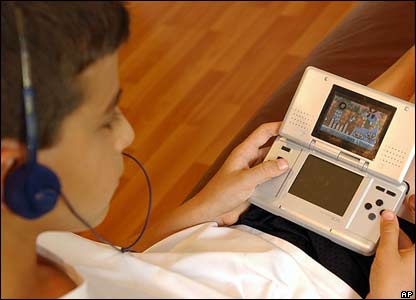
One of the obvious reasons is cost.  Computers–whether desktops, laptops, tablets, or even smart devices (like an iPod touch, NintendoDS, etc.), are not cheap. Trust me–we have at least one of each of those types of devices in my house, and I know how much we spent to have them.  Even with the movement to promote BYOD (Bring Your Own Device), not everyone can afford to have the latest and greatest gadget. Technology, these days, evolves very quickly, so it’s hard to keep up with the latest devices and tools. (This is why I’m always happy to hear of endeavors made to try to supply simple computing devices that are made cheaply to supply to children in far flung places in Africa, South America and Asia where such resources are scarce.)

Even so, I think the reason that many in higher ed and other educational levels don’t use more technology to teach is basically because they don’t know how.  I’ll give you an example.

My father was the first one to introduce me to computers a little bit more than 30 years ago when I was a kid. The Apple II had come around, and my father–a lifelong educator–found himself trying to support a family with four kids (me being the oldest of them) and having a very difficult time finding a job due to budget cuts happening left and right.  He found computers interesting, and realized that if computers were to become prolific, then maybe he could segueway his teaching skills into teaching adults how to use VisiCalc and basic word processing programs in business. In other words, he would move into the training and development business. But once he got a job back in the traditional educational field, while he did stay involved in computers, and even got to a point where he was not only a curriculum administrator but teaching night courses as well–he’d teach computing for a while, but it was never major advances. To this day, he’ll call up either me up or talk to my developer husband if he has computer issues. I don’t think other than teaching computing for a short time, that he really ever used technology in the classroom much. Sure, “Oregon Trail” was used, and maybe “Where in the World is Carmen Sandiego?“, but beyond that, even when he was officially retired and teaching history courses at the local community college, beyond the use of email, I don’t know that he necessarily used technology for those courses.  History classes can be very dry subjects (I ought to know, being a history major as an undergrad), but so much history is available online to make it come alive–with video and images alone.

Even in my own online grad courses, I could see where the staff knew things to a point, but then some would show their limitations of what they knew of the outside world and what tools were available to them, and this was a group that was generally more willing to use technology as well. One professor posted all the coursework on Moodle in one folder instead of using the features to the fullest to disseminate information. He may as well just have photocopied everything, stuck it in a manila folder, and handed the materials out willy-nilly instead. I see these as hugely missed opportunities for both my dad and this professor.

My taekwondo teacher taught me something years ago, which I know has been repeated elsewhere: the best way to learn is to teach.  From my own experience, this is not only true in taekwondo, but also for just about anything else in the rest of the world. Teachers–whether they be training specialists at a company, or preschool teachers, or anyone else in the educational field in between–need to continue to learn and grow themselves in order to be effective teachers, especially in this day and age. Technology is a lot less scary and more intuitive than it was 30 years ago, or even 10 years ago, and people forget that very quickly.  If teachers are expected to help turn out students who can contribute towards future growth, how can they do that if they don’t keep up? Yes, there are some older tried-and-true methods that still work and will always work.  But to create a future where everyone from the littlest preschooler to the adult learner contributes in a way that pulls us all forward–teachers need to keep up.

Mobile learning provides a fantastic and easy opportunity to do this, no matter what subject a teacher teaches, or what level. Tablets and smartphones are more prolific these days than even desktops or laptops, so whether a school district provides those tools, or a student brings it from home, it’s a portal to a world of opportunity. The use of whiteboards in the classroom make a huge difference–I know I remember hearing that my son enjoyed and seemed to respond better in classes if whiteboards were used.  As it’s been mentioned many times before, education is undergoing a bit of a revolution, because 19th century ways of teaching aren’t working well in the 21st century.  Life and business are conducted very differently and on a grander global scale than even 100 years ago, or even 10-15 years ago.  Social media and Web 2.0 tools are changing how we communicate and work with each other, especially in real-time.  And yet, having these tools can enable all of us as students of the worlds to learn more.  I guess I don’t know why some are so afraid of trying out the many technologies or applications out there that can work to advance our common knowledge.

You see, in my head, I can imagine how all these different subjects can use mobile technology or other e-learning tools.  You have a Social Studies class? How about asking students to find online newspapers to look at the world in other countries? Or using online libraries or resources to find information? What about doing a short project about looking up records on Ancestry.com to learn about World history and how their families may have come to this country? Science–so many scientific journals out there to access. English language and grammar? Many blogs and websites covering those topics, as well as many works of literature have been converted into videos or movies. Math? Check out Khan Academy or similar sites, and see if a flipped classroom curriculum works more. Physical education? Plenty of websites about sports, health, fitness out there. Foreign languages? Watch Japanese TV, Mexican soap operas or Italian news on YouTube. Google, Bing and other search sites are your friend as well as your students’ friend.

There is one last resource for teachers of higher ed or other educational institutions to learn more, and it harkens back to my taekwondo instructor’s words. Learn from your students. They are usually more up to date on what’s going on with all the devices. Why not ask them for suggestions, or learn how to use tools from them? Recently, I remember showing a professor of mine how to use hashtags on Twitter to start getting more involved in topics that she was interested in researching and find other Twitter users that shared common interests on that outlet. While she understood the concepts behind Twitter, she didn’t know that one could search by hashtags within Twitter, and so she learned how to use a social media tool that she was familiar with in a different way. I was glad that I was able to show that to her, and I’m sure going forward that it’s something she may pass along to her other students and colleagues as well.

Also, don’t be afraid of asking colleagues who are tech savvy as well. If they are enthusiastic about using technology in the classroom, they are usually more willing to share those ideas with someone else who shares that enthusiasm.

In the end, we can all benefit from each other in helping each other learn technology, but educators need to take special attention because in helping themselves learn about technology and using technology, they will help their students as well.

So, what are you so afraid of? Start looking in the App Store, You Tube and Google, and see what you can find. You might be surprised. Every little bit of knowledge helps to advance you and your students.

Do you agree or disagree? Let me know in the comments below.

And if there are any teachers (on any level) that would like some extra help…let me know.

Posted in Uncategorized

e-Learning – A Growing Field For Technical Writers | Immerse CMS

Read this article:
e-Learning – A Growing Field For Technical Writers | Immerse CMS.

This great little article makes a point that I’ve been trying to make on my own quest to find an e-learning positions. In no way am I putting down instructional designers, but as a trained technical communicator, I know that technical writers have the right stuff to be effective in writing for e-learning. Technical writers most often create user documentation and training manuals. With some creativity, imagination, and some quick learning of the basics of instructional design, technical writers can be quite capable of writing up e-learning content.

Now, with the advent of m-learning, the skills to be able to curate content and whittle it down to comprehensible, short yet clear information for smartphones and tablets will be vital. Technical writers are used to working with a mountain of information, and paring it down to the essential information needed to learn how to make something work or take a next step. Isn’t that a valuable skill to have as an instructional designer?

As more e-learning and especially m-learning programs expand, technical communicators are truly going to be needed to help bring things up to speed quickly to keep up with constantly emerging new mobile technologies.

So, if you are looking for a new instructional designer, think about giving a technical writer a chance. I’m sure there are plenty of them (including me especially) who would jump at the chance to write training materials in a new and exciting way, and technical writers already have most of the skills needed. The instructional design will come…most of the essential concepts aren’t that difficult. Give technical writers a chance!

Posted in Uncategorized

Hurrah! The ID/TC Education Resources Page has been updated on Techcommgeekmom.com!

Hello everyone!

It feels like it’s been a long time since I’ve posted here, but it’s only been a week. I do try to post something original here at least once a week as best as I can.

But right now, I’m mentally wiped out, so it occurred to me that now is a great time to update some of the pages here as best as I can.

So, for easier reading, I’ve updated the Instructional Design/Technical Communications Education Resources Page (otherwise known as the ID/TC Education Resources Page). If you click the link above in the navigation, that will take you directly to that page.

Now, upon first inspection, it will look pretty much the same, with the same links to helpful articles.

But now after a few additions and some reorganization, all 158 credentials are listed and organized by credential. Specifically, they are split up between Bachelor’s degrees, Certificates, Specialist degrees, Master’s degrees, and finally Doctorates.  I’m hoping that this reorganization will help anyone who is looking for that next avenue themselves. Many of these programs are online too, so be sure to check them out. Even my own alma mater, NJIT, is listed in the Master’s programs. 😉

As always, if you have a suggestion for a higher ed program related to technical communications, e-learning or m-learning, please let me know so I can add it to the list!

Enjoy, and thanks for continuing to support techcommgeekmom.com!