Posted in Uncategorized

What have you got against adverbs? What did they ever do to you?

loudI’ve noticed a disturbing trend that seems to be happening in the English language–at least in American English. Every time I heard this mistake, I cringe and wonder why it’s happening.

Evidently, people are not using adverbs correctly anymore. I keep hearing the “-ly” dropped from words in sentences often, and it makes me wonder why this is happening. Is it a lack of proper verbal education–not being taught to speak properly? Is it ignorance? Or is it part of an evolutionary process occurring in American English? (I haven’t noticed it when listening to British English on British television shows, which is why I think it might only be in the United States.)

Let me use some of the sentences that I’ve used above as examples, in which I’ll drop the “-ly” from the descriptor of the verb in the sentence.

“Evidently, people are not using adverbs correct anymore….Is it a lack of proper verbal education–not being taught to speak proper?”

See what I mean? This bothers me to no end, because I’m starting to see it in written English too, and, well…

IT’S NOT CORRECT!!

Perhaps I watch too much reality television that shows under-educated people who aren’t exactly the living examples of academia or professionalism. Even so, while I’ve noticed this trend in the past few years, it seems like it’s getting worse.  Is this evidence of the decay of American education? Perhaps.  I can tell you that being the “grammar police” of my household, this is always a concern to me. I want to make sure that my son speaks well and properly as he grows up and makes his way into the world. 

While I was writing this, it occurred to me that there is another consideration with this phenomenon related to technical communication.  This lack of correct adverb use can greatly affect translation and localization efforts. A huge issue that I’ve been hearing in tech comm is the need to write more clearly and in plain language to aid in better translation for localization.  If adverbs are not used correctly, how does that translate? In some languages, it might not matter, since some languages don’t use adverbs the same way English does. But most languages that I’ve ever encountered (and I’ve studied four, but far from mastered any of them) always had adverbs. Adverbs are simply proper grammar! So if improper grammar was used in a document, how would that reflect on the writer and the establishment the writer represented?

I implore my fellow technical communicators to please advocate for the adverb! Please make sure that adverbs are used properly, both in written and spoken language. We need to make corrections to preserve this important part of speech. Save the adverb!

Posted in Uncategorized

A First Timer’s Summit: It’ll be “Gone With The Wind” Fabulous!

Kenya-Moore
Kenya Moore of the Real Housewives of Atlanta shows us the “Gone-With-The-Wind Fabulous” twirl.

Here’s the last of the pre-STC Summit blog posts I’ve done for the STC Notebook.

A First Timer’s Summit: It’ll be “Gone With The Wind” Fabulous!.

Hopefully, I’ll meet many of my readers there. Please feel free to introduce yourself! I’m really looking forward to the whole experience. I’ll be blogging for both Adobe Day and continuing my “First Timer’s Summit” series during the STC Summit, so keep your eyes open for those new entries!

Posted in Uncategorized

A TechCommGeekMom Milestone: A baby blog is now a toddler

WOW!

10KCelebration_041913

I think my little blog just grew up a bit. I not only reached the 10,000 all-time hits mark, but even passed it. For a niche blog that’s 13.5 months old, I think that’s pretty amazing! I’m a proud TechCommGeekMom!

Thank you to every person who’s a regular reader, who just popped in once in a while, or who came only once for a visit. 10,000 all-time hits is a lot! Now, I know of blogs that have definitely had more traffic than me, mostly because they are much more hyper-focused on a particular segment of technical communications, like everything you want to know about a particular type of software, everything you want to know about a particular strategy, or else they’ve been around for a long time, so they’ve built up a following after a while. I do not begrudge these people, as they are my inspiration, and in some ways, they have contributed to this blog too through curated content now and then. TechCommGeekMom wants to be like those blogs as it grows up!

I trust that you enjoy what you read, and that you keep coming back for more. I’d like to think that the variety presented here, mixed with my own eccentric flair, brings about a lot of different perspectives of what technical communications is and what it can be. As I’ve said in the past, this blog started out very small, as a grad school project to build a community via social media, and I chose to work on building my tech comm/e-learning/m-learning community. I’m guessing that perhaps–just perhaps–I may have achieved my goal of creating a TechCommGeekMom community, and yet I hope the family will continue to grow. If you have any suggestions or ideas of things you’d like to see here, or if you’d like to contribute a guest post, please let me know!

Many thanks from the bottom of my heart for helping me reach this milestone! This blog is a labor of love, and it has opened so many doors for me, which I hope continue to open! I truly appreciate the support!

Posted in Uncategorized

Is English an International Language? – Part 2

UK vs US peepsEarlier this year, I was asked by the STC-PMC to write a two-part article about the differences and similarities between American and British English.  Part 1 was published in February.  Today, I happily saw that the second part was published in the STC-PMC bi-monthly newsletter.

To find the original article, see the March/April 2013 edition of the STC-PMC Newsletter here.

The article itself is below.


Is English an International Language?
Part 2

David Crystal, author of English as a Global Language, has said that in the pursuit of a World Standard Spoken English (WSSE), American English seems to be the most influential in its development, as American grammar is now starting to influence contemporary British usage.  He also discusses at length how different dialects will allow national and international intelligibility to start developing. He said, “If WSSE emerges as the neutral global variety in due course, it will be make redundant the British/American distinction. British and American English will still exist, of course, but as varieties expressing national identity in the UK and the USA.

Edmund H. Weiss, the author of The Elements of International English Style, also points out that there is clash when trying to come up with a standard version of English, namely between “…globalization, producing a one-size-fits-all solution for a diverse world of English speakers, versus localization, adapting and modifying this universal model for particular readers in particular locales.”  Where English is a second language, Weiss demonstrates, the idioms and figures of speech end up resembling the language structure of the native language. Because of there are about 400 million native English speakers, and about a billion people who speak it as a second language or as a foreign language (for business or a profession), the importance of clear, unambiguous communication is undeniable.

There are many great resources available about this conundrum that can help put everything in perspective, especially in a world in which the Internet is starting to spread the use of English more and more all the time. Some good ones include:

Recent Articles:
Internet + English= Netglish
Learning English online: How the Internet is changing language
Tongue and Tech: the Many Emotions from Which English Has No Words

Books:
·         Do’s and Taboos of Using English Around the World by Roger E. Axtell
·         Divided by a Common Language: A Guide to British and American English by Christopher Davies
·         The Elements of International English Style: A Guide to Writing Correspondence, Reports, Technical Documents, and Internet Pages for a Global Audience by Edmond H. Weiss
·         English as a Global Language by David Crystal
·         Brit-Think, Ameri-Think by Jane Walmsley

Podcast:
·         International English by Danielle M. Villegas at https://soundcloud.com/techcommgeekmom/international-english

So, what’s a technical writer supposed to do? The best thing to do is to be exceedingly careful of using slang or idioms that relate to one’s native English, and be aware of local usage used on a global scale. This isn’t an easy task at all, yet it’s an important consideration when translating English into another language, let alone trying to write for English speakers globally.

Posted in Uncategorized

Word Up! ain’t just a Cameo song: A TechCommGeekMom book review

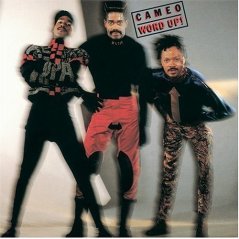
Cameo-Word_Up!Being that I came of age in the late 1980s, my immediate thought when I hear the words, “Word Up!” is the Cameo song playing with all its funkalicious glory.  But now, “Word Up!” has a new meaning for me as well.

I’ve just completed reading an advanced copy of the book, Word Up!: How to Write Powerful Sentences and Paragraphs (And Everything You Build From Them) by Marcia Riefer Johnston. Marcia and I met back at the Adobe Day event at Lavacon last October, and since then we’ve bonded over several interests, including our love of writing. I had first heard that Marcia was in the process of writing this book during the Adobe Day event, so when she asked me to read and possibly review the book, I was thrilled that she considered me as someone who could provide a constructive critique. When she sent me the copy, she stipulated, “[Please write] any kind of review you feel inspired to write: short, long, thumbs down, thumbs up. Or write nothing. No expectations, no strings.”
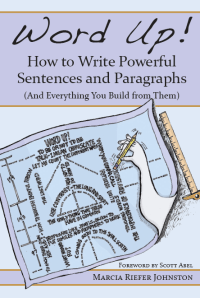
WordUp-cover-AFTEROkay, Marcia, I’m going to take you on your word about that!

So, I prepared to truly dig in to see if I could pick this book apart, and to find reasons why someone should read this book and have it in his or her library of writing resources.

Unlike most readers, I do have the advantage of knowing the author, so I found myself reading the book in her voice. Even if I hadn’t heard Marcia’s voice in my head, the casual, jovial tone and language she used throughout the book sounded very natural to me. Someone who has never met Marcia will enjoy this book very much as well, and would read it the same way I did. I enjoy her casual approach to this formal subject, and her sense of humor was infused into each chapter!

Marcia wrote in her chapter titled, “Mastering the Art of Knowing Your Audience”,

“…I find it satisfying to write for a reader whom I can imagine fully and accurately. Writing for someone I know–someone real or imagined, someone just like me in many ways or in few–is like making a gift for a friend. While I’m working on it, whatever it is, I confidently imagine the recipient opening it and saying, “Yes!”

I am happy to say that I had this “Yes!” response she described as I read this book. I write as if I’m talking to friends that share the same passions as I do, so to read that Marcia composes her words in the same way as I do was a revelation, and I was glad to see she made this recommendation.

Throughout the book, Marcia addresses common sticking points in writing as well as some that are not quite as obvious. One of the difficulties in reading any style guide is that the information can be rather dry since it is very factual. Dry and factual can be boring. Fortunately, Marcia doesn’t do this. With each chapter, she paints each new layer upon the last one, slowly building upon each topic so that the reader can see the big picture that writing is full of color and light. She uses everyday and personal examples which illuminate the point she’s making for a particular chapter much more apparent. In the process of reading this book, I ended up learning several tips that have helped me fine-tune my own writing.

Word Up! starts with a section that addresses common grammatical errors that just about everyone uses in one way or another.  Once those details are conquered, the second section of the book takes the basics up to an intermediate level, where further common grammatical errors, sentence structure, and paragraph building are addressed. The last section of the book ties everything together, teaching the reader how to be his or her own editor, and learning the fundamentals of technical writing, even for a creative writer. The last chapter itself shows Marcia dissecting one of her own essays apart using all the tools provided in the book. (Sorry for the spoilers!)

I’ll give you an example. How often, either in speech or writing, do you use the word, “just?” I have to admit, I do it ALL the time. It seems like a catch-all to emphasize the immediacy of an event’s occurrence. Marcia shows the reader how to avoid using the word as often as possible. Some other themes covered in the book include the proper use of metaphors, how to use contrast in a sentence, how to avoid the verb “to be” and most of its conjugations whenever possible, writing for one’s audience, and the importance of continually revising one’s content.  While these topics are just a sampling of what Marcia covers, there is so much more!

As you may or may not know, I teach a technical writing class on behalf of World Learning to students from various Microsoft offices in Asia. While I was reading Word Up!, I kept thinking that this would be a great book to recommend to my students. My students are often technical managers who are seeking some help to sharpen their business and technical writing.  World Learning has provided me with a great curriculum that I have found to be very thorough, and actually ran parallel to the information that Marcia provided in Word Up!. In fact, Word Up! provides more information in a compact volume than I do over the weeks that I teach the course.

I’m definitely going to add this book to the resources list that I provide at the end of the course. I know it will supplement the classwork effectively in a highly approachable manner that will be easy for my students to understand.  Having the reinforcement of the material in a relaxed, humorous, and informative way will help the students retain the information much better than remembering my lectures alone.

So, as you build your writing resources library to include copies of the Chicago Manual of Style, Strunk and White‘s Elements of Style, and Fowler’s Modern English Usage, be sure to add this new book to the collection. I guarantee you will find it an incredibly accessible writing resource, and I suspect it is destined to be one of the classic style guides in years to come.

The book will be released on April 27, 2013, which is also National Tell A Story Day, and available through Amazon and other fine book retailers. Click on the title below to find out more information about how to order this fine tome.

Word Up! How to Write Powerful Sentences and Paragraphs (And Everything You Build from Them)
ISBN: 978-0-9858203-0-5
Publisher: Northwest Brainstorms Publishing

**Disclaimer note: I did not receive any compensation for writing this review, and did my best to provide an unbiased review even though I know the author. **