Posted in Uncategorized

STC-PMC 2014 Conference – Better than last year!

NJIT's MSPTC program in the house at STCPMC14! L to R: Dr. Bernadette Longo, director of the MSPTC program; Jamil Wilkins, current MSPTC student; Danielle M. Villegas, MSPTC alum and STCPMC presenter.
NJIT’s MSPTC program in the house at #STCPMC14! L to R: Dr. Bernadette Longo, director of the MSPTC program; Jamil Wilkins, current MSPTC student; Danielle M. Villegas, MSPTC alum and STCPMC presenter.

In a nutshell, the 2014 STC-PMC Mid-Atlantic Technical Conference was better than last year, in my opinion! A slightly different format, a different day, more networking, and excellent speakers made for a fantastic event.

Okay, now for more details.

First, having been a member of the conference’s planning committee this year, I know that a lot of work went into making this event a success. Kudos to my fellow volunteers! Special care was taken to choose the best proposals submitted, and it definitely was reflected in the best of the best! There were so many great subjects to choose from that even among the presenters, some were saying to each other, “I want to go to your presentation, but I’m presenting at the same time!” I think some of the attendees also had hard choices to make, since sometimes they couldn’t decide between topics during a given session!

Nicky Bleiel, who is currently the President of the STC, gave the keynote address for the conference. She talked about flexible content with responsive design. The main message of her talk was that with responsive design, technical communicators can create and deliver a single responsive output that will work on thousands of devices, including new devices, old devices, and even ones that don’t exist yet. She showed us a few examples, such as Microsoft and Lycos websites in which the content remains the same, even though the output in different browsers changed to work with the size of a particular browser size. Many companies started making separate mobile sites, but the content was not the same as the full site. Responsive web design is Google’s preferred configuration when ranking sites. Mobile users want content parity, meaning they want everything that desktop owners have, thus they want one Web. Fluid layouts, fluid images, media queries in the coding, and stacking or collapsing grids are the key to creating responsive design.

During the first breakout session, I gave my own presentation, “Blogging Out Loud: The Basics of Blogging,” so I didn’t get a chance to see anyone else’s presentation during that time, obviously.  I did have a lot of people in my room, which pleased me, and we had a great discussion during the question-and-answer time. It was a great group, and smart questions were asked.

After a lunch break filled with awards, volunteer recognition, food, and networking, I chose to attend Todd DeLuca‘s talk about volunteering your way up the career ladder.  Todd kept the presentation fairly open, sharing some of his own insights about volunteering from his personal experiences and how they were able to apply to his professional life. The group attending participated by sharing ideas and experiences themselves about volunteering, bringing about a great conversation. Todd’s main idea was that it doesn’t matter how big or small the contribution, or if the volunteer opportunity is inside or outside of work. The experience fulfills you when helping others, but also fulfills you by allowing you to gain skills and experience that helps yourself. I think one idea he presented resonated with me, which was that volunteering is an offer to help, but it’s also a promise that evolves, as it’s a commitment that is followed through and builds trust. I also liked his point that volunteering is a safe environment to grow because usually there is less risk and some mistakes are expected, so the environment is often more nurturing than work. That’s a great environment to learn! Todd has been volunteering for things inside and outside of his job for years, related to tech comm as well as unrelated, and felt that he’s reaped benefits that apply to where he is professionally. I know that Todd will be speaking at the 2014 Spectrum conference for the STC Rochester chapter in a few weeks, and he’ll also be speaking at the STC Summit on this topic, so I encourage you to attend to get more details and ideas!

The last presentation I saw for the day was by Neil Perlin. Neil and I have known each other through both e-learning and tech comm social media circles for a while now, but hadn’t met before. It was a real treat to meet and chat with him, but to also hear him speak, as I know he’s rather popular on the e-learning and tech comm circuits. Neil’s talk was about emerging technologies, which is a subject he’s excited about and presents frequently. Neil covered a wide range of topics that are currently in use now and look to be expanding in the future. These topics included more mobile content that needs content strategy to steer it, more use of analytics to understand what our users need and use, using social media extensively, augmented reality, wearables, the use of the “cloud” and cloud-based tools. He also stated that there is a need for standards in order to future-proof our materials to avoid problems as technologies come and go, since it’s so hard to predict what will everyone use. He advised us to stay current by going to conferences and staying on top of general business issues and trends. Business issues can kill a technology, so staying current on your company business is a show of tech comm’s support of corporate strategy. His last bit of advice was to review your tools regularly for environmental change, accept the rise of content and social media, don’t denigrate tools in favor of writing, and embrace and help shape change!

After the conference, WebWorks and Publishing Smarter hosted a nice post-conference get-together at the Iron Abbey, a pub-restaurant down the street from the conference venue. It was a great treat of libations, appetizers, and networking further with tech comm peers.

Overall, it was a great experience. I liked the format this year because it felt more relaxed with fewer breakout sessions. Presenters weren’t rushed as they often are at events like these, and more time was allowed for networking with everyone. Perhaps it’s because I’d had a different experience last year as a total newbie that it was so different to me, but I don’t think so. The topics of the conference, the agenda, and the camaraderie of those hosting at the “City of Brotherly Love” came together into a pleasant Saturday of learning. As a smaller, regional conference I think the more intimate setting helped it be a more personalized experience for all, thus it was a big success.

(To any of the fellow speakers I reviewed here–if you’d like to add or correct anything that I summarized here, please feel free to do so in the comments area below!)

If you are in the Philadelphia area next year around mid-March, I highly recommend coming to next year’s STC-PMC Mid-Atlantic Conference. I guarantee you’ll enjoy it.

Posted in Uncategorized

Join me at the STC-PMC 2014 Mid-Atlantic Conference!

STC-PMC logo

One of the things I like about the STC having a chapter set-up is that even if the closest chapter isn’t next door, it’s usually still close enough to find people from your region with whom you can connect. For me, I found my “tribe” with the STC – Philadelphia Metro Chapter, or “STC-PMC” as we call it.

Every year, the STC-PMC hosts a Mid-Atlantic Technical Conference that people from around mid-Atlantic region–and beyond–come to learn and present information going on in the world of tech comm. My first exposure to tech comm conferences–and presenting–was at last year’s STC-PMC conference, and it was just a positive experience. I met many people whom I had only known through social media, and met new people as well. Philadelphia is known as the “City of Brotherly Love”, and it’s evident with this STC chapter. I immediately felt welcomed both as a member and as a new presenter as well.

The conference itself opened my eyes to new possibilities and new ideas as well. I also felt that it validated many of my own experiences as well–that I was coming up with similar ideas and solutions as others in the field. I also liked that unlike the STC Summit or some of the other conferences I’ve been to, this one is a little smaller and more intimate, allowing everyone the opportunity to get to know the speakers and the other attendees on a more one-to-one level.

This year’s STC-PMC conference is on Saturday, March 22nd just outside of Philadelphia in Willow Grove, PA. This all-day event is going to be jam-packed full of good information that’s timely and will be helpful in your tech comm evolution. I’m presenting this year, and my presentation is called, “Blogging Out Loud: The Basics of Blogging.” It seems I know a little something about blogging and am willing to share. 🙂

But I’m not the only draw–Neil Perlin, STC President Nicky Bleiel, Ellen Buttolph, Roger Renteria, Ben and Marilyn Woelk, Donn DeBoard, Todd DeLuca, Traci Browne, David Dylan Thomas, Bernard Aschwanden and Christopher Ward will all be presenting as well. There’s lunch, prizes, and lightning talks, too! All at a very affordable price!

Afterwards, there will be a free networking event at the nearby Iron Abbey restaurant sponsored by WebWorks and Publishing Smarter. (You don’t need to go to the conference to attend the networking event, but you’ll get more bang for your buck if you do both!)

So, it’s a fantastic event that the STC-PMC is setting up, and gee–it’s on a Saturday! You don’t have to worry about missing work to take advantage of this great networking and learning opportunity.

If you’re relatively nearby and want to participate, there’s still time and still some spots left! Register today by going to http://www.stcpmc.org/conference.

You won’t regret it! (And if you do come, make sure to seek me out and say hello!)

Posted in Uncategorized

TechCommGeekMom’s Updated Tech Comm Educational Resources Out Now!

degreeinhandSome updates have been made to my Tech Comm Educational Resources list. There are two new additions.

First, there is a new Master’s degree in Social Media–and it’s an online course of study–available through the University of Florida. I’ve checked out the program and talked briefly with a rep for the program, and it sounds like a great program.

The second new addition is a new Master’s degree in Technical Communication from Arizona State University, which already has a great Bachelor’s program. This ASU program is so new that the first class will start in Fall 2014!  I’ve looked at the curriculum of this program as well, and it also looks very good.

For more information, look for the Technical Communications Education Resource List on this blog by either clicking on the ID/TC Education Resources tab above, or by clicking here.

If you are interested in Instructional Design educational resources, you can click on the same links for the Instructional Design Education Resource List.

If you know of a related program that I don’t have listed for either category, please let me know, and I’ll be happy to add it to my lists!

Posted in Uncategorized

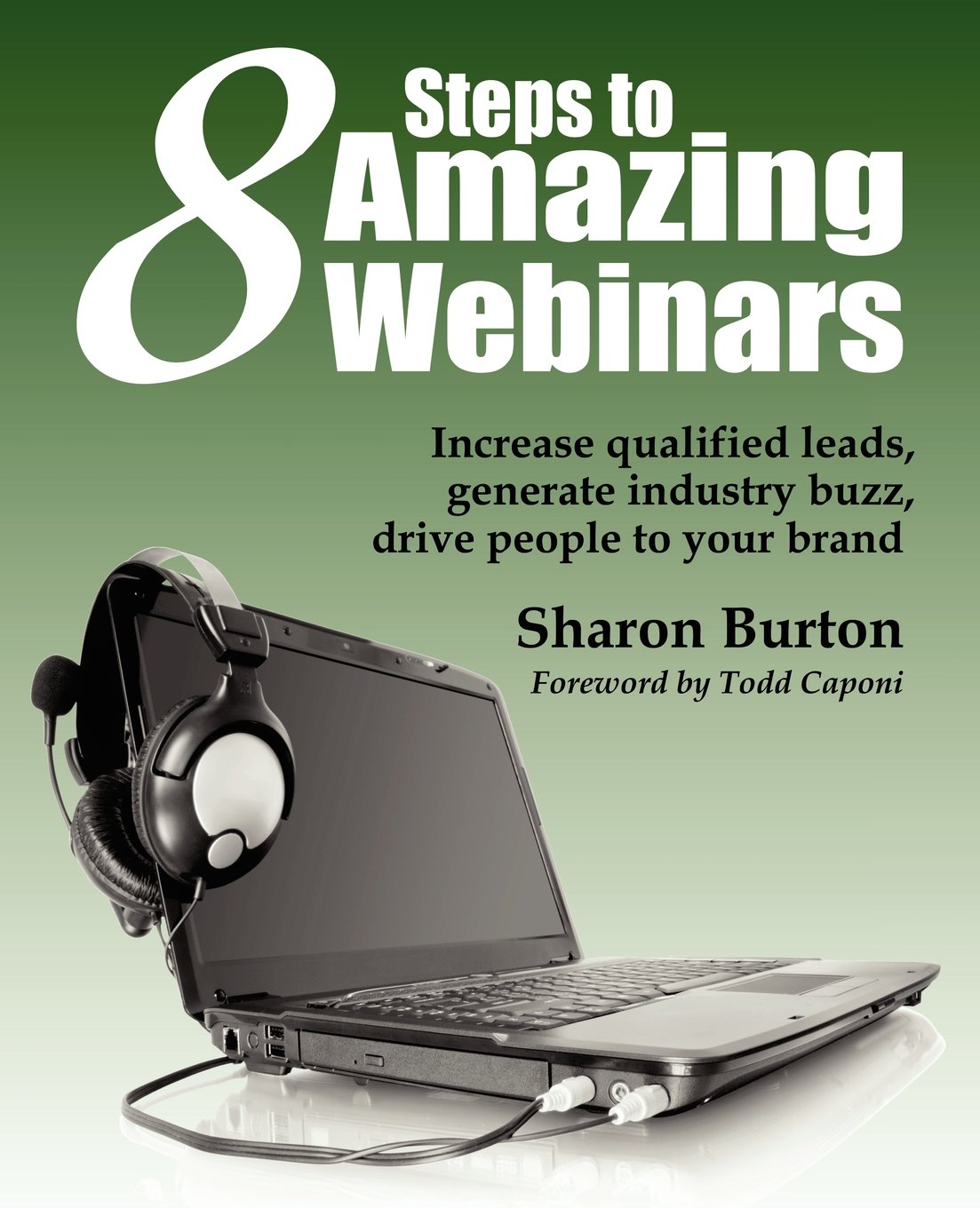
Book Review: 8 Steps to Amazing Webinars by Sharon Burton

8StepsToAmazingWebinarsIn less than a week from this writing, I will be doing a new webinar that I was asked to do by one of the STC Special Interest Groups (SIGs). I was really honored to have been asked, and it’s about a topic that I think I know a little something about–blogging. After all, this little webspot has been going strong for about 21 months now.

But in putting this latest webinar together, I realized that while I felt that I could whip something decent together, it’s been a while since I had to craft a webinar presentation. This, in turn, reminded me that I had a promise to fulfull, as I sought out a reference in my personal library written by one of my tech comm knitting buddies. Pulling this reference out reminded me that I’ve been meaning to write this review since last spring, but had been side-tracked several times until now–when I really needed it most.

Sharon Burton’s book, 8 Steps to Amazing Webinars, is a slim volume of only 81 pages (and that’s the end of Appendix B), but it’s loaded with very concise information. 81 pages is all you need! Considering that this is a short and concise how-to book, it shouldn’t have taken me this long to write this! I truly try to read any books that I’m asked to review cover to cover, and this was a quick but highly informative read!

There are several things I like about Sharon’s book. It’s short and to the point, as already mentioned. For busy presenters who have many things to do other than solely doing webinars, this is great resource because she gets straight to the heart of what needs to be done. Additionally, one of the things that I’ve found that Sharon and I have in common with our tech comm perspective is that our views are highly customer service-oriented. Before my life in an IT/tech comm world, I came from a customer service/client services background, so much of her advice on the how and why webinars can be great marketing tools geared towards customers made a lot of sense to me.

Sharon’s eight steps take the reader from the point of understanding what a webinar is, through every step of the process of creating and following-up with the webinar, including choosing presenters, topics, technology needed, advertisting the webinar, and all the other preparation steps to creating the webinar. She even includes pointers on how to set up the presentation slides that are most likely going to be used in the presentation.

As I read the book, I was quickly reminded of the first webinar that I did back in 2012 for Adobe’s Technical Communications group (you can find the link on the right-hand column of this blog). I remember not knowing the first thing about how to put together a webinar. At the time, Maxwell Hoffman, who is one of the evangelists for Adobe TCS, guided and coached me through the process, and it ended up being a great success. Looking back, I would not be surprised if Maxwell was already well-versed in the steps that Sharon outlines in her book, because I’m fairly sure that we followed every single step. When I also look back to the first in-person presentation I did, which lead to a recent webinar on the same topic, I realized that I had followed much of the same steps again, and got a great response as a result. These steps are practically foolproof, so I can assure you that if you follow Sharon’s advice in the book–and much of it is really common sense, you should have success in presenting a webinar.

Sharon’s viewpoint in this book is from a marketing perspective, in that webinars are used to drive people to a brand, increase leads, and provide resources to your customers. And for 99.9% of time, this is a main focus for most people who would read this book. But even for people who are academics, for example, who are not necessarily trying to create a brand, but rather disseminate valuable information, this book is still helpful because it put the reader in the right mind-set to create a virtual presentation that is meaningful for his or her audience. For example, while I am promoting my “brand” of TechCommGeekMom, I’m not really selling a product or service the same way that a software company or communications service consultancy would be. (At least I’m not at that stage yet!) Even so, I know that when I present the webinars that I’ve done, there is some sort of value based on the type of information that I’m providing. By referring back to 8 Steps to Amazing Webinars as I prepared for this upcoming webinar, I knew that I was on the right track to maximize the information that I will be delivering. It also made me reflect, based on these steps, what made for a bad webinar, and I’m sad to say that I’ve attended a few of those in my time. I think I even remember one that Sharon and I attended at the same time, and I remember us talking about how disappointed we were with that one webinar, and we had the same sticking points about it.

I highly endorse this book for its strong content and its easy-to-read, straightforward language. Anyone who is doing a webinar–or even an in-person presentation–can gain some great pointers and advice following Sharon’s advice. Hey, it’s such good advice that the book is endorsed by the STC itself, and I know that many of their best webinars follow Sharon’s methods. So that says something right there!

You can find the book on Amazon.com, Barnes & Noble, and XML Press websites. And be sure to follow Sharon on Twitter too– she’s @sharonburton, or on her blog found at sharonburton.com. She always has good information to pass along that goes beyond just how to do webinars!