Posted in Uncategorized

Tech Comm=Customer Satisfaction. Or So It Should Be.

Nadeen says, "SIMMAH DOWN NAH!" at the idea that tech comm will be playing a more active role at customer satisfaction. Click on the image to see the OPPOSITE of customer satisfaction--a la Nadeen.
Nadeen says, “SIMMAH DOWN NAH!” at the idea that tech comm will be playing a more active role at customer satisfaction. Click on the image to see the OPPOSITE of customer satisfaction–a la Nadeen.

As I continue to study my digital marketing course, and I start to delve more into trying to understand content marketing, to me, I end up going back to my foundation, which is customer service and consumer relations, and how that all ties into what technical communication is about.

My career did not start in tech comm. My first job out of college was doing field sales for a gift novelty company. I wasn’t good at it, to say the least. The next two jobs were working on the other side of a toll-free number for customer service, specifically for a consumer goods company, then a pharmaceutical company. As much as I wasn’t a fan of those jobs, they laid a strong foundation for work that I would do later. When you get calls for a medication that’s been temporarily discontinued that are literally a life-or-death medication needed for someone, yet you can’t say, “Sure, take some of our reserves!” to potentially save that person’s life, it has a big impact on you. Nothing after that, short of other truly life-or-death situations, are important in the big scheme of things. I found that if nobody died and the economy didn’t crash if I didn’t do something, then it wasn’t quite that important in the grand scheme of things if I couldn’t get it done on time. It would just be an inconvenience that the content providers could’ve avoided if they did their jobs in a timely manner.

But there are a few things I learned during my years in customer service that have stuck with me, other than most things are not life-or-death situations.  Customer service is a two-way communication. All situations, even non-business ones, require providing customer service to each other. There can’t be full understanding unless there is a full give-and-take from all parties involved. You can’t talk without listening. And listening alone doesn’t work unless you give feedback. This applies to personal relationships as well as professional ones, if you think about it.

So as I’ve gotten older and transitioned careers from customer service to technical communications (and random IT-like jobs in between), the idea of providing customer service has stuck with me–how can we communicate information so that everyone is happy in the end?

This is an important point as to why being a technical communicator has been a good fit for me. As a technical communicator, it seems to me that we produce what creates and maintains customer service. We write product manuals, we write help files, we write FAQs…we are the ones who write the content that makes customer service happen. We fill in the information gap!

Now, content strategists are starting to lean towards content marketing. In my mind, marketing has always been the push for the product, or the “razzle dazzle” to entice you towards that product or service. Customer service, and by extension tech comm, was the post-sales process that helped keep the customer experience smooth and happy, thus promoting brand loyalty.  I’ve felt that customer service always had the harder job of retaining sales and customer loyalty than those who hawked the products and services.

But with the advent of digital marketing, and more and more use of the Internet for searching before even getting to the marketing part, those lines between marketing and customer service are seriously starting to blur. Digital marketing is now, from what I can see, turning traditional marketing upside down. People will look at product instructions and specs and the FAQs before purchasing now. Wait, that’s backwards by traditional marketing standards! The sale of goods or services is now based on reaching individuals as closely as possible through searches and website content. The “bling” of media ads are still around, but don’t have the same impact as finding websites that can provide you with exactly what you want at the right time, when you want it. Technical communicators, especially those in mobile, know this already. It’s something that I’ve heard time and time again before I’d ever heard of “content marketing”.

Having a technical communications background along with my customer service background will help with this topsy-turvy new world. But when content marketing jobs continually advertise asking for heavier emphasis on marketing skills and experience rather than content strategy skills and experience, those prospective employers are wrong. Moving forward, the internet is where customers will find more information, and content strategists and tech writers know this already.  We’re already grounded in this. We can learn the marketing stuff, but understanding how to write the content that customers want and need is something that often eludes marketers, but not technical communicators.

Time will tell how this pans out as the call for “knocking down the silos” between content strategists and marketers has bellowed, first by the content strategists, from what I can tell. The way we search, heck–the way we acquire any information anymore is through the Internet more and more. Why not let those who are more experienced get a crack at making the marketing experience in this new digital age more effective?

Sharon Burton has written an entire series on how content writing and product instruction writing deeply affects the customer experience. I highly recommend reading it when you have a chance–good stuff there that support my viewpoint.

What do you think? What is your experience? Do you agree with the idea that tech comm holds a bigger place in customer satisfaction than people are giving it credit for? Share your comments below.

Posted in Uncategorized

Online Student Again: Part 2 – SEO is kicking my butt

kick_me
That’s right, SEO. I know you put that sign there. (I wish I looked this good from behind, but that’s not me! I’m much wider. :-S) You win.

The second module of my online course in digital marketing is about Search Marketing and how SEO (Search Engine Optimization) and SEM (Search Engine Marketing) works. The module is taught by Mike Moran, who crams a lot of information in 3-4 hours of video.

My initial reaction is similar to when I heard Mark Lewis talk about using XML and DITA to determine ROI metrics on tech content, namely that I understand it on a broad level, but ouch, it hurts my brain! Mark is awesome*, don’t get me wrong, and what he figured out with his XML analytics is genius to me, but about 95% of it is over my head. That’s how I feel about Mr. Moran’s talk on SEO Marketing. I understand the concepts without any problem, but I supposed that since I have little practical marketing experience, much like my XML/DITA experience (which is even narrower), it’s hard for me to make the full connection to the information without feeling overwhelmed.

I just took my quiz, and got a 70% on it. Ugh. Not good. I can take the quiz over again many times until I get a better score, but that’s not a good starting point.

I think much of it feels overwhelming not only because it’s taken from a marketing perspective which I don’t originally come from, but also because I’m listening to the information, and the content strategist/writer in me is trying to think, “Okay, now with the content I write, it has to be clear and concise, and written in as much plain English as possible, using consistent terminology and word choices to be able to be reused and translated easily, as well as written in a way that can be globally understood in context, AND now I have to start thinking about keywords in relation to organic and paid searches to my website so that I can have as high a ranking in web searches as possible.” (And I’m sure I’m forgetting a few other things, too.)

AAAGGGGH!

I think my brain just exploded. Hopefully there’s something left, because it feels like a mess inside my cranium. In the end, what’s happened to the actual content? Is there anything left worth looking at after that? How creative can I be to make ALL of that happen?

To put it in context, I’m trying to think about how to apply this information I’m learning about search towards either this blog or towards websites I’m thinking of building for my potential tech comm consulting business I might start this summer. Part of me wants to give up before I even start! How can I compete when it all boils down to keywords in my content, figuring out differentiators (which I can’t figure out in the first place), and other factors that would help drive my listings towards the top of a search? For example, how do I even start to promote myself as a tech comm consultant? I have to figure out what makes me a great choice. Part of that is on me, because I have to figure out what my strengths are, and I still don’t feel as strong as other technical communicators who have been doing this much longer than me. Sure, I understand content strategy, but I’m no Scott Abel, or Rahel Bailie, or Ann Rockley, or Val Swisher, or Noz Urbina, or Sarah O’Keefe…(and the list goes on and on…) But once I figure that out, what’s the one thing that will help draw me to the top of the list, or at least the first page of a search, other than geography?

(Ow, ow, ow…hurting brain….)

I think I need to review the slides again for this module, and start re-analyzing the terminology and conditions of all the topics. From a high level, I understand this. From a more granular level–not even that far down–I get lost. I’m feeling a bit defeated already. Mr. Moran said at the end of the lecture that a lot of this information is overwhelming, and that we should focus on what we can do rather than what we can’t do, and work on one aspect, and hopefully you can grow as you learn and practice. He even wrote a compelling article that digital marketing is a matter of bravery, not necessarily matter of knowledge. While I take this to heart, and will keep pursuing this, it will be difficult since I have no or little practical application for this right now. Fear is my primary motivator in all of this. I’m not a content marketer…yet. I don’t even know if I’ll be any good at content marketing until I have a chance to actually try. All I know is that this is the direction I have to go to better my chances in finding work. I really need to master this better, because I don’t have practical experience to use.

I didn’t go to business school for a reason–I’m not good at it, or at least I know others who are a lot better at it than I am. If I can survive this digital marketing course, it’ll be a miracle, at this rate. 😦

One more review of module 2, then it’s on to Module 3– social media marketing. Okay, that might not be too bad. After all, I have a little bit of practical experience with that topic from promoting this blog and other stuff I’ve produced on other blogs…**fingers crossed**

* Since I wrote the two articles about Mark Lewis linked above, I did meet him a year ago, and that’s why I know he’s awesome beyond just watching his presentations. 😀

Posted in Uncategorized

Online Student Again: Part 1

ipad with handAs I’ve mentioned in an earlier post, I decided to bite the bullet and “git me some learnin’ ” in preparation of possible unemployment or breaking out on my own to consult. The big buzz in content strategy for the last year or so has been “content marketing”. From the highest level looking down, I get what it is, but I have no practical experience in marketing, or have true comprehension of some of the components that are important to it. So, I’m taking the Online Mini-MBA course at Rutgers University in Digital Marketing. It seemed to have everything I was looking for in a digital marketing class to fill in the gaps–social media marketing, SEO and SEM practices, YouTube marketing, mobile marketing, etc. (Gee, I sound like Stefan from SNL with that description.)

stefan-snl
Stefan from Weekend Update on Saturday Night Live (SNL) says, “It’s got everything, alright!”

The coursework for this credential is very different from my experience for my MSPTC (Masters of Science in Professional and Technical Communication) at NJIT. With those courses, there was required reading, and each module was released each week (more or less) with set deadlines for online discussion participation and papers. Each week or two, I had to have something to turn in. I don’t remember ever having quizzes or tests, but rather I had lots of assignments to show that a) I could follow directions, and b) could produce something that showed that I comprehended the information.

This mini-MBA is set up rather differently. It is more self-driven as far as the pace goes, with a series of videos to watch that were evidently taken during a recent week-long, in-person crash course of the same material. There is a capstone project at the end that comprises of a 20-slide PowerPoint presentation, but I guess I’ll figure out what that entails as I go along. All the modules are available to do from Day 1. I’m not entirely used to that!

So, I just completed the first of ten modules, which was an overview about digital marketing as presented by Dr. Augustine Fou. He gave some easy to understand examples that I could follow along, but at the same time, I had to be grateful for having attended the Intelligent Content Conference and other presentations last year that talked a little bit about content marketing. Otherwise, I would’ve been totally lost or overwhelmed. At least I had a clue about what he was talking about, and again, the examples he used were easy to follow. I took my first quiz, and fortunately, I got a perfect score, and that’s considering that I watched all the videos for this module over two days in my free time, and there were only five questions! At least it’s a good start for now.

I was nervous about starting this coursework–business topics are something that I’m not exactly keen on or particularly good at, and it’s been a while since I’ve felt the pressure of having to do well considering I’ve spent a lot of money to be learning this information, but I think, as I said, I’m off to a good start. I’m truly hoping that after I’m done, it’ll help me speak in marketing language enough that I can potentially get a content marketing job, or at least be able to offer some advice as a consultant.

Onwards to Module 2!

Posted in Uncategorized

Book Review: Global Content Strategy: A Primer by Val Swisher

Image courtesy of XML Press

Anyone who has read this blog for a while knows how much I love Val Swisher of Content Rules.  Why? Well, first of all, she’s a lovely person and great friend all around. But that’s beside the point. As a technical communicator, she is one of the foremost experts on content strategy, specializing in global content strategy.  I’ve seen Val give presentations at various conferences, and the thing I like about her presentations is that while her topics might be high-level topics, someone like me who is still learning can understand what she is talking about.  I never walk away from a Val Swisher presentation without feeling like I absorbed something that I can use in my own work–or at least have a better understanding of how it fits into the content strategy field.  I have often credited Val for providing me with the ideas that have helped me get my current job and make an impact there.

So on that note, I was pleased to see that she had written a book on her specialty called, Global Content Strategy: A Primer, which is available through The Content Wrangler’s Content Strategy Series published by XML Press.  This book is easily read in an afternoon, and is loaded with a lot of information.

If you’ve never had the pleasure of hearing Val’s presentations, then this book is a great way to have many of the concepts she talks about in her presentations found in one place. She provides not only the basics of what global content strategy is, but breaks down bigger ideas into simple terms, and includes color images to provide examples, which is a good move. Val explains that globalization is not just about translating content, but also being sensitive and knowledgeable about localization as well. For example, what works in Portugese in Portugal doesn’t necessarily work for Portugese in Brazil. Translations can’t always be made word for word because of idioms and expressions that aren’t universal. Val provides many examples of this applies not only textually, but in imagery as well.

The book also talks about how the translation process can get complex and bungled without establishing a translation memory database and consistency of terminology. Val provides some pointers to help global strategists wade through these issues to keep it all straight, including what not to do as well as what best practices are.

My only criticism of the book, ironically enough, is that it doesn’t seem to be written for a global audience, but rather for an American–or perhaps North American–audience. There’s nothing wrong with that, but what if I was in another country and looking to create a global strategy? Perhaps it’s because as the Internet has grown, it has seemingly been American English-centric, and by writing for an American audience, Val has written for the group that needs to become more aware of the global audience it needs to reach!

I’ve been a team member on a global web project for the last six months or so, and I remember much of what I learned from Val had taught me to the members of my immediate team that would show that even though we were working on a North American section of a website, we had to find that balance between the global and local content. Sometimes my words were heard, and sometimes it fell on deaf ears. Upon reading this book and revisiting the concepts that I’ve heard her present in the past, I do wish this book had been given to someone at the top of the global team to understand that translation alone is not enough, and that localization makes a big difference. They could’ve used this book as a great reference to better streamline the process and the web project. Many global companies could benefit from reading this book to help put their content in perspective.

If you are looking to acclimate to the concept of global content strategy and what that entails, then this is a great resource for you to read. There are a lot of details squeezed into this slim volume that will be easy to understand, and yet you’ll feel a little overwhelmed at first at how many details one needs to consider when creating a global strategy. Fortunately, this reference book breaks it down so that it isn’t as overwhelming as it could be, and helps content strategists think in a more single-sourced, consistent way to provide the best ROI for a project.

I highly recommend this book.

You can find purchasing information about the book at XML Press:
Global Content Strategy: A Primer

Have you read this book? What do you think? Include your comments below.

Posted in Uncategorized

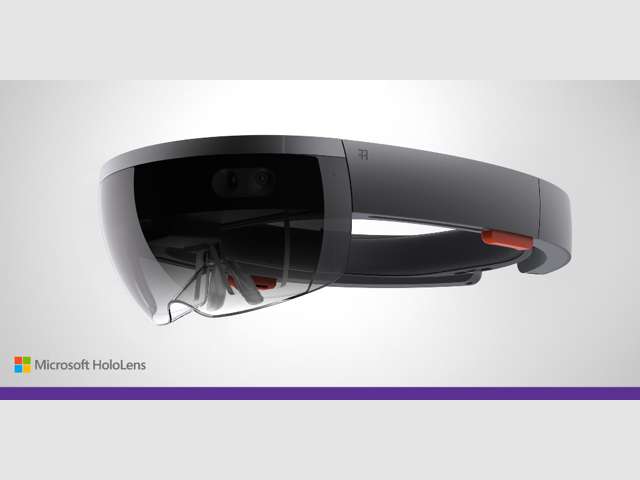
Move over, Google Glass! HoloLens is here!

http://recode.net/2015/01/21/microsofts-hololens-makes-the-leap-to-holographic-computing/
Photo courtesy of Recode.net

Today, I tuned in to listen to the Windows 10 event that was to promote more about the upcoming new OS that many are anticipating will be a big improvement over Windows 8 and 8.1. While I’m a huge fan of iOS products like iPad and iPhone, when it comes to my laptop, I’m a devoted PC gal who would much rather use the Microsoft operating system and tools. I suppose it’s because this is what I’ve been used to for 20-plus years, and it’s easier for me to adapt those changes, and more of the tools I like to use are available for PC use. Yet, while I’m usually a relatively early adopter with many things, I’ve been very hesitant to adopt Windows 8 or 8.1. There are some improvements with Win 8.1, but when I first encountered Win 8, I balked.  So, time will tell what happens once we all get our free upgrades to Win 10 (which is great–it’s going to be free for the first year of availability to Win 7 users like me, and to Win 8/8.1 users). There was a set of business apps called Surface Hub that looked good that combined OneNote with a digital whiteboard and provided new sharing capabilities for workgroups and meetings. I could see the practical uses for that in my own work right now.  The new browser called “Project Spartan” looks incredibly promising as well, based on some of the new functionality that will be forthcoming.

But what REALLY caught my attention in this event was the introduction of a new device that Microsoft introduced. I think it was a bit of a surprise to see this, but it is a sign that Microsoft means business, and to me, it’s a positive sign.  Microsoft has created a new device called the HoloLens. And from what I could tell, HoloLens is everything that Google Glass wishes it could be. While the viewing apparatus used is certainly more…clunky looking…than Google Glass, everything else about it (and why it’s probably still clunky looking) is what it has going for it. There are no wires, no synching it with your phone–it is an autonomous device unto itself. The connection with today’s Win 10 event is that it will run Win 10, but it showed how people can interact with the world around them, and still use the holographic tools around them to merge reality and virtuality. It’s difficult for me to describe, but the 3D imagery used was fantastic, and they showed several applications of how it could be used more practically with other people–including those who don’t have a HoloLens.

I think the biggest difference of all–other than the fact that this is a device that acts on its own, with its own processors among other things, is that unlike Google Glass that was being promoted as a device that could be used as a tool and for everyday use, HoloLens seems to be promoted solely as a tool. Now, it can be used for gaming and such, but the tool applications were what really made it stand out more than anything. My husband and I were using Skype and exchanging comments while watching the live streaming video, and when we were commenting about the differences between HoloLens and Glass, his comment was, “…but this is built as a tool.. you can see the size. It’s not meant as an accessory.. it’s actually a tool.” He’s exactly right. This isn’t a novelty item with potential for greater capability. It has the greater capability, but it’s not an accessory.

I recommend reading this article by The Verge that includes great video and further description of the product. 

I don’t think this is the type of thing that I need right now, even when it comes out. I don’t have any practical application. But I could see how this could be used in several years once the components do become smaller and I can use it as an accessory. (Give it time!)

What do you think? Do you think this is the next step of merging the virtual world with reality? Sure looks like it to me. Post your comments below.

Update: When I mentioned the new HoloLens to my son, he asked me, “Are you sure they aren’t just ripping off Oculus Rift?” Good question. I don’t think so, because HoloLens lets you see through to what’s actually around you, whereas Oculus Rift is contained in its view. Tell me what you think.