While this kind of thing has been happening for years–I’ve seen it going on in the last two decades–it does seem to be getting worse. While this focuses specifically about a case happening with an American research university and their IT workers, it directly affects technical communication workers as well. Some of us are included in the IT departments, some are not, but we’re all directly affected. When layoffs happen, it’s always the consultant/contractors that go first, and in tech comm, that makes up a good portion of our workforce.
I’ve been told that sometimes I’m too panicked about the state of the tech comm workforce because of my own struggle to find long term work, but the more I talk to other technical communicators who are often also contractors, they are feeling the stress as well. It’s articles like this that further my argument that if we can’t keep up and be adaptable, and prove our worth in the market, all the jobs–at least in the U.S.–will go elsewhere. This is not to say that other countries should be able to create new jobs to build their economy, but there’s a point where if all the jobs are exported elsewhere, what’s left for us?
What do you think? Is this just another layoff story, or is it a foretelling story of things yet to come? Include your comments below.
Really, Father, my only sins are beer, donuts, beer, donuts, not knowing DITA, beer, donuts…
“Bless me, Father, for I have sinned! I am a failure in technical communications.”
OK, perhaps in many eyes, I haven’t been a failure in technical communications. It will be five years this spring since I graduated with my Masters degree in Professional and Technical Communication from NJIT. In many ways, that feels like it was just yesterday, and I’m still a “new graduate”. But with the change this year in my STC Membership that’s moved from “Student” to “New Professional” to “Classic”, I supposed I’m not anymore.
While graduate school gave me a good foundation to move forward, I learned very quickly that I needed to continue to educate myself. As I attended conferences and presentations, and paid attention to discussions in social media, I found out that graduate school lessons barely cut the surface. I’ve tried my best to continue my studies by attending as many webinars, conferences, and presentations that I can. I even took another university graduate certificate course on digital marketing, hoping to get some insight that might help me going forward.
However, in the end, I failed to do one thing that might actually boost what I’m doing as a fledgling content strategist, and thus, my confession: I needed to learn DITA.
For those of you who don’t know what DITA is, it’s the acronym for Darwin Information Typing Architecture, and it’s a commonly used method for creating structured authoring using XML coding. The idea is that documentation done using DITA methods will allow for single-sourcing for content elements, and equally make it easier to integrate that content into print or digital outputs in a super-organized, modular way. It’s a standard that helps because it’s generic to almost any system out there. Any system that can read XML can read a DITA document, for the most part. When moving from one system to another, the content can stay intact if done using DITA/XML methods.
I don’t remember learning much about DITA in grad school, other than understanding what it was in general as I explained it above. I never learned the details. In my work life so far, I haven’t needed it. It’s always been unstructured authoring. I try to take some small steps to create some single-sourcing content when possible in content management systems, but that was hard to do sometimes. One of my recent jobs made me realize that we needed some sort of structured authoring done, but I didn’t know how to go about it. We created our own coding tags to describe things going on in copy decks. It wasn’t the best, but it was better than nothing.
In the past year, I’ve tried to figure out ways to continue to improve my skills, and make myself more marketable as a content strategist/content manager. I talked to the leading experts in the field. (It’s one of the benefits of getting involved with the STC and attending STC events–you get to know these people personally.) And the one thing that seemed to come back to me again and again was that I had a good resume, and I have some great skills under my belt, and they knew that I was a good writer from this blog. The biggest sore spot in my skill set was that I lacked an important skill–knowing DITA and using it. And while I looked for jobs in my area that included DITA practices (I think I’ve only seen one listing in three years), I’ve been assured that if I could learn DITA, the remote/telecommuting possibilities could be much better for me. And since remote opportunities are my best bet right now, I have to do what I need to do to make that happen.
So, as the saying goes, I bit the bullet. Fortunately, the STC was promoting a course about DITA Essentials taught by Bernard Aschwanden, the Immediate Past-President of the STC, and the proprietor of Publishing Smarter. Bernard’s a great instructor, and he’s taking it nice and slow. One of the best parts of the course is hands-on experience, even if it’s in the simplest ways. That’s the way I tend to learn best–learn the logistics of how something is done, then I need to learn to do the work through trial and error. Last week’s assignment was particularly challenging for me. While I understood what I had to do conceptually, since I was also trying to familiarize myself with a few XML editors at the same time while applying what I wanted to do with my assignment, I got very frustrated. I sent in my assignment, along with notes about where I was getting frustrated and needing some guidance. Bernard assured me that all would be well, and asked me if he could use what I had turned in for my assignment for the most recent class. He also warned me to have a glass of wine ready while taking class, because I’d be needing it. Yikes!
I was told to prepare for the onslaught of big corrections to my DITA homework with a glass of wine. I took the suggestion seriously, thankfully.
The glass of wine was done by the end of the class, and yes, he ripped my assignment apart, but it was okay in the end. I knew there were problems with it, and he showed me where my original thought process was correct, but I didn’t know how to execute it properly. One of the mistakes I was making was my use of XML tags, particularly using the correct ones. While the XML editing apps all have guidance features to help you with using correct tags in certain situations, I still wasn’t using the best choices. Most of that was because I’m not familiar with what these XML tags mean, so I was using them at face value. For example, I was using a step example tag in part of my content, and Bernard understood why I used it, but felt that the way I used it was incorrect, and didn’t allow for cleaner coding. Okay, I can deal with that, especially when he demonstrated the correction.
So, as much as I’m struggling with DITA, I do understand the essential concepts behind it now. My biggest problem is learning how to use it beyond the most elementary tasks. I haven’t had any “real world” scenarios to date when I could implement and learn how to use the XML editors and use DITA practices in writing or rewriting content. I need to figure out how to find content and start having a way to truly play with something so that I can get the full experience of that trial and error to master DITA.
After the STC course that Bernard is teaching, I plan to follow-up with Scriptorium’s DITA tutorials as well, and see if I can learn some more about XML coding. I have a lot to do to figure this out, but I know that in the end, this will be a big skill that will make a lot of difference in how I approach content. The content strategist skills I already have acquired have helped me frame DITA much more easily than if I learned this with no prior knowledge. But, I can tell that I still have a long way to go before I feel that I’ve mastered this.
So, this ends my confession. I have needed to learn DITA. If it’s not taught in university classes in technical writing, it should be. I think it would have saved me a lot of frustration, and provided more opportunities for me sooner. If I can get a better handle on this, I’m hoping that I can start exploring how XML Editors can integrate with CMSs, like Adobe CQ. I’m not an Adobe AEM developer (I’m not a developer at all!), but I know how to create websites and pages with AEM, and hopefully I can start figuring out how to integrate those skills with DITA skills. I was told by one mentor, that would make me a very desirable job candidate, and I think she’s onto something. Of course, I need to brush up on my AEM skills, since it’s been a couple of years since I’ve used them regularly, but with all things, once you master them, it’s like riding a bicycle. You might be a little unstable at first, but you never quite forget how to do it once you get started back into it again.
Here’s hoping that in 2017, DITA will become a “bicycle” skill for me. I’ll go say a few rounds of the Rosary in the meantime for my penance.
(What do you think? How important is DITA in technical writing? I’ve heard some say it’s a passing trend, and others say that its usage continues to grow. Include your comments below.)
I was casually reading my LinkedIn feed today, and a new connection of mine had liked this particular infographic that one of their connections made, and that connection had obviously gotten it from somewhere else, so I apologize for not being able to name the direct source.
But it’s something that I think is an important part of anyone who is still working and especially for employers who want to understand those who are job seekers. It’s a very different world from even five or ten years ago (trust me, I was job searching that long ago), and while this chart really can apply to anyone, I truly see this definitely applying to technical communications:
What got me is that it isn’t generational–a Baby Boomers and Gen X way of thinking versus Millennial thinking. I’ve had Millennial bosses who thought in the “old thinking” ways, and I’ve had the older generations think in the “new thinking” way. I think the problem–at least in the United States–is that we operate on a factory mentality from the 19th century that still is in place. (Operating from 19th century thinking applies to our educational system too, but that’s another argument.) Productivity and profit was made when thinks were much more manually done. Even in a factory with machines, it was always down to productivity and profit, and bottom line to get those things done. While those are still important factors motivating business now, time has allowed us to reflect on those values, and see the impact on people over 100+ years time. By following the “old thinking” methods, quality of life became impacted. People were things to be manipulated at the cost of time with families, company loyalty, pride in their work.
EVERYTHING in that “new thinking” column embodies what technical communication is right now, and what technical communication jobs should be, but often are not. I’ve heard companies use language that speaks of this “new thinking”, but continue to practice hard-line “old thinking”. This is the 21st century, mind you, and technology and society has come a long way. It doesn’t matter what you do, whether you are a technical communicator, or a factory worker, or someone plowing a field for crops. The best working conditions are those that embrace the new thinking. It allows workers to be creative with solutions after failure, and allows them to work in a more relaxed setting, and if it’s a matter of behavior over skill, the skills will catch up with the behaviors if they are good ones. Happy workers are productive workers. Working in a variety of different jobs over the past 26 years have told me that when I’m a happy worker, I get it done. I produce my best work, and my productivity increases, and my bottom line is more willingness to help that company become more productive and profitable. It happens naturally, instead of being forced.
It’s kind of like that kid doing homework who hates school (I have one of these kids). When it’s time to do homework, some kids need someone over their shoulder, constantly making sure that they do it right, they get it done quickly, and they need to do menial tasks that might not really need to be done. Kids who are given a little bit of room, given tasks that provide some meaning to the material and work they need to produce, and aren’t rushed, tend to get the work done better. Why can’t that apply in the work world as well? We all have deadlines–kids do too. Why not create realistic expectations, which is what much of this “new thinking” is about?
I wish more employers adopted this “new thinking” instead of holding so tightly to the “old thinking”, or at least stop preaching the “new thinking” while actually doing “old thinking”. It would allow a more open way of working that would allow for creativity and better problem-solving, which would help the bottom line. (In other words, allow for more remote workers to get the best results possible!)
What do you think? Include your comments below.
**ETA:
Thought I’d add something here. Got a comment two years after I wrote this that I chose not to approve that said I was delusional and I should continue to pet my unicorn on this one. That’s fine. I’ve only been in the workforce for over 30 years and lived through good work situations, and bad situations with micromanagers who couldn’t be please even with them over your shoulder. I’ve studied British and American History for years as a history major in college, which centered on the practices of how their respective industrial economies drove events of the 19th and 20th centuries forward. I don’t speak from a standpoint of knowledge? Sorry, I think I do. Beside, guess what? This is my blog. I have no problem listening or reading opposing points of view, but I don’t need to be insulted in the process.
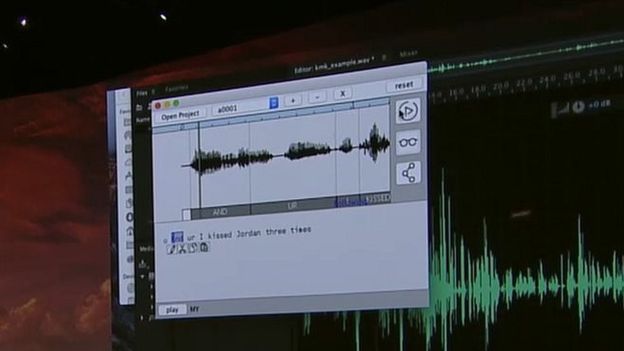
I didn’t see this article when it first came out, but WOW! A Photoshop-like application that can change audio? At first, it sounds like a really cool app, but as this article explains, it could actually be rather dangerous in the wrong hands.
As content developers, understanding that there are tools like this possibly on the market helps us to understand some of the possibilities and limitations of where we, as technical communicators, can take content to the next level. Who says we can’t take someone’s voice and alter it to read something else, just like reading text of any other source content? Or have the ability to replace an image or other multimedia element that we have now? As the article points out in more details, copyright infringements are a first consideration, but what about security based on voice commands? What about altering audio that gives a different message? Especially after this recent U.S. election, the issue of “fake news” influencing the election would be grossly affected if such technology was already out–it’d be worse than it already is!
Read this article, and give me some feedback about what you think about this upcoming technology. Is it good, bad, or do we need to wait and see how it will be distributed first? Include your comments below.
Jumping back into the job market can be tough under any circumstances but if you haven’t actively looked for a job in more than 10 years, you’re going to be in for a rude awakening. “Everything was different,” say James Trandel, a 49-year-old leasing agent from Schaumburg, Ill. “I used to think I could just count on my skills and my experiences but I was off on a lot of things. I didn’t even have a LinkedIn account. It was a rude awakening.”
A few years ago, I actually gave a presentation at the STC Summit covering much of this information, which I learned the hard way! Even after learning how to do all these steps, it doesn’t guarantee anything, but it sure keeps you viable. This is why I’ve resigned myself to knowing that the likelihood of me getting a full-time, permanent job is unlikely, and I’m always learning new things to try to stay competitive. Heck, even during this writing, I’m taking a class right now through the STC to catch up on a skill.
Read this if you haven’t been looking that hard or don’t know where to start. It provides some good foundational advice for moving forward.
–TechCommGeekMom
(Thanks to Tina Howe for sharing this on Facebook originally!)








 TechCommGeekMom
You must be logged in to post a comment.